
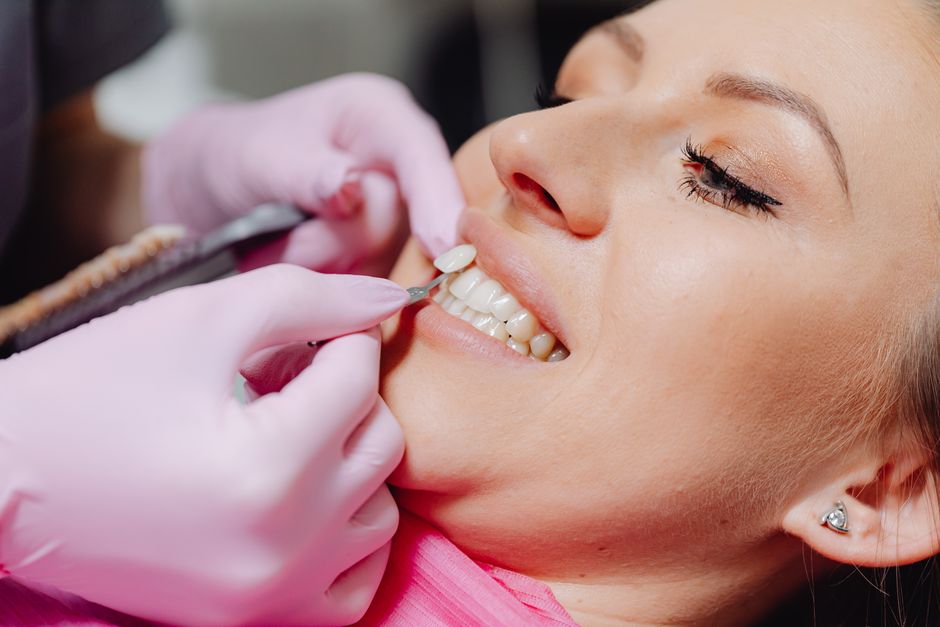
Porcelain veneers change more than the way your teeth look. They change how your teeth feel to your tongue, how you bite into food, and how you form certain sounds when you speak. Most people adapt within a few weeks, but the adjustment period is real. Here is what you can expect from the texture, the bite, and your speech after getting veneers.
What Do Veneers Feel Like on Your Teeth?
Veneers are thin shells of porcelain bonded to the front of your teeth. They are smooth to the tongue, but they do not feel exactly like natural enamel. Natural teeth have microscopic ridges and subtle surface variation. Porcelain is glass-like and uniformly smooth.
Your tongue will notice the difference immediately. Many people describe the sensation as “slippery” or “glassy” for the first few days. This is not painful. It is simply a new texture your tongue has never touched before.
The edges of veneers are the most noticeable part. Where the porcelain meets your natural tooth, there is a tiny seam. Your tongue will find this seam and keep returning to it. This is normal. The seam is typically polished smooth by your dentist, but it still creates a slight ridge that your tongue can detect.
Your lips will also feel the change. The front surface of veneers sits slightly more forward than your original tooth enamel. Your lower lip will rest against this new contour. For people with thin lips, this can feel like a mild pressure or fullness in the first week.
How Long Does It Take to Get Used to the Feeling?
Most people adapt to the texture of veneers within one to two weeks. The tongue is highly sensitive, but it also adapts quickly to new surfaces. By the third week, most patients report that the veneers feel completely normal.
Some people adapt in a few days. Others need a full month. The variation depends on how many veneers you have and how different the new shape is from your original teeth. A single veneer is easier to ignore than a full set of ten.
Dentists call this process “proprioceptive adaptation.” Your brain learns to ignore the new texture once it determines the veneers are not a threat. The tongue stops investigating the surface and treats it as part of your mouth.
If the texture still bothers you after a month, tell your dentist. Sometimes a veneer edge needs additional polishing. Sometimes the shape needs minor adjustment. These are routine refinements, not signs of a failed procedure.
What Does Biting Feel Like With Veneers?
Biting is where veneers feel most different from natural teeth. Porcelain is harder than enamel, but it is also more brittle. Your brain knows this on a subconscious level, and many people bite more cautiously at first.
The first bite into an apple or a crusty piece of bread will feel strange. The contact point between your upper and lower teeth changes because the veneers add a thin layer of thickness. This changes how your teeth meet.
Most patients describe the bite as “off” for the first few days. Your teeth may touch sooner than they used to. You may find yourself chewing on one side of your mouth without realizing it. This is your mouth searching for the bite pattern it remembers.
Your dentist should check your bite after the veneers are bonded. This is called “occlusal adjustment.” Small spots on the veneers are polished to ensure your teeth meet evenly. This is a standard part of the procedure, not an optional extra.
If your bite feels uneven after you leave the dental office, return for an adjustment. Do not wait for it to fix itself. An uneven bite can cause jaw pain and headaches. A five-minute polishing appointment usually resolves the issue.
Hard foods require permanent caution. Veneers can chip if you bite into ice, hard candy, or bones. This is not a reason to avoid veneers, but it is a reason to change how you eat. Cut apples into slices instead of biting into the whole fruit.





Does the Bite Change Affect Chewing?
Chewing is less affected than biting. The molars do most of the work of grinding food, and most people do not get veneers on their molars. Veneers are typically placed on the front six to eight teeth, which are used for cutting and tearing, not grinding.
The front teeth guide your jaw during chewing. This is called “anterior guidance.” When the front teeth change shape, the jaw’s chewing path changes slightly. Most people adapt to this within a week without thinking about it.
Some patients report that food tastes different for the first few days. This is not a change in taste buds. It is a change in how food is positioned in the mouth. The tongue is busy adjusting to the new surface and does not move food as efficiently at first.
There is no evidence that veneers permanently change your ability to chew or your enjoyment of food. The adaptation period is temporary. Once your brain adjusts, chewing returns to normal.
How Do Veneers Affect Speech?
Speech is the most variable part of the veneer adjustment. Some people notice no change at all. Others struggle with certain sounds for several weeks.
The sounds most affected are the “f,” “v,” and “s” sounds. These require your upper front teeth to touch your lower lip or your tongue to approach the teeth closely. A small change in tooth thickness changes the airflow and the sound produced.
The “s” sound is the most common problem. The tongue produces “s” by directing air through a narrow channel between the tongue and the roof of the mouth, just behind the front teeth. If the front teeth are thicker, the channel changes shape, and the “s” comes out with a slight whistle or lisp.
This is not permanent. Your tongue learns the new position within days. Practicing by reading aloud helps. Many dentists recommend reading a page of text aloud twice a day until your speech returns to normal.
If a lisp persists beyond three weeks, tell your dentist. The shape of the veneer may need adjustment. This is not a speech disorder. It is a fit issue that can be corrected.
Do Temporary Veneers Feel Different From Permanent Ones?
Temporary veneers are made of acrylic or composite resin. They are thicker and rougher than the final porcelain veneers. If you have temporaries, the adjustment period for the permanent veneers will be shorter and easier.
Temporaries are intentionally bulky. They protect your prepared teeth and give your dentist a template for the final shape. They also give you a preview of the new size and position of your teeth, but the texture and fit are not representative of the final result.
Some patients dislike their temporaries so much that they worry about the permanent veneers. This is usually unnecessary. Porcelain is thinner, smoother, and more precisely shaped. The permanent veneers feel significantly better than the temporaries.
If your temporaries cause speech problems, expect those problems to diminish with the permanent veneers. The thinner porcelain leaves more room for your tongue and lips to move naturally.
Can You Feel Veneers on Your Gums?
Veneers end at the gum line. The edge of the porcelain sits at or slightly below the gum margin. You may feel a slight pressure or awareness at the gum line for the first week.
This is not pain. It is the gum tissue adjusting to a new surface. The gums may also be slightly tender from the dental procedure itself. This tenderness usually resolves within a few days.
Good oral hygiene is important during this adjustment period. Brush gently along the gum line and floss carefully around the veneers. If your gums bleed or stay sore for more than a week, see your dentist. This could be a sign that the veneer edge is too close to the gum tissue.
Some patients report that flossing feels different. The veneers are slightly thicker than natural teeth, so the contact points between teeth are slightly tighter. Floss may feel snug at first. This is normal and usually resolves as the floss wears a tiny channel into the contact area.
What Should You Avoid After Getting Veneers?
For the first 24 hours, the cement bonding the veneers needs to set. Avoid anything that could displace the veneers during this time. This means no biting into hard foods, no chewing gum, and no vigorous brushing.
After the first day, you can return to normal eating with one exception: avoid biting directly into hard foods. This includes apples, corn on the cob, hard breads, and bones. Cut these foods into small pieces instead.
Do not use your teeth to open packages, crack nuts, or bite your fingernails. These habits can chip porcelain. If you grind your teeth at night, ask your dentist about a night guard. Grinding is the most common cause of veneer damage.
Staining is not a major concern with porcelain, but the bonding agent at the edges can stain over time. Limit coffee, tea, and red wine in the first week after placement. After that, normal consumption is fine, but good brushing habits matter more than ever.
What If the Feeling Never Goes Away?
A small number of patients never fully adapt to veneers. The texture or the bite change continues to bother them for months. This is rare, but it happens.
If you are still uncomfortable after three months, the veneers may need to be adjusted or replaced. Your dentist can polish the edges, adjust the bite, or in some cases, remake one or more veneers with a slightly different shape.
Do not accept permanent discomfort as the price of veneers. A well-made set of veneers should feel like part of your mouth within a few weeks. Persistent discomfort is a fit problem, not a personal failing.
Before getting veneers, ask your dentist how they handle adjustments after placement. Most reputable dentists include a follow-up visit and minor adjustments in the cost of the procedure. This follow-up is essential, not optional.
The decision to get veneers is a commitment to a new feeling in your mouth. For most people, the adaptation is quick and the result is worth it. For a few, the adjustment is harder. Knowing what to expect before you begin makes the process easier to manage.
Frequently Asked Questions
Do veneers feel like real teeth?
No, porcelain veneers feel smoother and slightly harder than natural enamel. Most people adapt to the difference within one to two weeks.
Will veneers affect my bite?
Yes, veneers add a thin layer of thickness that changes how your teeth meet. Your dentist will adjust the bite after bonding, and most people adapt within a few days.
How long does it take to talk normally with veneers?
Most people speak normally within one to two weeks. Reading aloud daily speeds up the adaptation process.
Can veneers cause a permanent lisp?
No, a lisp from veneers is temporary and resolves as your tongue adapts. If a lisp lasts beyond three weeks, the veneer shape may need adjustment by your dentist.
