
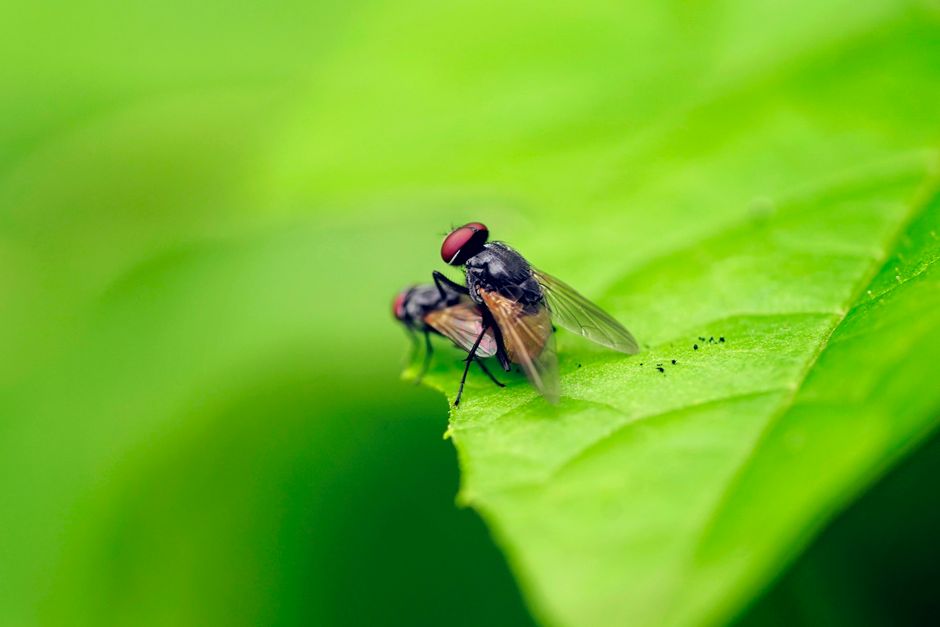
Green flies do not bite people. The insects most people call green flies are blowflies and bottle flies, and they feed on liquids from decaying matter, not blood. They can still cause problems — spreading bacteria from garbage and animal waste to food surfaces, and occasionally laying eggs on wounds or in body openings — but a bite is not one of them. The insects that actually bite and look green are usually deer flies, horse flies, or stable flies, and those are a different matter entirely.
Knowing which insect you are dealing with changes what you do next. A fly that lands on your arm and walks around is not feeding on you. A fly that lands and produces a sharp, immediate sting is. This article explains the difference, why the confusion is so common, and what to do if you have a bite or a fly problem.
Do Green Flies Bite And What To Do About It?
True green flies — the metallic green and blue blowflies in the family Calliphoridae — have mouthparts built for sponging up liquids. They cannot pierce skin. Their mouthparts work like a sponge, which is why you see them on a dropped piece of food or an open trash bag rather than on your skin.
That anatomy is the key fact. A biting insect needs a piercing proboscis, a structure that can cut or stab through skin. Blowflies do not have one. They feed on wound exudate, sweat, tears, and the fluids of decaying material. They may land on a person to drink sweat or moisture around the eyes and mouth, but they are not taking blood.
What to do if a green fly lands on you: brush it away. There is no bite to treat. The more useful action is checking what attracted it — an open garbage bin, pet waste, a compost pile, or a wound that needs cleaning and covering.
There is one genuine medical exception worth knowing. Blowflies can lay eggs on open wounds or in the nose, ears, or mouth of a person who cannot swat them away, such as someone bedridden, unconscious, or severely impaired. This is called myiasis. It is uncommon in healthy adults in the US, but it is a real condition, and it is a reason to keep wounds dressed and to check on people who cannot care for themselves.
Why Do People Think Green Flies Bite?
Because several biting insects are also green, and because a fly landing on skin feels like something. Deer flies are the most common culprit. They have patterned wings and a greenish or yellowish body, and their bite is genuinely painful — a sharp, immediate sting followed by swelling and itching.
Horse flies are larger, often dark with greenish eyes, and deliver one of the more painful bites in North America. Stable flies look like house flies but have a painful bite, usually aimed at the ankles and lower legs. None of these are blowflies, but all of them get called green flies by people who are not looking closely.
The distinction matters because the treatment differs. A bite needs cleaning, monitoring, and sometimes medical attention. A blowfly landing on you needs nothing.
How Do You Tell A Biting Fly From A Non-Biting Green Fly?
Watch how it behaves when it lands. A blowfly settles, walks in short loops, and feeds on moisture or food. A deer fly or horse fly lands and bites almost immediately, often on the head, neck, or arms, and it is persistent — it will circle back after being swatted.
The timing of the pain is the clearest signal. Blowflies cannot cause a sharp sting on contact. If you feel a bite the moment an insect lands, it is not a blowfly.
- Blowflies: metallic green or blue, loud buzzing, drawn to garbage and decaying food, no bite.
- Deer flies: patterned wings, greenish body, painful bite, often near water and woods.
- Horse flies: large, dark, very painful bite, active in summer near livestock and water.
- Stable flies: house-fly appearance, painful bite, targets ankles and legs.
One point that surprises people: the biting flies are not feeding on decay. Female deer flies and horse flies take blood meals because they need protein to develop eggs. That is a completely different feeding strategy from a blowfly’s, and it is why their mouthparts are built differently.



What Should You Do If You Get Bitten By A Green-Looking Fly?
Wash the bite with soap and water. That is the single most useful step, and it applies to any insect bite. Apply a cold pack wrapped in cloth for short periods to reduce swelling and pain.
Most bites from deer flies, horse flies, and stable flies resolve on their own. They can be intensely itchy and may swell more than a mosquito bite. Over-the-counter hydrocortisone cream or an oral antihistamine can help with itching. Some clinicians recommend these for bothersome insect bites; the evidence for symptom relief is reasonable but modest.
Do not scratch open the bite. Broken skin is how secondary bacterial infections start, and fly bites are no exception. Keep the area clean and covered if you cannot leave it alone.
Seek medical care if you notice spreading redness, warmth, increasing pain after the first day or two, pus, fever, or red streaks moving away from the bite. These are signs of possible infection, not a normal reaction. Anyone with a known allergy to insect venom or a history of severe reactions should treat any bite cautiously and follow their existing care plan.
There is no specific treatment that shortens a deer fly or horse fly bite, and no vaccine or preventive medication exists for them. The honest position is that management is supportive — cleaning, reducing itch, and watching for infection.
Why Are Green Flies In My House Or Yard?
Blowflies follow odor. They are attracted to garbage, pet waste, compost, rotting fruit, and dead animals. A sudden appearance of many blowflies indoors usually means there is a source nearby — often a bin that has not been emptied, a forgotten piece of food, or, less commonly, a dead rodent in a wall or attic.
Finding and removing the source is the only reliable fix. Insecticide sprays kill the flies you see but do nothing about the breeding site. Once the source is gone, the population drops.
Practical steps that work:
- Keep garbage in bins with tight-fitting lids and empty them regularly.
- Clean up pet waste promptly, especially in warm months.
- Keep compost covered and turn it regularly.
- Check for and remove any dead animals near the home.
- Screen windows and doors, and repair tears.
- Keep food covered, both indoors and outdoors.
Blowflies are also a public health concern because they move between filth and food. Their legs and bodies can carry bacteria from waste to a kitchen counter or an uncovered meal. This is why food safety guidance treats fly contact with food as contamination, not just an annoyance.
Are Green Flies Dangerous To Health?
They are not dangerous in the way a biting insect is. There is no bite, no venom, and no disease transmitted by a bite. The risk they carry is contamination — mechanical transfer of bacteria from waste to food, surfaces, or an open wound.
The wound situation is the one to take seriously. A blowfly laying eggs on a neglected wound or in the nose or ears of someone who cannot respond is a genuine medical problem that needs clinical care. It is not something to manage at home. If you are caring for a person who is bedridden, unconscious, or has limited mobility, inspect skin and wounds regularly and keep them clean and covered.
For a healthy adult with intact skin, a green fly landing on you poses no meaningful health risk. That is a fair and accurate statement, and it is worth saying plainly because the fear of these insects often runs far ahead of the actual risk.
How Do You Prevent Fly Problems Around The Home?
Prevention comes down to removing what attracts them and blocking their entry. Blowflies are driven by smell, so the goal is eliminating odor sources before they find them.
Keep outdoor bins away from doors and windows. Rinse bins periodically, since residue keeps attracting flies even after the trash is gone. Use tightly sealed containers for pet food and keep pet waste in a covered bin. In summer, check screens and door sweeps, and use fans in entryways — moving air makes it harder for flies to land and enter.
If you spend time outdoors where biting flies are common, such as near water, woods, or livestock, the prevention is different. Insect repellents registered with the EPA can reduce biting fly landings, though their effectiveness against deer flies and horse flies varies and is generally less consistent than against mosquitoes. Wearing light-colored clothing, long sleeves, and a hat helps, and avoiding peak activity hours near breeding sites reduces exposure.
If flies are appearing in large numbers indoors and you cannot find the source, a pest control professional can locate it. Persistent blowfly activity in a home is often a sign of a hidden problem worth finding rather than something to spray away.
Frequently Asked Questions
Do green flies bite humans?
No. True green blowflies cannot pierce skin and do not bite. If something green bit you, it was almost certainly a deer fly, horse fly, or stable fly.
What does a green fly bite look like?
There is no such thing as a blowfly bite, so a bite from a green-looking fly is usually from a deer fly or horse fly. It typically appears as a red, swollen, itchy bump that may be more painful than a mosquito bite.
Why do green flies land on people?
Blowflies land on people to drink sweat, tears, or moisture around the eyes and mouth. They are not feeding on blood, and brushing them away is enough.
Should I see a doctor after a fly bite?
See a doctor if redness spreads, the area becomes warm or increasingly painful, pus appears, or you develop a fever. These signs suggest infection rather than a normal bite reaction.
