
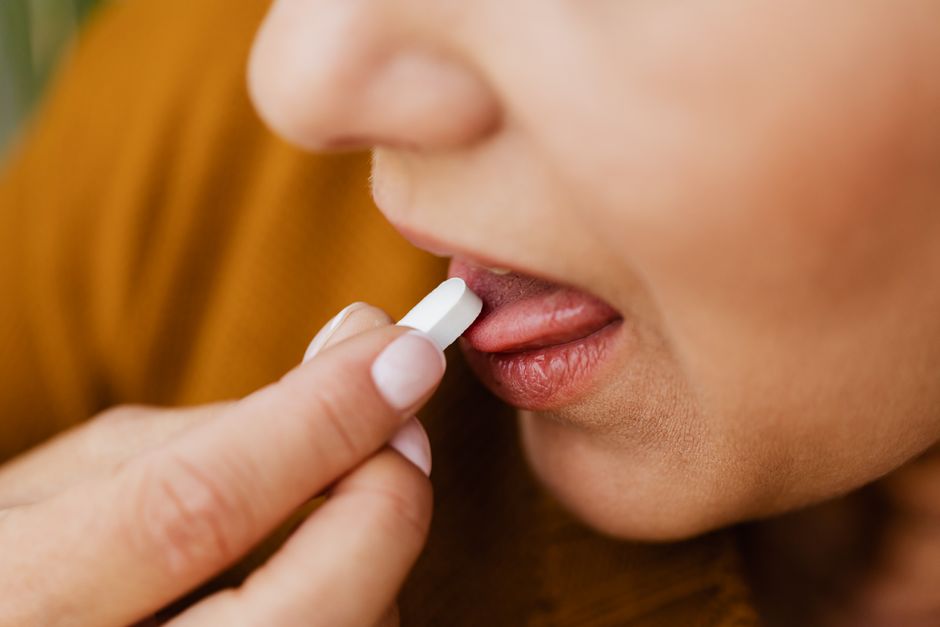
Yes, you can take an expectorant before bed, but the timing can affect how well you sleep. Expectorants work by thinning mucus in your airways so you can cough it up more easily. That job does not stop when you lie down, which is why some people find nighttime doses helpful and others find them disruptive.
The decision usually comes down to what your cough is doing and what the product actually contains. A plain expectorant is one thing. A combination cold medicine with several active ingredients is a different situation entirely, especially at bedtime.
What Does an Expectorant Actually Do?
An expectorant thins and loosens mucus in the respiratory tract so that coughing becomes more productive. The most common expectorant in over-the-counter products in the United States is guaifenesin.
Guaifenesin is thought to reduce the thickness and stickiness of airway secretions, which makes them easier to clear. That is the mechanism described in product labeling and pharmacology references. What the evidence does not show is that guaifenesin shortens how long a cough lasts or treats the underlying cause. It addresses the symptom of thick mucus, not the infection or irritation producing it.
This distinction matters. An expectorant is not a cough suppressant. It does not quiet the cough reflex. In fact, by loosening mucus, it can make you cough more in the short term because your body is clearing what has been thinned out.
Expectorant vs. Suppressant
These two categories do opposite things, and mixing them up is a common mistake.
- Expectorants (guaifenesin) thin mucus so you can cough it out.
- Suppressants (dextromethorphan) act on the brain to reduce the cough reflex.
Some products combine both. Others combine an expectorant with a decongestant, an antihistamine, or a pain reliever. Reading the active ingredients list on the box tells you which one you actually have.
Can You Take Expectorant Before Bed?
You can take an expectorant at bedtime, and many people do. There is no rule that says expectorants must be taken only during the day. The label directions typically call for dosing every four hours as needed, which naturally includes nighttime.
The practical question is whether it helps or hurts your sleep. Two things tend to come up.
First, loosening mucus can trigger more coughing, and coughing is what wakes people up. For some, that means a nighttime expectorant leads to a rougher night. For others, thinner mucus is easier to clear, so they cough productively for a few minutes and then settle.
Second, the other ingredients in the product may matter more than the expectorant itself. A decongestant such as pseudoephedrine is a stimulant and can make it hard to fall asleep. An older antihistamine such as diphenhydramine causes drowsiness, which some people want at night and others do not.
So the honest answer is: a plain expectorant before bed is reasonable. A multi-ingredient cold medicine before bed deserves a closer look at the label.
Why Do Coughs Get Worse at Night?
Nighttime coughing is common, and it is not your imagination. Several factors line up after you lie down.
When you are upright during the day, gravity helps mucus drain. Lying flat changes that. Postnasal drip, which is mucus running down the back of your throat, tends to pool and irritate the throat more when you are horizontal. That triggers coughing.
Air also tends to be drier at night, particularly in heated or air-conditioned rooms. Dry air can irritate an already sensitive airway. Some people also breathe through their mouths more while asleep, which dries the throat further.
None of this means an expectorant will fix nighttime coughing. It means the reasons a cough worsens at night are mostly mechanical and environmental, and an expectorant only addresses one piece of that picture.





How Should You Time an Expectorant Dose?
Follow the directions on the product label. That is the baseline, and it is not a suggestion. Guaifenesin products commonly direct dosing every four hours, and exceeding the labeled frequency or amount does not make the medicine work better.
If you want the expectorant to help clear mucus while you are awake and upright, taking it earlier in the evening rather than right before lying down is a reasonable approach. This is practical reasoning, not a formal clinical recommendation. There is no established guideline specifying the ideal clock time for an expectorant dose.
A few practical points that do rest on solid ground:
- Drink enough water. Guaifenesin works best when you are well hydrated, and hydration itself helps thin mucus.
- Check whether your product contains a decongestant if you are trying to sleep.
- Do not take more than the label allows, and do not double up on products that share an ingredient.
That last point matters more than people realize. Many cold and flu products contain guaifenesin, and taking two of them together can mean an unintended double dose.
Who Should Be Careful With Expectorants?
Guaifenesin is generally well tolerated by healthy adults at labeled doses. That said, “generally well tolerated” is not the same as “safe for everyone in every situation.”
People with certain chronic conditions, pregnant women, and those taking other medications should check with a pharmacist or clinician before using any over-the-counter cough product. This is standard guidance, not a scare tactic.
Persistent cough deserves attention regardless of what you are taking for it. A cough that lasts for weeks, comes with fever, produces blood, or causes shortness of breath is a reason to see a clinician rather than manage it at home. No over-the-counter expectorant treats the cause of a cough like that.
There is also a category of cough that does not involve mucus at all. A dry, hacking cough from irritation or a viral illness that has run its course will not respond to an expectorant, because there is nothing to thin. Using an expectorant for a dry cough is a mismatch.
What About Other Bedtime Cough Options?
Expectorants are one tool among several, and for nighttime specifically they are not always the best fit.
Honey has some evidence behind it for soothing cough, and it is commonly used before bed. It is not appropriate for infants under one year because of the risk of infant botulism. For everyone else, a spoonful is a low-risk option that some research supports for cough relief.
Humidifiers add moisture to the air, which can ease throat irritation from dryness. Keeping the head of the bed slightly elevated can reduce postnasal drip pooling. These are supportive measures, not treatments, and the evidence for each is modest.
Cough suppressants such as dextromethorphan are sometimes used at night specifically because they reduce the cough reflex. Whether they work well varies, and the evidence for over-the-counter cough medicines in general is mixed. That is worth knowing before you assume any of them will guarantee sleep.
The Bottom Line on Bedtime Expectorants
A plain expectorant before bed is a reasonable choice if your cough is productive and you want to loosen mucus. If your cough is dry, an expectorant is the wrong tool. If your product contains a decongestant, expect it to work against your sleep.
The most useful thing you can do is read the label and match the product to your actual symptoms. Expectorants do one job. They do not treat infection, they do not stop a cough reflex, and they do not shorten how long you are sick.
Frequently Asked Questions
Can I take guaifenesin right before bed?
Yes, guaifenesin can be taken before bed, and label directions generally allow dosing every four hours as needed. Just be aware that loosening mucus may trigger more coughing at first, which can affect sleep.
Does an expectorant keep you awake?
A plain expectorant does not contain stimulants and is not expected to keep you awake. If your product also contains a decongestant like pseudoephedrine, that ingredient can interfere with sleep.
Should I take an expectorant or a cough suppressant at night?
It depends on your cough: expectorants suit a wet, productive cough, while suppressants are aimed at a dry cough that disrupts sleep. Many people find a suppressant more helpful at night for that reason, though evidence for over-the-counter cough medicines is mixed.
Can I take an expectorant with other cold medicine?
Only if you check the labels first, because many cold medicines already contain guaifenesin and doubling up can cause an unintended overdose. Ask a pharmacist if you are unsure what is safe to combine.
