
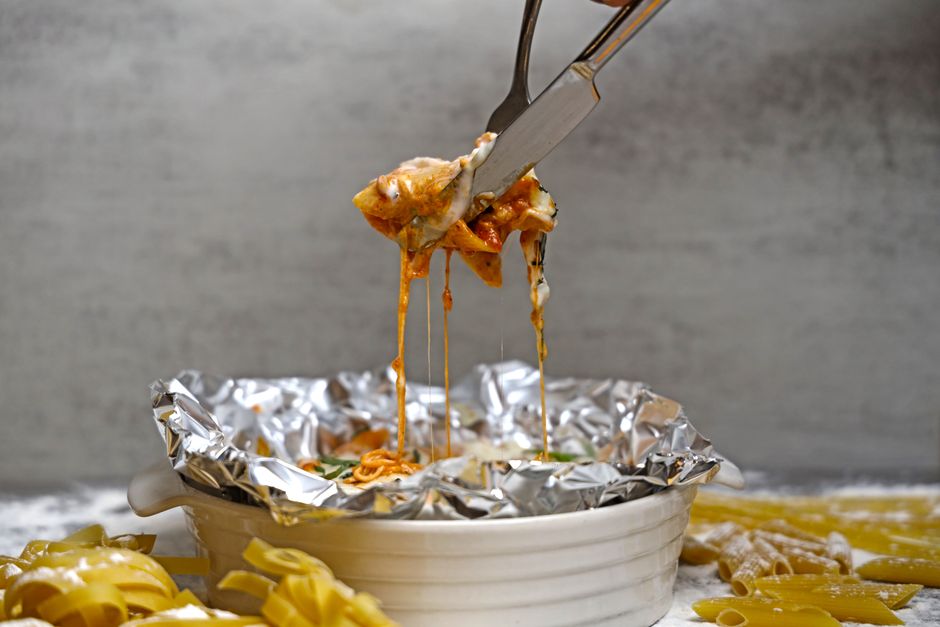
Yes, you can put aluminum foil in a standard home oven. It is a common and generally safe practice for cooking, lining trays, and covering dishes. However, the safety and effectiveness depend entirely on how you use it, and there are specific situations where foil can become a fire hazard or damage your oven.
Is It Safe to Put Aluminum Foil in a Regular Oven?
Aluminum foil is safe for use in conventional and convection ovens at normal cooking temperatures. The melting point of aluminum foil is around 1,220°F (660°C). Standard home ovens rarely exceed 500°F (260°C) even on the highest broil settings. This means the foil will not melt or catch fire under normal cooking conditions.
The real risks are not the foil itself but how it is positioned and shaped. Foil that touches the heating elements, blocks airflow, or is crumpled into sharp points can cause sparks or fires. These are preventable mistakes, not inherent problems with using foil.
What Happens if Aluminum Foil Touches the Heating Element?
If foil comes into direct contact with the oven’s heating element, it can overheat rapidly. This can cause the foil to melt, create sparks, or potentially start a fire. The heating element can reach temperatures well above the melting point of the foil, even when the air inside the oven is much cooler.
This is especially dangerous in ovens with exposed bottom heating elements. Foil placed directly on the bottom of the oven can easily shift and touch the element. Many oven manufacturers explicitly warn against this practice because it can also damage the oven’s interior finish and lead to costly repairs.
Why Should You Never Line the Bottom of the Oven With Foil?
Lining the bottom of the oven with foil is one of the most common and most dangerous mistakes. The foil traps heat beneath it, which can damage the oven’s heating element and interfere with the oven’s ability to maintain the correct temperature. This can lead to uneven cooking and potential damage to the oven itself.
In gas ovens, foil on the bottom can block the gas burners and vents. This disrupts airflow and can cause incomplete combustion, which is a safety hazard. In electric ovens, foil can reflect heat back onto the element, causing it to overheat and fail prematurely. If you want to catch drips, use a proper oven liner or place a baking sheet on a lower rack instead.





Does Aluminum Foil Leach Into Food During Cooking?
Some research suggests that small amounts of aluminum can transfer from foil into food during cooking. The amount depends on the food’s acidity, cooking temperature, and cooking time. Acidic foods like tomatoes, citrus, and vinegar-based sauces cause more aluminum to leach into the food than neutral foods.
The FDA and other health authorities have not set a specific limit for aluminum intake from cookware and foil because the amounts are generally considered low. However, some studies have raised questions about whether long-term, high-level aluminum exposure is linked to health concerns. The evidence is not conclusive, and most experts agree that occasional use of foil for cooking is not a health risk for healthy adults.
If you cook highly acidic foods regularly, consider using parchment paper or glass bakeware instead. This is a simple precaution, especially for people who cook with foil frequently.
Can You Use Aluminum Foil in a Convection Oven?
Yes, you can use foil in a convection oven, but you must be more careful. Convection ovens use a fan to circulate hot air throughout the oven cavity. This fan improves cooking evenness, but it also means that foil can be blown around if it is not weighted down.
Loose foil can get pulled into the fan, which can cause sparks, damage the fan motor, or start a fire. If you use foil in a convection oven, make sure it is securely wrapped around the food or weighted down by a baking dish. Do not let foil hang over the edges of a tray where the fan can catch it.
What Are the Best Practices for Using Foil in the Oven?
Using foil safely comes down to a few simple rules. Always keep foil at least one inch away from the oven walls and heating elements. Never cover the oven racks completely, as this blocks airflow and can cause hot spots or uneven cooking.
- Use foil to cover dishes loosely to prevent over-browning or to trap moisture.
- Line baking sheets with foil for easy cleanup when roasting vegetables or baking cookies.
- Wrap food tightly in foil to create a sealed packet for steaming or slow cooking.
- Never place foil on the oven floor, even as a drip catcher.
- Do not use foil to cover the broiler pan slots, as this can cause grease to pool and ignite.
When broiling, be especially cautious. The broiler element gets extremely hot, and foil placed too close to it can ignite. If you use foil under the broiler, keep it well away from the element and monitor it closely.
Is Parchment Paper a Better Alternative to Foil?
Parchment paper is often a better choice for lining baking sheets and roasting pans. It does not react with acidic foods, so there is no concern about metal leaching. Parchment paper also has a silicone coating that makes it non-stick, which means you may need less oil or cooking spray.
However, parchment paper has a lower heat tolerance than foil. Most parchment paper is rated for temperatures up to 420°F to 450°F (215°C to 232°C). If you use it above this temperature, it can brown, smoke, or catch fire. Foil can handle higher temperatures without issue, making it the better choice for high-heat roasting and broiling.
For most baking and roasting tasks, parchment paper is the safer and more convenient option. For high-heat cooking or when you need to seal food tightly, foil is still the better tool.
Can Aluminum Foil Cause Sparks in a Microwave?
This is a different question entirely, but it is worth clarifying because many people confuse the two appliances. Aluminum foil should never be used in a microwave oven. The microwaves cause electrical currents to build up in the metal, which can create sparks, arcs, and potentially start a fire.
Some microwaves can handle small amounts of foil if it is smooth and placed carefully, but this is not recommended. The risk of arcing is simply too high, and the results can be dangerous. If you need to cover food in a microwave, use a microwave-safe lid or a damp paper towel instead.
What Does the Evidence Say About Aluminum Foil and Dementia?
There is a long-standing myth that cooking with aluminum foil increases the risk of Alzheimer’s disease. This belief stems from older studies that found elevated aluminum levels in the brain tissue of some Alzheimer’s patients. However, more recent and rigorous research has not confirmed a causal link between dietary aluminum and Alzheimer’s disease.
The scientific consensus today is that aluminum exposure from cooking is not a proven risk factor for dementia. The human body efficiently eliminates small amounts of aluminum through the kidneys. No major health organization has issued a warning against using aluminum foil for cooking based on dementia risk. This does not mean the leaching is zero, but it means the health significance is not established.
Frequently Asked Questions
Can you put aluminum foil directly on the oven rack?
Yes, but it is not recommended. Foil on the rack can shift and block airflow, which may cause uneven cooking or damage the heating elements.
At what temperature does aluminum foil become dangerous in the oven?
Aluminum foil melts at about 1,220°F, which is far above any home oven temperature. The danger comes from direct contact with heating elements, not the air temperature.
Is it safe to cook acidic foods like tomatoes wrapped in foil?
It is safe, but acidic foods cause more aluminum to leach into the food. The amounts are small and not considered harmful, but parchment paper or glass is a better choice for frequent acidic cooking.
Does aluminum foil cause cancer?
No credible scientific evidence links cooking with aluminum foil to cancer. The aluminum that leaches into food is minimal, and health agencies have not classified dietary aluminum as a carcinogen.
