
Yes, you can eat uncooked beets. Raw beets are safe to eat and are a common ingredient in salads and slaws. They are crunchy, slightly sweet, and earthy in flavor. However, eating them raw is not the same as eating them cooked, and there are a few things worth knowing before you slice one up.
Can You Eat Uncooked Beets Safely?
Raw beets are safe for most people to eat. They are not toxic and do not need to be cooked for safety reasons. The main concerns are texture, taste, and how your body handles them.
Beets are a root vegetable. Like carrots or radishes, they grow underground and can be eaten fresh. You should wash them well to remove dirt and bacteria from the soil. Peeling is optional, though the skin can be tough and slightly bitter when raw.
Some people find raw beets harder to digest than cooked ones. If you have a sensitive stomach or a history of digestive issues, start with a small amount. Cooking breaks down the fiber, which makes beets easier on the gut.
What Changes When Beets Are Cooked vs. Raw
Cooking changes beets in three main ways: texture, nutrient availability, and oxalate content.
Raw beets are firm and crisp. Cooking softens them and brings out their natural sweetness. The earthy flavor becomes milder when roasted, boiled, or steamed.
Heat also affects nutrients. Some vitamins, like vitamin C, are sensitive to heat and can be reduced during cooking. Eating raw beets preserves more of the heat-sensitive nutrients. At the same time, cooking can make other nutrients easier to absorb. Carotenoids, for example, are better absorbed from cooked vegetables than raw ones.
Beets contain oxalates, naturally occurring compounds found in many plant foods. Cooking can reduce oxalate content slightly. For most people this is not a concern, but those with a history of kidney stones may want to be careful with high-oxalate foods in any form.
Nutritional Value of Raw Beets
Beets are a nutrient-dense food. They are low in calories and provide fiber, folate, manganese, and potassium. They also contain nitrates, which are compounds that your body converts to nitric oxide.
Nitric oxide helps blood vessels relax and can support healthy blood pressure. This is one of the most studied benefits of beets. Research has shown that both raw and cooked beets provide dietary nitrates, though the amount can vary based on growing conditions and preparation.
One cup of raw beets provides about 58 calories and 3.8 grams of fiber. They are also about 87% water, which makes them hydrating. The deep red color comes from betalains, which are pigments with antioxidant properties.
Raw beet greens are also edible and highly nutritious. They contain more iron and calcium than the root itself. If you buy beets with the greens attached, do not throw them away. Wash them and use them like spinach or Swiss chard.



How to Eat Raw Beets
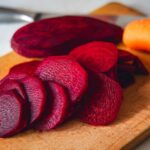
Raw beets are versatile. You can grate them into salads, slice them thin for sandwiches, or spiralize them into noodles. Shredded raw beets work well in slaws with cabbage and carrots.
Here are some simple ways to include raw beets in your diet:
- Grate them over salads for color and crunch
- Thinly slice them and add to sandwiches or wraps
- Juice them with apples, carrots, or ginger
- Blend them into smoothies for added fiber
- Pickle them at home for a tangy snack
When preparing raw beets, you may notice they stain your hands and cutting board. The red pigment is strong and can be hard to wash off. Wearing kitchen gloves or rubbing your hands with lemon juice can help reduce staining.
Raw beets pair well with citrus. The acidity of lemon or orange juice balances their earthy flavor. Olive oil, salt, and fresh herbs like dill or parsley also work well.
Who Should Be Careful With Raw Beets
Most people can eat raw beets without any problems. But some groups should be more cautious.
People with a history of kidney stones may want to limit beets in any form. Beets are high in oxalates, which can contribute to calcium oxalate stones, the most common type of kidney stone. If you have had kidney stones, talk to your doctor about whether raw beets are right for you.
People with low blood pressure should also be aware. The nitrates in beets can lower blood pressure. For most people this is a benefit, but if you already have low blood pressure or take blood pressure medication, eating large amounts of beets could cause your pressure to drop too much.
Digestive sensitivity is another consideration. Raw beets contain more fiber than cooked ones, and fiber can cause gas or bloating in some people. If you are not used to eating high-fiber foods, introduce raw beets gradually.
Beeturia is a harmless condition in which urine turns pink or red after eating beets. It affects about 10 to 14 percent of people and is not a sign of illness. It can be alarming if you do not know about it, but it is completely benign.
Do Raw Beets Have More Benefits Than Cooked Beets?
There is no simple answer. Both raw and cooked beets are healthy, and the best choice depends on your goals.
Raw beets preserve heat-sensitive nutrients like vitamin C. They also have more fiber because cooking softens the cell walls and can reduce fiber content slightly. If your goal is maximum fiber and vitamin C, raw beets have a slight edge.
Cooked beets are easier to digest and may make some nutrients more available. The body can absorb certain antioxidants better from cooked beets. Roasting beets also concentrates their natural sugars, which improves the taste for many people.
Some research suggests that the nitrates in beets are well absorbed from both raw and cooked forms. The key is that the beets are fresh. Nitrate levels decrease over time, so a fresh beet of any preparation is better than an old one.
The evidence does not show that one form is clearly superior. The best approach is to eat beets in the form you enjoy most. If you like them raw, eat them raw. If you prefer them roasted, that is fine too. The important thing is that you are eating them at all.
Can You Eat Raw Beets Every Day?
Eating raw beets daily is generally safe for healthy people. There is no established upper limit for beet consumption.
That said, moderation is reasonable. A serving of beets is about one cup, whether raw or cooked. Eating more than this on a regular basis is not necessary and may increase the risk of digestive discomfort or changes in blood pressure.
No clinical guidelines currently exist for a maximum daily beet intake. The evidence supports beets as part of a balanced diet, not as a concentrated supplement. If you are using beet juice for athletic performance or blood pressure support, follow the dosing on the product label or the advice of your healthcare provider.
For most people, a few servings of beets per week is a sensible target. This gives you the nutritional benefits without overdoing any single food.
Frequently Asked Questions
Do raw beets need to be peeled?
No, raw beets do not need to be peeled. The skin is edible, though it can be tough and slightly bitter, so many people prefer to peel them for a smoother texture.
Can raw beets make you sick?
Raw beets are safe for most people and do not cause illness. As with any raw vegetable, wash them thoroughly to remove soil and bacteria before eating.
Are raw beets better for you than cooked beets?
Neither form is clearly better. Raw beets preserve heat-sensitive nutrients like vitamin C, while cooked beets are easier to digest and may improve absorption of some antioxidants.
Can eating raw beets turn your urine red?
Yes, this is called beeturia and it affects about 10 to 14 percent of people. It is harmless and the color change goes away on its own.
