
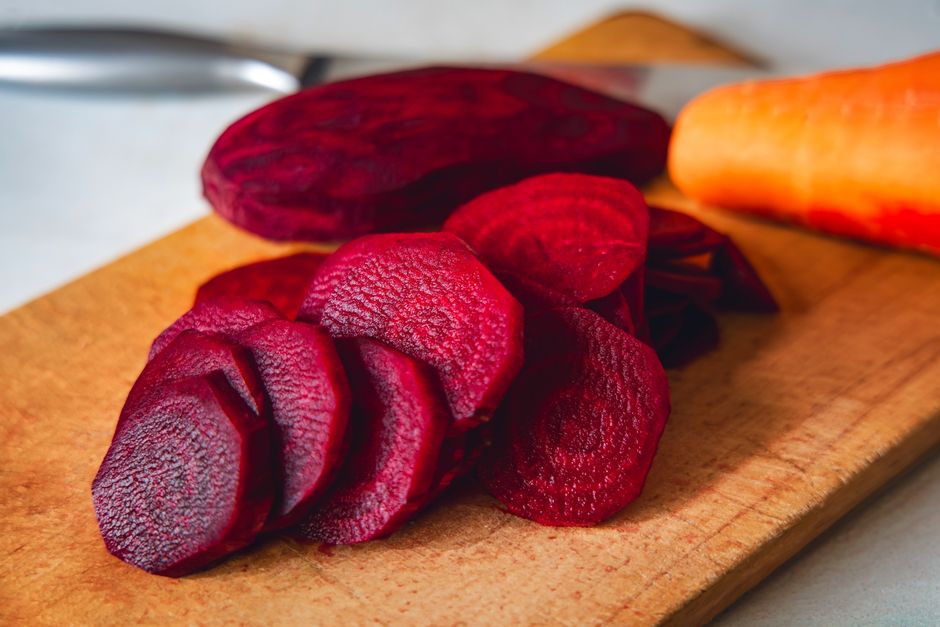
Raw beets are firm, earthy, and full of natural sugar, but cooking them transforms their dense texture into something tender and sweet. You can roast, boil, steam, or pressure-cook them, and each method takes about 30 to 60 minutes depending on the size of the beets and the technique you choose. Start by washing the beets thoroughly and trimming the leaves to about an inch above the root, but leave the skin on and the root tail intact during cooking to prevent the red pigments from bleeding out. After cooking, the skins slip off easily under cool running water, leaving you with a vibrant, ready-to-use vegetable for salads, sides, or soups.
How Do You Prepare Raw Beets Before Cooking?
Preparation is simple but matters for the final result. Scrub the beets under cold water to remove all dirt and grit. Do not peel them yet — the skin protects the flesh and helps the beet hold its color and nutrients during cooking.
Cut off the leafy tops, leaving about one inch of stem attached. If you cut into the beet body itself, it will bleed red pigment into the cooking water. Save the greens if they look fresh and crisp — they are edible and cook like Swiss chard or spinach.
Keep the root tail intact. The long thin root at the bottom also prevents excessive bleeding. If your beets are very large, you can cut them into uniform halves or quarters, but expect more color loss into the cooking liquid. Smaller pieces cook faster but release more pigment.
How To Cook Raw Beets: Step By Step Roasting Method
Roasting is the most popular method because it concentrates the natural sugars and produces the deepest flavor. The dry heat of the oven caramelizes the beet’s sugars, giving it a sweetness that boiling cannot match.
Here is the step-by-step process:
- Preheat your oven to 400°F (200°C).
- Wash the beets and trim the tops and root tails as described above.
- Wrap each beet individually in aluminum foil with a small drizzle of olive oil and a pinch of salt, if desired.
- Place the wrapped beets on a baking sheet to catch any drips.
- Roast for 45 to 60 minutes, depending on size. A medium beet (about 2 to 3 inches in diameter) usually takes around 50 minutes.
- Test for doneness by piercing the largest beet with a paring knife. It should slide in with little resistance, like a fork-tender potato.
- Let the beets cool slightly, then rub the skins off with your fingers or a paper towel. The skin should slip off easily.
You can skip the foil and roast beets directly on a sheet pan, but they will dry out more on the surface and require occasional turning. Foil-wrapped beets essentially steam inside their own moisture, producing a more evenly tender result.
How Do You Boil Beets Without Losing Too Much Color?
Boiling is the fastest hands-off method, but it does leach more color and nutrients into the water. Keep the beets whole with the skin on and the root tail attached to minimize this loss.
Place the prepared beets in a pot and cover them with cold water. Add a tablespoon of vinegar or lemon juice to the water — the acid helps stabilize the red pigment and keeps the beets brighter. Bring the water to a boil, then reduce to a simmer.
Simmer for 30 to 45 minutes for medium beets. Check doneness with a fork or knife at the 30-minute mark. Larger beets may need up to an hour. Drain the beets and run them under cold water. The skins will slide off easily.
Do not salt the water. Salt draws moisture out of the beets and can make them tougher. Add salt after cooking, when you season the finished dish.





What Is the Fastest Way To Cook Raw Beets?
A pressure cooker or Instant Pot is the fastest method by a wide margin. Whole medium beets cook in about 15 to 20 minutes under high pressure, compared to 45 to 60 minutes for roasting.
Place the trivet in the pressure cooker and add one cup of water. Put the washed, trimmed beets on the trivet. Lock the lid and cook on high pressure for 15 minutes for small beets, 20 minutes for medium beets, and 25 minutes for large ones. Let the pressure release naturally for 10 minutes, then quick-release the remaining steam.
Steaming is another relatively quick option. Place whole beets in a steamer basket over boiling water, cover, and steam for 30 to 40 minutes. Steaming preserves more color and nutrients than boiling because the beets never sit directly in water.
How Do You Know When Beets Are Fully Cooked?
The most reliable test is the knife test. Insert a paring knife or fork into the thickest part of the largest beet. If it enters with minimal resistance and slides out cleanly, the beet is done.
Another sign is the skin. A cooked beet’s skin begins to wrinkle and pull away from the flesh on its own. If the skin is still tight and smooth, the beet needs more time.
Undercooked beets have a crunchy, raw texture in the center. Overcooked beets become mushy and waterlogged, especially if boiled. The window between perfectly tender and overly soft is wide enough that you do not need to worry much — aim for tender but not falling apart.
Should You Peel Beets Before or After Cooking?
Peel after cooking. This is the standard practice for a reason: raw beet skin is thin but tough, and peeling it with a vegetable peeler is awkward because of the beet’s round shape. The skin also holds in moisture and pigment during cooking.
Once cooked, the skin loosens and rubs off with minimal effort. Run the cooked beets under cool water and push the skin away with your thumbs. If some patches resist, use a paring knife to lift an edge, then peel the rest by hand.
Wear kitchen gloves if you want to avoid stained hands. Beet juice is a strong natural dye that can temporarily discolor your fingers and nails. Lemon juice helps remove the stains from your skin afterward.
Can You Eat Beets Raw?
Yes, raw beets are safe to eat and appear shredded in salads or thinly sliced in slaws. They have a crunchy texture and a more assertive, earthy flavor compared to cooked beets. Many people find raw beets too hard and strongly flavored, which is why cooking is the more common preparation.
Raw beets are also harder to digest for some people. Cooking breaks down the fiber and makes the nutrients more accessible. If you are new to beets, start with cooked versions and try raw beets only in small amounts, finely grated.
What Are the Best Ways To Use Cooked Beets?
Cooked beets are versatile. Slice them warm and dress with olive oil, vinegar, and fresh herbs for a simple side dish. Chill them and dice into salads with goat cheese and walnuts — a classic combination that balances the beet’s sweetness with creamy and nutty flavors.
Puree cooked beets into soups like borscht or blend them into smoothies for natural color and sweetness. You can also pickle cooked beet slices in vinegar, sugar, and spices for a tangy condiment that keeps for weeks in the refrigerator.
Roasted beets hold their shape better than boiled ones, making them the better choice for salads where you want distinct pieces. Boiled beets are softer and work well in purees, dips, or when mashed into other dishes.
Frequently Asked Questions
How long does it take to cook raw beets?
Boiling takes 30 to 45 minutes, roasting takes 45 to 60 minutes at 400°F, and a pressure cooker takes about 15 to 20 minutes. Exact time depends on beet size.
Do you need to peel beets before cooking?
No, leave the skin on during cooking and peel afterward — the skin slips off easily once the beets are tender. Peeling first causes more color loss and makes the beets harder to handle.
Can you eat the greens from raw beets?
Yes, beet greens are edible and nutritious. Wash them well and cook them like spinach or Swiss chard by sautéing or steaming.
Why are my cooked beets tough in the middle?
They are undercooked — return them to the heat for another 10 to 15 minutes and test again with a knife. Very large beets often need more time than recipes suggest.
