
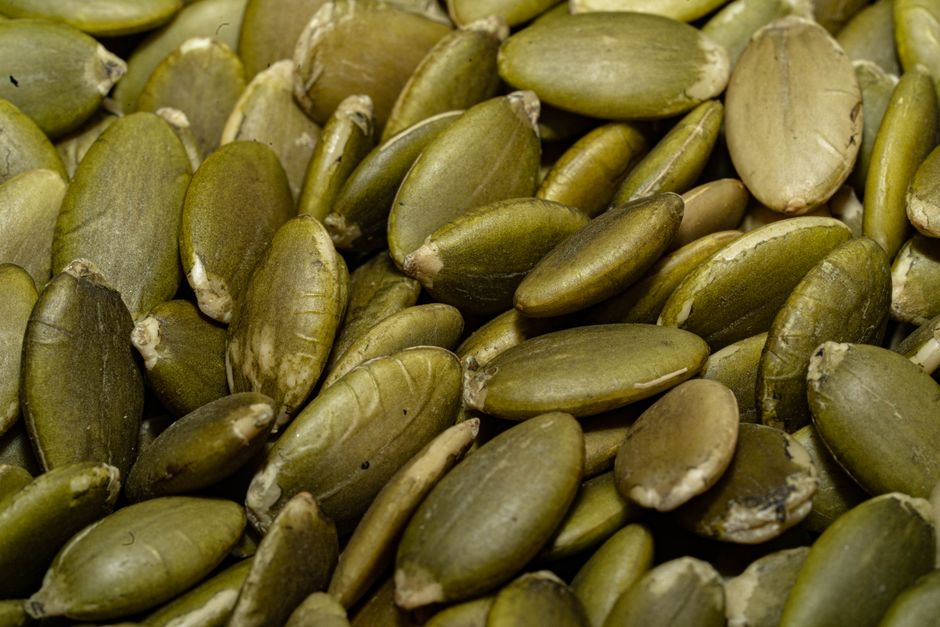
Yes, you can eat pumpkin seeds in the shell. The entire seed, shell and all, is safe to eat and provides extra fiber compared to the shelled kernel alone. Many people enjoy them roasted as a crunchy snack, though the texture is tough and chewy, which not everyone likes.
What Is the Difference Between White and Green Pumpkin Seeds?
Pumpkin seeds come in two main forms at the store. The white ones are the whole seed with the outer husk still attached. The green ones, often called pepitas, are the inner kernel with the shell removed.
Both come from the same type of pumpkin or squash. Pepitas are common in Mexican cuisine and baking. Whole seeds with the shell are the classic Halloween carving pumpkin seeds that people roast at home.
Nutritionally, the difference is mostly fiber. The shell adds a significant amount of insoluble fiber, which helps with digestion. The kernel contains most of the fat, protein, and minerals.
Can You Eat Pumpkin Seeds In The Shell?
Yes, the shells are completely edible and safe for most people. The shell is tough and fibrous, but your digestive system can handle it without issue. Chewing thoroughly is important because large pieces of shell can be hard to break down.
People who have difficulty swallowing, have digestive disorders like diverticulitis, or have had gastrointestinal surgery may want to avoid the shells. For those individuals, shelled pepitas are a better choice.
Children under four years old should not eat whole pumpkin seeds in the shell. The shells are a choking hazard for young children. Shelled seeds are safer for this age group.
What Are the Health Benefits of Eating the Shell?
The shell is where most of the fiber lives. A one-ounce serving of whole pumpkin seeds contains about 5 grams of fiber. The same amount of shelled kernels contains about 2 grams.
Fiber supports regular bowel movements and feeds the beneficial bacteria in your gut. Most Americans do not get enough fiber, so choosing whole seeds over shelled ones is an easy way to increase your intake.
The shell also contains more magnesium and zinc than the kernel alone, though the kernel still provides these minerals in good amounts. Magnesium supports muscle and nerve function. Zinc is important for immune health and wound healing.
Both forms of pumpkin seeds are rich in healthy unsaturated fats and plant-based protein. A one-ounce serving provides roughly 7 grams of protein, making them a solid snack for vegetarians and anyone looking for a filling option.


How Should You Eat Pumpkin Seeds in the Shell?
Roasting is the most common way to eat whole pumpkin seeds. Rinse the seeds to remove pulp, toss them with a small amount of oil and salt, and spread them on a baking sheet. Roast at 300°F for 30 to 40 minutes, stirring occasionally, until they are dry and lightly browned.
You eat the whole seed, shell and all. Some people crack the shell with their teeth, eat the kernel, and spit out the shell. That is fine too, but you miss the fiber benefit.
Roasted seeds keep well in an airtight container at room temperature for up to two weeks. Refrigerating them extends their shelf life to several months because the fats in the seeds can go rancid over time.
You can also buy pre-roasted whole pumpkin seeds at most grocery stores. Check the ingredient list for added salt or sugar if you are watching your sodium intake. Some commercial brands are heavily salted.
Are There Any Risks to Eating the Shells?
For healthy adults, the risks are minimal. The main concern is if you do not chew well. Large, sharp pieces of shell could irritate your throat or digestive tract, though this is uncommon.
People with diverticulitis have historically been told to avoid seeds and nuts because of a theory that small particles could get trapped in the intestinal pouches and cause inflammation. Current evidence does not support this warning for most people with diverticulitis, but some clinicians still recommend caution. If you have this condition, talk to your doctor about what is right for you.
Pumpkin seeds are high in calories because of their fat content. A one-ounce serving is about 160 calories. Eating them in moderation is fine, but mindless snacking on a large bowl can add up quickly.
Some people experience bloating or gas after eating pumpkin seeds with the shell. The extra fiber is the cause. If you are not used to high-fiber foods, start with a small handful and increase gradually.
How Many Pumpkin Seeds Should You Eat Per Day?
A reasonable serving size is about one ounce, which is roughly a small handful or about 140 whole seeds. This provides a good balance of nutrients without excessive calories.
There is no official daily recommendation for pumpkin seeds specifically. The general dietary guidance for nuts and seeds is about 1.5 ounces per day as part of a balanced diet. One ounce of pumpkin seeds fits comfortably within that range.
If you are eating them for the fiber, remember that increasing fiber too quickly can cause digestive discomfort. Pair them with plenty of water throughout the day.
Do Pumpkin Seeds Interfere With Medications?
Pumpkin seeds are a food, not a medication, but they do contain compounds that can interact with certain drugs. They are naturally rich in vitamin K, which plays a role in blood clotting. People taking blood thinners like warfarin should keep their vitamin K intake consistent so their medication dose remains effective.
Pumpkin seeds also contain phytates, which can reduce the absorption of minerals like iron and zinc from the same meal. This is generally not a problem for people eating a varied diet, but it is worth knowing if you rely on seeds as a major mineral source.
If you take medication for high blood pressure or diabetes, monitor your levels when adding pumpkin seeds to your diet regularly. The seeds can have a mild effect on blood pressure and blood sugar, though this is not a reason to avoid them.
Are Roasted Pumpkin Seeds Better Than Raw?
Both raw and roasted seeds are nutritious. Roasting changes the flavor and texture, making the seeds crunchier and more palatable for many people. It does not significantly reduce the nutrient content.
Roasting at very high temperatures for a long time can damage some of the delicate fats and reduce antioxidant content. The typical home roasting method at 300°F is gentle enough to preserve most nutrients.
Raw seeds are fine to eat, but they have a softer texture and a milder flavor. Some people find them harder to digest raw. If you prefer raw, soak them in salted water overnight and then dehydrate them for a better texture.
Frequently Asked Questions
Can you swallow pumpkin seed shells whole?
You should chew pumpkin seed shells before swallowing. Swallowing large pieces whole could irritate your throat or be difficult to digest.
Are pumpkin seed shells hard to digest?
The shells are fibrous and tough, but most people digest them without problems if they chew thoroughly. People with digestive disorders may prefer shelled seeds.
Do pumpkin seeds in the shell have more fiber than shelled ones?
Yes, whole pumpkin seeds contain roughly double the fiber of shelled kernels. The shell is almost entirely insoluble fiber.
Can dogs eat pumpkin seeds in the shell?
Plain, unsalted pumpkin seeds are safe for dogs in small amounts. The shells are fine for most dogs, but grind them or offer shelled seeds to smaller dogs to reduce choking risk.
