
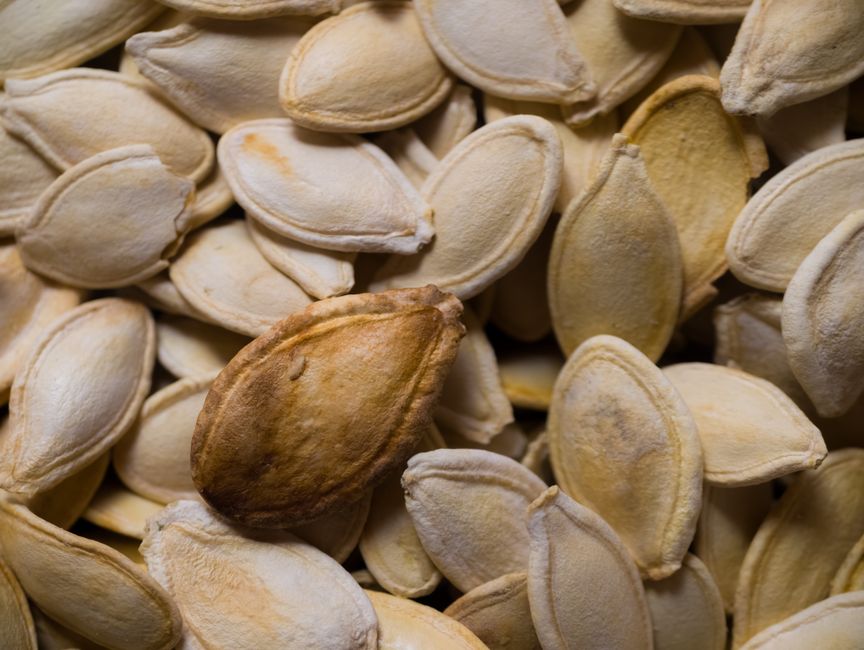
Yes, you can eat pumpkin seed shells. They are completely safe to eat and are a good source of fiber. Many people eat the whole seed, shell and all, because it is easier than peeling them. The shell has a chewy, slightly tough texture that some people enjoy and others find unappealing.
What Are Pumpkin Seed Shells Made Of?
Pumpkin seeds grow inside the pumpkin fruit. Each seed has two parts: the outer shell and the inner kernel. The shell is also called the hull or the seed coat.
The shell is mostly fiber and cellulose. It is tough and fibrous by design. It protects the kernel, which is the softer part of the seed that contains most of the fat and protein. When you eat the whole seed, you get both the shell and the kernel.
Some pumpkin varieties are bred to produce seeds without shells. These are called hull-less or naked seeds. They are sold as pepitas. If you want to avoid the shell entirely, pepitas are the option to choose.
Nutritional Value of Whole Pumpkin Seeds
Eating the shell adds fiber to your diet. The shell also contains minerals like zinc and magnesium, though the kernel holds the majority of the seed’s nutrients.
A one-ounce serving of whole roasted pumpkin seeds provides roughly 150 calories. That serving size is about a small handful. The same serving contains about 5 grams of protein and 13 grams of fat. The fat is mostly unsaturated, which is the heart-healthy type.
Fiber content is where the shell makes a real difference. Whole seeds with shells contain about 5 grams of fiber per ounce. Shelled kernels contain about 2 grams. If you need more fiber in your diet, eating the shell is a simple way to get it.
Health Benefits of Eating the Shell
Fiber is the main benefit of eating pumpkin seed shells. Fiber helps keep your digestive system regular. It also helps you feel full after eating, which can support weight management when used as part of a balanced diet.
The shells also contain antioxidants. These are compounds that help protect your cells from damage. The exact antioxidant content varies by seed variety and how the seeds are prepared.
Some research suggests pumpkin seeds may support heart health. The magnesium in seeds helps regulate blood pressure. The plant compounds called phytosterols may help lower cholesterol. These benefits come from the seed as a whole, not just the shell.
No study has confirmed that the shell alone provides unique health benefits beyond its fiber content. The shell is nutritious, but the kernel is where most of the vitamins and minerals are concentrated.



Do You Eat Pumpkin Seed Shell: Texture and Taste
The shell has a distinct texture. It is chewy and slightly tough. Some people compare it to eating popcorn kernels that did not pop. Others find it similar to eating sunflower seeds with the hulls on.
The taste is mild and nutty. The shell itself does not have a strong flavor. Most of the taste comes from the kernel inside. Roasting seeds with salt or spices adds flavor to the shell, which makes the whole seed more enjoyable.
If you eat the shell, chew thoroughly. Whole shells that are swallowed without chewing can be hard to digest. Chewing breaks down the fiber so your digestive system can process it more easily.
How to Prepare Pumpkin Seeds With Shells
Raw pumpkin seeds can be eaten straight from the pumpkin. Rinse them first to remove the pulp and strings. Then pat them dry.
Roasting is the most common way to prepare whole seeds. Spread them on a baking sheet. Toss with a small amount of oil and salt. Roast at 300°F for about 30 to 40 minutes. Stir them halfway through so they cook evenly.
Roasting changes the texture. It makes the shell crunchier and easier to chew. It also brings out the nutty flavor. Store roasted seeds in an airtight container at room temperature for up to a week.
Boiling seeds before roasting is another method. Boil them in salted water for 10 minutes, drain, then roast. This helps the salt penetrate the shell and gives the seeds a more even crunch.
Who Should Be Careful About Eating Shells
Most people can eat pumpkin seed shells without any problem. But some people should be cautious.
People with digestive conditions like diverticulitis should talk to their doctor first. In the past, doctors advised avoiding seeds and nuts for people with diverticulitis. Current guidance is less strict, but individual cases vary. Your doctor can give you personal advice based on your health history.
Young children may struggle to chew the shells properly. Whole seeds can be a choking hazard for children under four years old. If you give pumpkin seeds to young children, choose shelled kernels or grind the seeds into a powder.
People who have had abdominal surgery may also want to be cautious. Tough fibrous foods can be harder to digest during recovery. Start with a small amount and see how your body responds.
Common Myths About Pumpkin Seed Shells
One common myth is that eating the shells causes appendicitis. This is not supported by medical evidence. The appendix can become inflamed for many reasons, but pumpkin seed shells are not a known cause.
Another myth is that the shells have no nutritional value. This is false. The shell is a source of fiber and contains trace minerals. It is less nutrient-dense than the kernel, but it is not empty calories.
Some people believe you must remove the shell to get any benefit from pumpkin seeds. This is also false. Eating the whole seed is a normal and healthy way to consume them. Many cultures eat whole pumpkin seeds regularly.
Pumpkin Seed Oil vs. Whole Seeds
Pumpkin seed oil is made by pressing the kernels. The oil contains concentrated fats and some fat-soluble vitamins. It does not contain fiber because fiber is removed during pressing.
Whole seeds with shells contain fiber, protein, and fat together. This combination is more filling than oil alone. The oil is useful for cooking or dressing salads, but it lacks the fiber benefit of whole seeds.
If your goal is fiber, choose whole seeds. If your goal is a concentrated source of plant fats, oil is an option. Most people benefit from whole seeds because they provide a broader range of nutrients.
How Many Pumpkin Seeds Should You Eat?
There is no official guideline for pumpkin seed intake. A reasonable serving is about one ounce, or a small handful. That is roughly 85 to 140 seeds depending on the size.
Eating more than a handful is not harmful for most people. But remember that seeds are calorie-dense. A few extra handfuls add up quickly in calories. If you are watching your weight, measure your portion rather than eating directly from the bag.
The fiber in the shells can cause gas or bloating if you are not used to it. Start with a smaller portion and increase gradually. Drink plenty of water to help your digestive system process the extra fiber.
Bottom Line on Eating Pumpkin Seed Shells
Pumpkin seed shells are safe to eat and provide fiber. They have a chewy texture that some people enjoy and others do not. Roasting improves the texture and flavor.
No clinical evidence suggests that eating the shells is harmful for healthy adults. The main considerations are personal preference, digestive comfort, and chewing ability.
If you like the texture, eat the whole seed. If you do not, buy shelled pepitas instead. Both options are healthy. The choice comes down to what you enjoy and what your digestive system tolerates.
Frequently Asked Questions
Can you eat pumpkin seed shells raw?
Yes, raw pumpkin seed shells are safe to eat. Rinse them well first to remove pumpkin pulp, then chew thoroughly before swallowing.
Are pumpkin seed shells hard to digest?
The shells are fibrous and can be harder to digest than the kernels, especially if not chewed well. Chewing thoroughly helps your digestive system process them more easily.
Do pumpkin seed shells have any nutritional value?
Yes, the shells are a good source of fiber and contain trace minerals. The kernel contains most of the seed’s protein, fat, and overall nutrients.
Can pumpkin seed shells cause appendicitis?
No medical evidence supports the claim that pumpkin seed shells cause appendicitis. This is a myth without scientific backing.
