
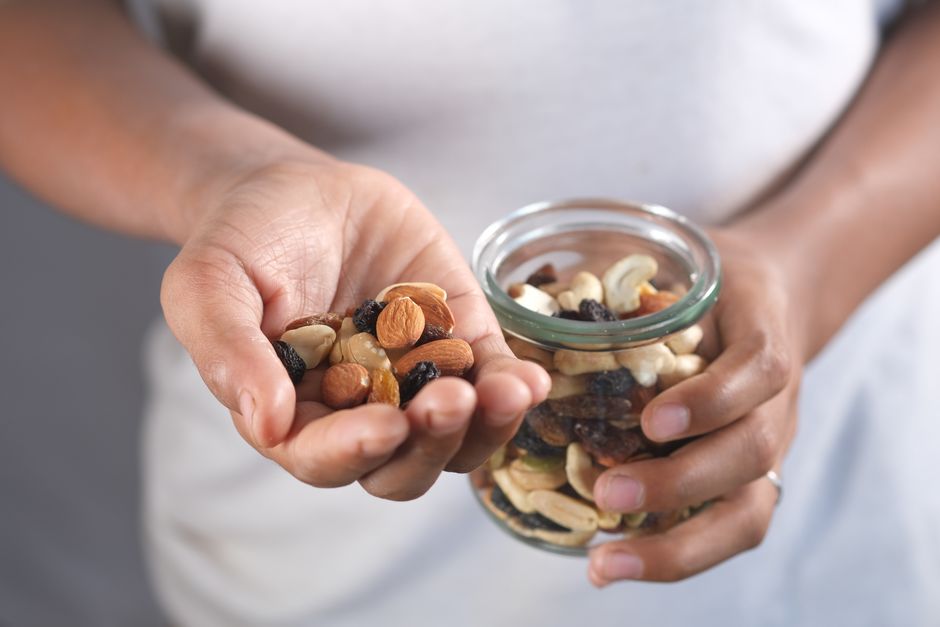
Nuts are one of the most calorie-dense foods in the grocery store. A single handful of almonds can carry more calories than a slice of bread. So it seems logical that eating them regularly would lead to weight gain. But the research tells a different story. Studies that track people over years consistently find that higher nut consumption is linked to less weight gain and lower risk of obesity, not more. The calories on the label are real. Your body just doesn’t seem to absorb or use all of them the way the number suggests.
Why Nuts Have So Many Calories
Nuts are built to store energy for a seed that needs to survive until it can grow. That energy comes mostly from fat, which packs 9 calories per gram compared to 4 calories per gram for carbohydrate or protein. This is why a small serving carries a big number.
One ounce of almonds — about 23 nuts — contains roughly 160 to 170 calories. The same amount of walnuts or pecans lands in a similar range. It doesn’t take much for a casual snack to add up quickly if you’re not paying attention.
But the calorie count on a nutrition label is calculated using general food energy values, not by measuring what a specific person actually absorbs. For nuts, that gap matters more than it does for most foods.
Do You Absorb All the Calories in Nuts?
No. This is one of the more interesting findings in nutrition science, and it’s well supported. The structure of a nut works against full calorie absorption.
Nut cells store fat inside rigid walls made of fiber. Chewing breaks some of those walls, but many survive intact and pass through the digestive tract without releasing their contents. The fat trapped inside never gets absorbed.
Research has measured this directly. Studies where participants ate almonds and researchers analyzed their stool found that a meaningful portion of the fat was never digested. The exact amount varies by nut type, how thoroughly it’s chewed, and the individual. But the effect is real and repeatable across multiple studies.
This means the usable calories from a serving of nuts are lower than the label states. How much lower depends on the person and the nut. It’s not a fixed discount you can apply universally.
What Does the Research Actually Show About Nuts and Weight?
Large observational studies have followed tens of thousands of people for years and tracked their weight over time. The pattern is consistent: people who eat nuts more often tend to gain less weight and have lower rates of obesity than those who rarely eat them.
This kind of study can’t prove cause and effect. People who eat nuts may differ from those who don’t in other ways that affect weight. But the finding holds up across different populations and different countries, which makes it harder to dismiss as a coincidence.
Clinical trials — where researchers assign people to eat nuts or not — generally show that adding nuts to the diet doesn’t cause weight gain, at least in the short to medium term. Some trials show no change in weight. A few show slightly less weight gain than expected. None show the large gain you’d predict from the added calories alone.
The evidence is not perfectly uniform. Some trials in people actively trying to lose weight show mixed results. But the overall picture from both types of research points in the same direction.





Why Nuts Don’t Cause Weight Gain the Way You’d Expect
Several mechanisms work together, and each one chips away at the “calories in, calories out” math.
- Incomplete absorption. As described above, some fat stays locked in fiber and exits the body undigested.
- Increased metabolism. Some studies suggest the body burns slightly more energy after eating nuts, possibly because digesting them takes more work.
- Appetite control. Nuts contain protein, fiber, and fat — a combination that tends to keep people full. When people eat nuts as a snack, they often eat less at their next meal.
- Calorie displacement. In real life, people who add nuts to their diet often replace something else. They don’t just stack nuts on top of everything they were already eating.
The appetite effect is probably the biggest one. Fat and fiber slow digestion and trigger satiety signals. That fullness carries into the next meal and reduces how much you eat overall.
Does the Type of Nut Matter?
Not much, based on current evidence. Almonds, walnuts, pistachios, pecans, cashews, and peanuts (which are technically legumes) have all been studied, and the general pattern holds across them.
What differs is the nutrient profile. Walnuts are notably high in omega-3 fatty acids. Almonds are high in vitamin E. Pistachios have more protein per serving than most others. These differences matter for overall nutrition but don’t seem to change the weight story much.
One practical difference: nuts sold with added oil, sugar, or salt carry extra calories and sodium that plain nuts don’t. Honey-roasted or candy-coated varieties are a different food category entirely. The research on weight and nuts is based on plain or dry-roasted nuts, not snack mixes with added ingredients.
How Many Nuts Should You Eat?
There is no single official recommendation for nut intake in the US. Dietary guidelines include nuts as part of a healthy eating pattern but don’t specify an exact daily amount.
Observational research often groups people by how often they eat nuts — such as never, a few times a week, or daily — rather than by exact gram amounts. The benefits tend to show up in people eating them regularly, not in people eating large quantities at once.
A common approach in nutrition research is one ounce per day, roughly a small handful. That’s about 160 to 200 calories depending on the nut. For most adults, that fits comfortably into a balanced diet.
For people with specific medical conditions, nut allergies, or those following medically supervised diets, individual guidance from a clinician matters more than general recommendations. No universal dose applies to everyone.
When Nuts Can Contribute to Weight Gain
Nuts are not magic. They can contribute to weight gain if eaten in large amounts on top of everything else you’re already eating.
The calorie discount from incomplete absorption is real but partial. It doesn’t cancel out the calories entirely. If you eat three or four handfuls a day without adjusting anything else, the math can catch up with you.
Mindless eating is the bigger risk. Nuts are easy to eat by the handful while watching TV or working, and it’s hard to notice how much you’ve had. A small bowl can turn into half a bag without any conscious decision.
Nut butters are a separate consideration. They’re nutritious, but the grinding process breaks down cell walls, which likely reduces the incomplete-absorption effect. Nut butter calories are probably closer to what the label says than whole nuts are. That said, no large trials have directly compared whole nuts and nut butter on weight outcomes, so the size of this difference is not well established.
What This Means in Practice
If you enjoy nuts and you’re watching your weight, the evidence doesn’t support cutting them out. It supports eating them in reasonable amounts as part of a varied diet.
A small handful as a snack, a sprinkle on oatmeal or salad, or a spoonful of nut butter in a smoothie are all reasonable ways to include them. The protein, fiber, healthy fats, vitamins, and minerals they provide are well documented.
The bigger picture from the research is that nuts are not the weight-gain villain they’re sometimes made out to be. The calorie math on the label overstates what your body actually gets. And the appetite control they provide often works in your favor.
Frequently Asked Questions
Can eating nuts every day make you gain weight?
Research generally does not support this. Large observational studies link regular nut consumption to less weight gain over time, not more.
How many calories do you actually absorb from nuts?
It varies by person and nut type, but studies show some fat passes through undigested, so usable calories are lower than the label states.
Are nut butters as good for weight control as whole nuts?
The evidence is not clear on this. Grinding likely reduces the incomplete-absorption effect, but no large trials have directly compared the two for weight outcomes.
What is a reasonable daily amount of nuts?
There is no official US recommendation for nut intake. Many studies use about one ounce per day, which is roughly a small handful.
