
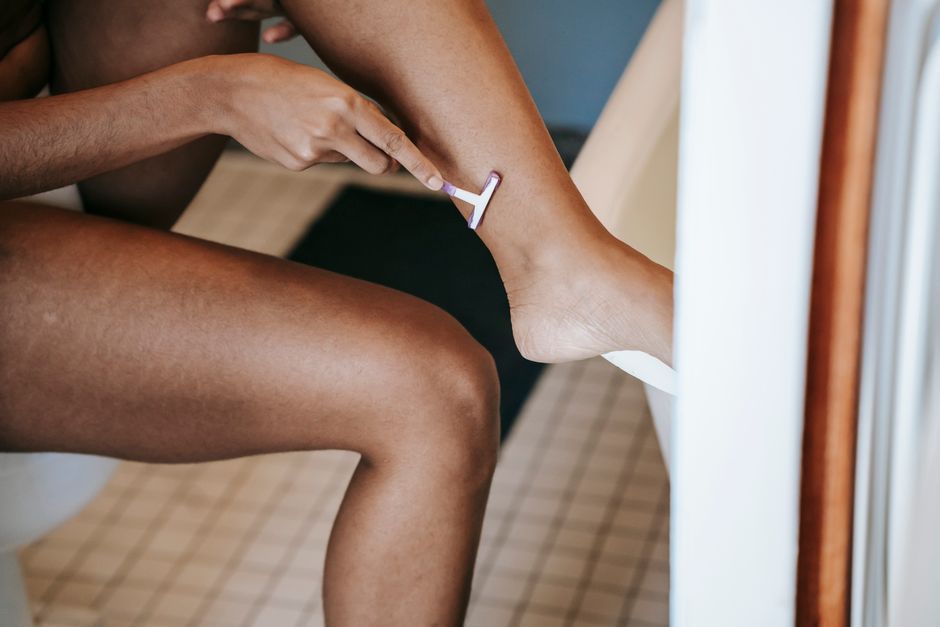
Yes, ingrown hairs go away on their own in most cases. A single ingrown hair usually clears within days to a few weeks as the trapped hair works its way out or the skin sheds it. The bigger issue is recurrence: if the hair type, shaving method, or skin condition that caused it does not change, new ingrown hairs tend to keep forming in the same spots.
An ingrown hair happens when a hair curls back and grows into the skin, or when dead skin blocks the follicle opening and forces the growing hair sideways. The result is a small, sometimes itchy or tender bump that can look like a pimple. Most are harmless. Some become infected or leave dark marks that outlast the bump itself.
What Exactly Is an Ingrown Hair?
A hair grows from a follicle, a tiny pocket under the skin. Normally the hair exits through the follicle opening and grows outward. An ingrown hair happens when that exit path is blocked or the hair tip turns back.
There are two main patterns. In one, the hair curls around and re-enters the skin nearby, creating inflammation right at the surface. In the other, dead skin cells plug the follicle opening, and the hair grows sideways under the skin. Both produce the same visible result: a raised bump, often with a dark dot or a thin line of hair visible under the surface.
Ingrown hairs are most common in areas where hair is shaved, waxed, or plucked. That includes the face, neck, armpits, legs, and pubic area. People with tightly curled or coarse hair are more prone to them, especially after close shaving. This is why ingrown hairs are a frequent problem in the beard area for men and the bikini area for women.
Can Ingrown Hairs Go Away Without Treatment?
Most ingrown hairs resolve on their own. The body either pushes the hair out or breaks it down, and the bump flattens over time. For a simple, uninfected ingrown hair, this typically takes several days to a couple of weeks.
You can support the process without doing anything aggressive. Warm compresses a few times a day can soften the skin and ease inflammation. Gentle exfoliation with a soft washcloth may help remove the dead skin trapping the hair. What you should not do is dig at it.
Picking, squeezing, or using a needle to pry out the hair raises the risk of infection and scarring. It can also push the hair deeper or break it off, which makes the problem last longer. If a hair is clearly visible at the surface and easy to lift, a clean tweezers can remove it. If it is not visible, leave it alone.
When Does an Ingrown Hair Need Medical Attention?
Some ingrown hairs become infected, and that changes the picture. Signs of infection include spreading redness, increasing pain, warmth, swelling, or pus. A boil or a cluster of boils may form. In these cases, the problem is unlikely to clear on its own and may need a doctor.
See a healthcare provider if:
- The bump gets larger, more painful, or more red over a few days
- Pus or drainage appears
- You develop a fever
- The area spreads or you get many bumps at once
- The problem keeps returning despite changes to your hair removal routine
There is a skin condition called pseudofolliculitis barbae, common in people with curly hair who shave. It causes ongoing inflamed bumps, mostly in the beard area. It is not just a cosmetic issue for some people, and a doctor can recommend treatments. A related condition, folliculitis, is inflammation or infection of the follicles themselves and can look similar. Because several conditions produce similar bumps, a diagnosis from a clinician matters when the problem is persistent or severe.
Do not try to drain a boil at home. That can spread infection.





What Causes Ingrown Hairs in the First Place?
The cause comes down to how hair is removed and how the skin behaves. Close shaving cuts hair at an angle, leaving a sharp tip that can re-enter the skin as it grows. Waxing and plucking pull hair out by the root, and when it regrows it may not find a clear path out. Tight clothing can press hair back into the skin, and friction from clothing adds to the irritation.
Some people are simply more prone to ingrown hairs. Curly or coarse hair is a major factor. So is having a lot of dead skin buildup on the surface. Hormonal changes can thicken hair in some areas, which is why ingrown hairs sometimes increase during puberty or with certain hormonal conditions.
Understanding the cause matters because it points to prevention. If shaving is the trigger, changing how you shave helps more than treating each bump after it forms.
How Can You Prevent Ingrown Hairs?
Prevention focuses on removing hair in a way that lets it grow back cleanly, and on keeping the skin surface clear. These steps are widely recommended and based on how ingrown hairs form.
- Shave in the direction of hair growth, not against it
- Use a sharp blade and replace it regularly; dull blades tug and cut unevenly
- Wet the skin and use shaving cream or gel to reduce friction
- Exfoliate gently a few times a week to remove dead skin
- Moisturize to keep skin soft and reduce friction
- Consider not shaving as close, or switching to trimming or an electric razor
For people who get ingrown hairs often, stopping close shaving for a period can break the cycle. Some choose laser hair removal, which reduces hair growth over time. It is not a guaranteed fix, and results vary by hair color, skin tone, and the device used. It also requires multiple sessions and is typically done by a trained professional.
Waxing and plucking are not automatically better. They can cause ingrown hairs too, because regrowth is the vulnerable phase. There is no single method that eliminates the problem for everyone.
Do Home Remedies and Products Actually Work?
Some over-the-counter products can help, and some popular remedies are not supported by strong evidence. It helps to know the difference.
Products containing salicylic acid or glycolic acid are commonly used to exfoliate the skin and may help clear the dead skin trapping hairs. Some clinicians recommend them for mild cases. Their effectiveness for ingrown hairs specifically is based more on how they work on skin than on large dedicated trials, so treat them as reasonable options rather than proven cures.
Warm compresses are a low-risk way to ease discomfort and encourage a trapped hair to surface. This is standard self-care, not a treatment with strong trial backing.
Be cautious with aggressive scrubs, harsh acids, and any product that promises to “dissolve” ingrown hairs. No product does that. There is no cream or serum that reliably removes an ingrown hair from under the skin. Claims like these are marketing, not medicine.
Prescription treatments exist for stubborn cases, including topical retinoids and, for infected follicles, antibiotics. These require a clinician’s evaluation. No clinical guidelines support self-treating infected or recurring ingrown hairs with drugstore products alone.
Why Do Ingrown Hairs Sometimes Leave Dark Marks?
After the bump fades, a dark spot may remain. This is called post-inflammatory hyperpigmentation, and it happens when inflammation triggers extra pigment production in the skin. It is more common and more noticeable in people with darker skin tones.
These marks are not scars in the usual sense. They tend to fade over months, though the timeline varies a lot from person to person. Sun exposure can make them darker and slow the fading, so protecting the area from sun helps. Avoiding picking and squeezing also lowers the chance of lasting marks, since more inflammation means more pigment.
True scarring is possible if an ingrown hair becomes badly infected or is repeatedly irritated. This is another reason not to dig at the bumps.
The Bottom Line
Ingrown hairs usually go away on their own within days to a few weeks. The main risks come from what people do to them: picking, squeezing, and digging can turn a minor bump into an infection or a lasting mark. If a bump is getting worse, painful, or draining pus, that is a signal to see a doctor rather than wait it out.
For most people, the real solution is prevention. Changing how hair is removed and keeping the skin clear does more than any single treatment. When ingrown hairs keep coming back despite those changes, a clinician can help sort out whether it is a simple ingrown hair or a condition like pseudofolliculitis barbae that needs a different approach.
Frequently Asked Questions
Can ingrown hairs go away on their own?
Yes, most ingrown hairs clear on their own within days to a few weeks as the hair surfaces or the skin sheds it. They tend to keep returning if the shaving method or hair type causing them does not change.
How long does an ingrown hair last?
A simple, uninfected ingrown hair usually resolves within several days to a couple of weeks. If it becomes infected or keeps returning, it can last longer and may need medical care.
Should I pop an ingrown hair?
No, you should not pop or squeeze an ingrown hair. Doing so raises the risk of infection and scarring and can push the hair deeper, making it last longer.
When should I see a doctor for an ingrown hair?
See a doctor if the bump gets larger, more painful, or more red, or if pus, drainage, or fever appears. Persistent or recurring bumps also warrant an evaluation, since other skin conditions can look similar.
