
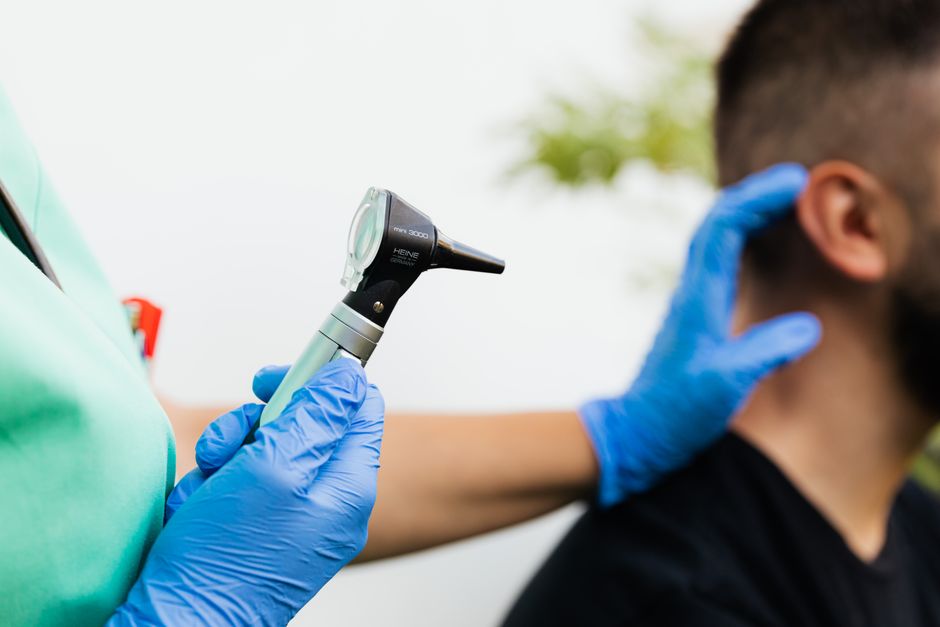
Yes, you can buy a hearing aid without seeing an audiologist. Over-the-counter hearing aids have been legally sold in the US since 2022 for adults with mild to moderate hearing loss. But buying one without a professional evaluation comes with real trade-offs. You save money and time, but you take on the responsibility of fitting the device yourself. For some people this works well. For others, it leads to frustration and a device left in a drawer.
What Is the Difference Between Over-the-Counter and Prescription Hearing Aids?
Over-the-counter (OTC) hearing aids are designed for adults 18 and older who have perceived mild to moderate hearing loss. You can buy them in stores or online without a medical exam or a prescription. They are self-fitting, meaning you adjust them yourself using a smartphone app or controls on the device.
Prescription hearing aids require a licensed hearing care professional. This is usually an audiologist or a hearing aid specialist. They test your hearing, program the device to match your specific loss, and provide follow-up care. Prescription aids are the only option for severe hearing loss.
The FDA created the OTC category to lower cost and improve access. Before 2022, all hearing aids required a professional visit. That changed the market significantly. Prices for OTC devices typically range from a few hundred to about a thousand dollars per pair. Prescription devices often cost two to four times more.
How Do I Know If I Qualify for an Over-the-Counter Hearing Aid?
The FDA defines mild to moderate hearing loss in practical terms. You struggle to hear soft speech. You have trouble following conversations in noisy places. You find yourself asking people to repeat themselves often. But you can still hear loud sounds and some speech without amplification.
If you have severe hearing loss, OTC devices are not appropriate. Signs of severe loss include being unable to hear speech at normal volume, needing the TV at maximum volume, or having difficulty understanding someone even in a quiet room. You also should not use OTC aids if you have pain, drainage, sudden hearing loss, or ringing in only one ear.
These symptoms can signal a medical problem that needs evaluation. The FDA requires OTC packaging to warn against use when these red flags are present.
No hearing test is legally required before buying OTC aids. But the FDA recommends that adults with hearing concerns get a professional evaluation first. Many audiologists offer free or low-cost hearing screenings. Some online hearing aid companies provide a remote hearing test before shipping a device.
What Happens When You Skip the Audiologist?
An audiologist does more than sell you a device. They measure your hearing across different frequencies. They determine the quietest sounds you can hear at each pitch. This information tells them exactly how to program the device.
Hearing loss is rarely uniform. You might hear low pitches well but struggle with high frequencies like consonants. A professional program boosts only the frequencies you need. OTC devices use a self-test or a questionnaire to set amplification. This is less precise.
Self-fitting also means you troubleshoot alone. If the device whistles, feels uncomfortable, or sounds distorted, you have to solve it yourself. Some OTC brands offer phone support or online chat. But no one is physically adjusting the fit or checking your ear canal.
Research suggests many people who buy OTC hearing aids are satisfied. But studies also show that some users abandon them because they cannot get a good fit or sound quality. The evidence on long-term outcomes is still developing since the category is new.



How Much Money Are You Really Saving?
Price is the main reason people consider OTC hearing aids. A pair of prescription hearing aids often costs between $2,000 and $6,000. This price usually includes the devices, fitting sessions, and follow-up adjustments for a year or two. OTC pairs typically cost between $200 and $1,000.
But the comparison is not always apples to apples. Prescription prices often bundle professional services. If you need adjustments, reprogramming, or cleaning, those visits are covered. With OTC, you pay for the device and nothing else. If you cannot make them work, you cannot return them in many cases. Check the return policy before buying.
Some insurance plans cover hearing aids for adults, but coverage varies widely. Medicare does not cover hearing aids or hearing exams for routine purposes. Medicaid coverage depends on your state. If you have insurance, it may only cover devices purchased through a licensed provider. That could eliminate the savings from OTC.
Can a Hearing Test Be Done Online?
Some companies offer online hearing tests that take a few minutes. You use headphones and respond to tones or speech in noise. These tests can give you a rough idea of your hearing ability. They can help you decide if an OTC device is worth trying.
These tests are not the same as a clinical audiogram. They do not measure bone conduction, speech discrimination, or middle ear function. They cannot detect conditions like earwax blockage, eardrum perforation, or acoustic neuroma. A clinical test performed by an audiologist in a sound-treated booth is the gold standard.
If you have no red flags and just want a basic sense of your hearing, an online test is a reasonable starting point. If it suggests significant loss, a professional evaluation is the right next step.
When Should You See an Audiologist Instead?
See a professional if you have sudden hearing loss, hearing loss in only one ear, pain, drainage, dizziness, or a feeling of fullness in the ear. These require medical evaluation, not a hearing aid purchase.
You should also see an audiologist if your hearing loss makes daily life genuinely difficult. If you avoid social situations because you cannot hear, or if family members say you are not hearing them, a professional evaluation is worth the cost.
Many people with mild to moderate loss do well with OTC devices. But a professional fitting is still the more reliable path for most. The audiologist can rule out medical causes, program the device precisely, and provide ongoing support. That service is valuable, especially in the first few weeks of adjustment.
What About Hearing Aids Sold Online Without Any Test at All?
Some online retailers sell hearing amplifiers that are not FDA-regulated as hearing aids. These are personal sound amplification products, or PSAPs. They are not intended for hearing loss. They simply make all sounds louder, including background noise.
PSAPs are marketed for recreational use, like birdwatching or lectures. They are not a substitute for a hearing aid. Using a PSAP for actual hearing loss can be uncomfortable and ineffective. Some sellers blur the line between PSAPs and OTC hearing aids. Read the labeling carefully. A true OTC hearing aid is FDA-cleared and labeled as such.
If a deal seems too good to be true, it likely is. Extremely cheap devices often have poor sound quality, short battery life, and no support. A hearing aid that amplifies everything equally is not helping you hear speech better in a noisy room.
Frequently Asked Questions
Do I need a prescription to buy a hearing aid?
No. Over-the-counter hearing aids for mild to moderate hearing loss do not require a prescription. Prescription hearing aids for severe loss still require a professional evaluation.
Can I test my hearing at home instead of seeing an audiologist?
Online hearing tests can give you a rough estimate of your hearing ability. They cannot replace a clinical audiogram performed by a professional.
Are over-the-counter hearing aids as good as prescription ones?
For mild to moderate loss, OTC devices can be effective and many users are satisfied. Prescription aids offer more precise programming and professional follow-up care.
What are the risks of buying a hearing aid without an audiologist?
The main risks are improper fit, poor sound quality, and missing an underlying medical condition. Sudden hearing loss, pain, or one-sided loss should always be evaluated by a doctor.
