
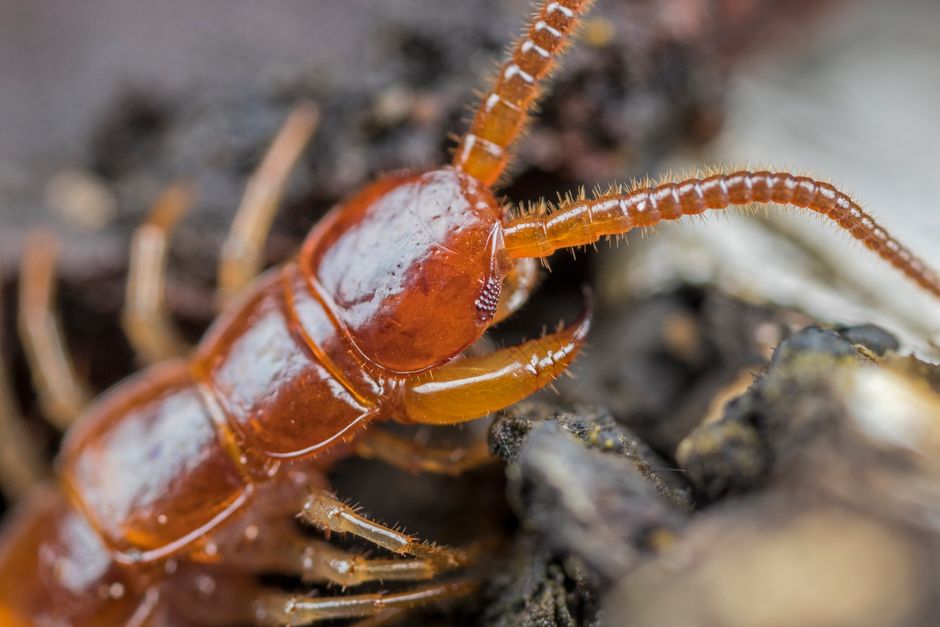
House centipedes are fast, many-legged insects that show up in bathrooms and basements. People often wonder if these creatures can bite. The short answer is yes, house centipedes can bite, but it is very rare and their jaws are too weak to break human skin in most cases. Even when a bite does happen, it is not considered dangerous to humans.
What Does a House Centipede Bite Look Like?
A house centipede bite is rare because these animals prefer to run away rather than fight. When they do bite, the result is usually mild. Most people describe it as similar to a bee sting or a mild mosquito bite.
The bite site may show some redness and swelling. You might feel a sharp, temporary pain at the moment of the bite. In most cases, the discomfort fades within a few hours. No serious medical complications have been reported from house centipede bites in healthy adults.
Some people may have an allergic reaction to the venom. This is uncommon, but it can cause more noticeable swelling or itching. If you experience difficulty breathing, swelling of the face or throat, or dizziness after a bite, seek medical care immediately. These symptoms would point to a serious allergic reaction rather than a typical response.
Why Do House Centipedes Bite?
House centipedes do not hunt humans. They bite for two reasons only: defense and feeding.
Their primary food source is other small pests. They eat cockroaches, termites, silverfish, spiders, and bed bugs. Their jaws, called forcipules, inject venom into prey to immobilize it. These same jaws are what they use defensively if they feel trapped or threatened.
When you see a house centipede, it is almost always trying to escape from you. They are extremely fast and avoid human contact. A bite typically happens only if you accidentally trap one against your skin, such as when putting on shoes or reaching into a dark corner.
House centipedes do not seek out humans as hosts. They do not feed on blood. They have no interest in biting you for nourishment.
How Strong Is a House Centipede Bite?
The house centipede’s jaws are small and not built for penetrating thick skin. Human skin on most parts of the body is too tough for them to break through easily. This is one reason bites are so uncommon.
Areas with thinner skin, such as the hands, feet, or between fingers, are more vulnerable. Even then, the bite is not powerful. The venom amount delivered is tiny and not considered medically significant for humans.
For comparison, a house centipede bite is much less concerning than a bee sting or a wasp sting. The venom is designed to disable small insects, not large mammals. Your immune system handles the small amount of venom without difficulty in nearly all cases.
No deaths have ever been documented from a house centipede bite. No cases of serious tissue damage or systemic illness have been reported in medical literature.



How to Treat a House Centipede Bite at Home
If you are bitten, the treatment is simple and straightforward. Clean the area with soap and warm water. This reduces the risk of infection from any bacteria on the skin or the centipede’s jaws.
Applying a cold compress can reduce pain and swelling. Wrap ice or a cold pack in a cloth and hold it against the bite for 10 to 15 minutes at a time.
Over-the-counter antihistamines can help with itching. A topical hydrocortisone cream may also reduce redness and irritation. Pain relievers like acetaminophen or ibuprofen can manage any discomfort you feel.
Watch the bite site over the next day or two. If you notice increasing redness, warmth, swelling, or pus, see a doctor. These signs could indicate an infection, though this is rare with house centipede bites.
How to Keep House Centipedes Out of Your Home
House centipedes enter homes looking for food and moisture. They thrive in damp environments like bathrooms, basements, crawl spaces, and laundry rooms.
To reduce their presence, focus on removing what attracts them. Fix leaky pipes and faucets. Use a dehumidifier in damp areas. Improve ventilation in bathrooms and basements.
Seal entry points around your home. Check for gaps under doors, cracks in foundations, and openings around pipes and wires. Caulk these gaps to keep centipedes and other pests from getting inside.
Remove clutter where they can hide. Cardboard boxes, piles of paper, and stored clothing give centipedes shelter. Keep storage areas organized and off the floor.
Control their food source. House centipedes stay where they can find prey. If you eliminate other insects in your home, the centipedes will leave or die off on their own. Addressing a cockroach or silverfish problem often solves the centipede problem too.
Sticky traps placed along baseboards and in corners can catch centipedes and help you measure how many are present. These traps are inexpensive and safe to use around children and pets when placed out of reach.
Are House Centipedes Dangerous to Children or Pets?
House centipedes pose very little risk to children or pets. Bites are rare, and the venom is not potent enough to cause serious harm to a healthy child or a cat or dog.
A young child might be more likely to experience a bite because they may pick up a centipede out of curiosity. Even in that scenario, the bite would likely be minor. The same home treatment applies: clean the area, apply cold, and monitor for any unusual reaction.
Pets occasionally eat house centipedes. This is generally not a concern. The venom is injected through the jaws, not stored in the body, so eating a centipede does not expose a pet to venom. If your pet eats a centipede and shows signs of distress like vomiting, drooling, or lethargy, contact your veterinarian as a precaution.
No evidence suggests house centipedes carry diseases that can spread to humans or pets. They are not known to transmit any pathogens.
Do House Centipedes Bite in Their Sleep or at Night?
House centipedes are nocturnal. They are most active at night, hunting for prey. This means you are more likely to encounter one in the dark than during the day.
Bites during sleep are extremely rare. A centipede has no reason to crawl onto a sleeping human. It would only happen if the centipede felt trapped against your skin, such as if you rolled onto it. Even then, the bite would be a defensive reaction, not an attack.
If you find a centipede in your bed, it is likely passing through on its way to hunt elsewhere. Removing it gently with a jar and a piece of paper is the safest way to relocate it without harm to you or the centipede.
What Attracts House Centipedes to Certain Rooms?
House centipedes prefer dark, damp, and cool environments. Bathrooms and basements are the most common places to find them because these rooms offer moisture and hiding spots.
Kitchens can attract them if there are other pest problems. A centipede follows its food source. If you see centipedes in the kitchen, there is likely a population of smaller insects nearby.
Closets and storage areas can also harbor them, especially if items are stored in cardboard boxes on the floor. The boxes provide shelter, and the dark conditions match their preferences.
Reducing humidity and eliminating other insects are the two most effective ways to make your home less attractive to house centipedes. They do not survive long in dry environments without a food source.
Should You Kill House Centipedes or Leave Them Alone?
House centipedes are beneficial predators. They eat pests that can damage your home and spread disease. Cockroaches, termites, and spiders are all on their menu.
Some pest control experts advise leaving house centipedes alone if you see only one or two. They are doing useful work by controlling other insect populations. Killing them may actually allow pest numbers to rise.
If you have a large infestation, that is a sign of a bigger problem. Many centipedes mean many prey insects are present. The solution is not to focus on the centipedes but to address the underlying pest issue.
If you prefer not to have them in your home, catch and release them outside rather than killing them. A jar and a thin piece of cardboard are all you need. Slide the cardboard under the jar, carry it outside, and let the centipede go near vegetation or under a rock.
Frequently Asked Questions
Can a house centipede bite through human skin?
Yes, but only rarely, and usually only on thin skin areas like the hands or feet. Their jaws are too weak to penetrate most skin on the body.
Is a house centipede bite poisonous?
House centipedes have venom, but it is not dangerous to humans. The venom is designed to disable small insects and causes only mild, temporary symptoms in people.
What should I do if my child gets bitten by a house centipede?
Clean the bite with soap and water and apply a cold compress. Monitor for signs of an allergic reaction and seek medical care if swelling spreads or breathing becomes difficult.
Do house centipedes bite dogs or cats?
Bites on pets are very rare and not considered dangerous. If your pet eats a centipede, it is generally harmless because the venom is only delivered through the jaws.
