
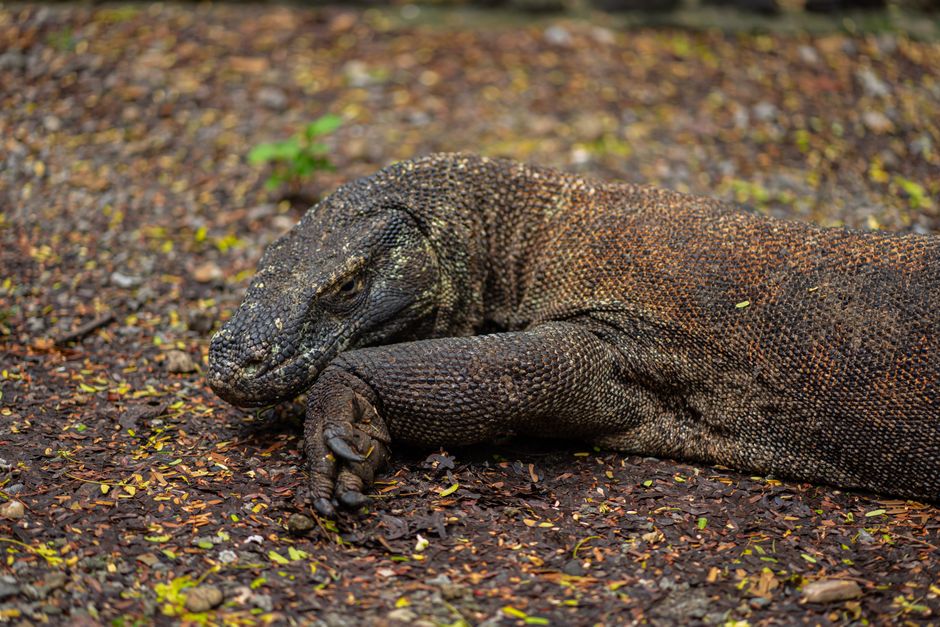
A Komodo dragon bite is often fatal without medical treatment. The venom causes rapid blood pressure drop, prevents clotting, and sends the victim into shock. Combine that with the bacteria in their mouths and the sheer physical damage from their serrated teeth, and you have one of the most dangerous bites in the animal kingdom. But the risk is not what most people think. The real danger is not the bacteria. It is the venom.
What Makes a Komodo Dragon Bite So Dangerous?
Komodo dragons are the largest living lizards. They can grow up to ten feet long and weigh over 150 pounds. Their bite delivers a combination of threats that work together to bring down prey. The physical bite alone is brutal. Their teeth are curved, serrated like steak knives, and designed to tear flesh. They do not chew. They bite and pull, causing massive tissue damage and blood loss.
But the physical wound is only the beginning. The dragon’s mouth contains a complex mix of venom and bacteria. For decades, researchers believed the bacteria were the primary killer. They thought the dragon’s saliva was so full of septic bacteria that any animal that escaped would die of infection within days. Current research suggests this is only part of the story. The venom is the faster, more direct threat.
As of 2026, scientists have identified several specific toxins in Komodo dragon venom. These toxins cause a rapid drop in blood pressure, prevent blood from clotting, and induce shock. A large animal like a deer or water buffalo can collapse within minutes of a bite. The venom works so fast that the prey cannot escape far before it is incapacitated.
How Deadly Is A Komodo Dragon Bite Venom Risk Compared to Other Animals?
| Animal | Primary Danger | Time to Serious Effect | Mortality Without Treatment |
|---|---|---|---|
| Komodo Dragon | Venom + physical trauma | Minutes to hours | Very high |
| King Cobra | Neurotoxic venom | 30 minutes to 2 hours | High |
| Saltwater Crocodile | Physical force + drowning | Immediate | Extremely high |
| Box Jellyfish | Cardiotoxic venom | Minutes | High |
| Grizzly Bear | Physical trauma | Immediate | High |
The table shows that the Komodo dragon is unique. It combines physical damage with venom that causes rapid circulatory collapse. Unlike a snake that injects venom through fangs, the dragon uses its serrated teeth to create deep wounds while venom pools in the victim’s flesh. This combination makes it especially dangerous because the venom enters the bloodstream quickly through torn tissue.
Some people compare Komodo dragons to crocodiles. Both are large predators with powerful bites. But the mechanisms are different. A crocodile kills by drowning or crushing. A Komodo dragon kills by making its prey bleed out and go into shock. The venom ensures that even if the prey escapes the initial attack, it will not survive long.
What Does Research on Komodo Dragon Venom Show?
The most important research on Komodo dragon venom was published in 2009 by a team led by Dr. Bryan Fry at the University of Melbourne. They discovered that Komodo dragons have venom glands in their lower jaw. These glands produce a complex venom containing several toxic proteins. The venom causes rapid blood pressure drops, prevents clotting, and induces paralysis in some cases.
Before this research, the scientific community largely believed that bacteria in the dragon’s mouth were responsible for killing prey. The 2009 study changed that understanding. The researchers found that the venom works much faster than any bacterial infection could. They also discovered that the dragon’s venom shares some components with venom from other monitor lizards and even some snakes.
Since then, further studies have confirmed these findings. The venom contains a protein called phospholipase A2, which breaks down cell membranes and causes tissue damage. It also contains compounds that dilate blood vessels, causing blood pressure to drop dangerously. The combination of these effects means that a bitten animal goes into shock quickly. Blood loss continues because the venom prevents clotting.
Some studies suggest that the bacteria in the dragon’s mouth still play a role. The dragon’s saliva contains over 50 different types of bacteria, including some that are highly pathogenic. For prey that survives the initial venom effects, infection becomes a serious secondary threat. But the primary mechanism of death is the venom itself.





What Are the Symptoms of a Komodo Dragon Bite in Humans?
Komodo dragon attacks on humans are rare but documented. When they happen, the symptoms follow a predictable pattern. Immediately after the bite, there is intense pain and heavy bleeding from the wound. The victim often feels faint or dizzy within minutes. This is the venom starting to lower blood pressure.
Other symptoms include:
- Rapid swelling around the bite area
- Nausea and vomiting
- Difficulty breathing
- Confusion or disorientation
- Signs of shock, including pale skin and rapid heartbeat
- Bleeding that does not stop easily
The severity of symptoms depends on the size of the dragon, the location of the bite, and the amount of venom delivered. A bite from a large adult dragon is much more dangerous than one from a juvenile. Bites to the torso or neck are more dangerous than bites to the limbs because venom spreads faster to vital organs.
There is no specific antivenom for Komodo dragon bites. Treatment focuses on supportive care: stopping the bleeding, cleaning the wound, giving fluids and medications to maintain blood pressure, and treating infections. In remote areas where medical help is not immediately available, the risk of death is very high.
Can a Human Survive a Komodo Dragon Bite?
Yes, survival is possible with prompt medical treatment. The key factors are the severity of the bite and how quickly the victim gets to a hospital. People who are bitten and receive emergency care within a few hours have a much better chance of survival. Those who are far from medical help face a much higher risk.
Historical records show that several people have survived Komodo dragon attacks. In most of these cases, the victims were quickly evacuated to hospitals where they received blood transfusions, wound cleaning, and antibiotics. The survival rate is not well studied because attacks are so rare, but it is clear that immediate medical attention is critical.
The risk is highest for people who live or work near Komodo dragon habitats. The dragons are native to a few Indonesian islands, including Komodo, Rinca, Flores, and Gili Motang. Tourists who visit these areas are generally safe if they follow park rules and stay with guides. Attacks on tourists are extremely rare but have happened when people got too close.
One thing to understand is that Komodo dragons do not hunt humans as prey. They are opportunistic feeders and will attack if they feel threatened or if they associate humans with food. Most attacks occur when a dragon is startled or when a person tries to get too close for a photo. Keeping a safe distance is the best prevention.
What Are Common Misconceptions About Komodo Dragon Bites?
The most common myth is that Komodo dragons kill their prey with bacteria. This was the accepted scientific view for decades, but it is incorrect. The venom is the primary weapon. The bacteria are a secondary factor that complicates recovery for animals that survive the initial venom effects.
Another myth is that Komodo dragons have a weak bite force. Some online sources claim that their bite is no stronger than a domestic dog’s. This is misleading. While their bite force is not as strong as a crocodile’s, their teeth are designed to slice through flesh with minimal force. They do not need a crushing bite because their teeth do the work. The combination of sharp teeth and venom makes the bite highly effective.
A third misconception is that Komodo dragons are slow and lazy. In reality, they can run at speeds of up to 12 miles per hour for short bursts. They are also excellent swimmers and climbers. They are patient ambush predators that can wait for hours near a water source or game trail. Underestimating their speed or agility is a mistake.
Some people also believe that Komodo dragons are immune to their own venom. This is not entirely true. They have some resistance, likely due to proteins in their blood that neutralize the venom. But they are not completely immune. Dragons have been known to injure each other during fights, and those wounds can become infected. The resistance is partial, not absolute.
Frequently Asked Questions
How fast does Komodo dragon venom kill?
In large prey, death can occur within 30 minutes to a few hours depending on the amount of venom and the location of the bite. The venom causes rapid blood pressure drop and prevents clotting.
Is there an antivenom for Komodo dragon bites?
No specific antivenom exists for Komodo dragon venom. Treatment focuses on supportive care, wound cleaning, blood transfusions, and antibiotics.
Has anyone survived a Komodo dragon attack?
Yes, several people have survived attacks when they received prompt medical treatment. Survival is much less likely in remote areas without quick access to a hospital.
Do Komodo dragons attack humans often?
Attacks are rare. Most occur when a dragon feels threatened or has become accustomed to humans. Following park guidelines and keeping distance greatly reduces risk.
