
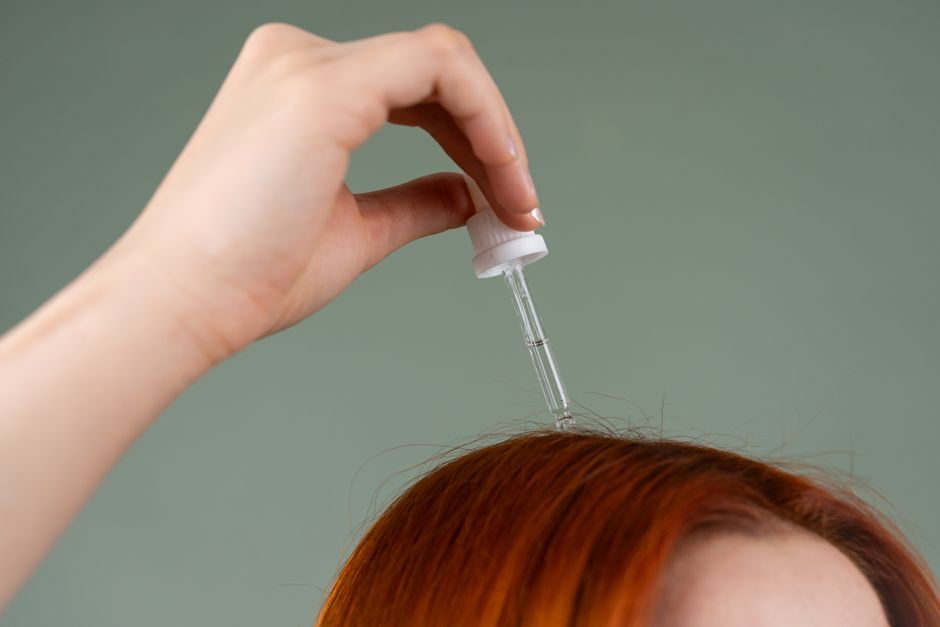
Castor oil is one of the most recommended home remedies for thinning hair, and it has been for generations. But the honest answer is that no human clinical trial has ever shown that castor oil regrows hair or treats hair loss. What it can do is coat the hair shaft, which makes existing hair look shinier and feel thicker. That is a cosmetic effect, not new growth.
The confusion comes from mixing up two different things: making hair look better and making hair grow. Castor oil is good at the first. There is no reliable evidence it does the second.
What Is Castor Oil Actually Made Of?
Castor oil is a thick, pale yellow vegetable oil pressed from the seeds of the castor plant, Ricinus communis. Its unusual thickness comes from a fatty acid called ricinoleic acid, which makes up roughly 85 to 90 percent of the oil. That is a higher concentration of a single fatty acid than almost any other plant oil.
Ricinoleic acid is what gives castor oil its heavy, syrupy texture and its ability to cling to surfaces. It is also the reason castor oil works as a laxative, a use that has real clinical backing. When swallowed, ricinoleic acid irritates the lining of the small intestine and speeds up movement through the gut. That is an established effect. Hair growth is not.
One important distinction: the castor bean contains a highly toxic protein called ricin. The oil itself does not, because ricin stays in the seed pulp and does not dissolve into the oil during pressing. Commercial castor oil is not a ricin risk. The seeds are.
Can Castor Oil Make Hair Grow?
No study in humans has shown that applying castor oil to the scalp increases hair growth, hair density, or hair thickness. That is the plain position, and it has not changed despite castor oil’s popularity.
The theory behind the claim is that ricinoleic acid might improve blood flow to the scalp or reduce inflammation around hair follicles. Both are plausible-sounding ideas. Neither has been confirmed in controlled human trials as a cause of new hair growth. Biological plausibility is not the same as demonstrated benefit. A substance can widen blood vessels in a lab dish and still do nothing for a hair follicle that has stopped producing hair.
What castor oil reliably does is coat the hair. This creates a few visible effects:
- Hair looks glossier because the oil smooths the outer layer of each strand
- Strands may appear slightly thicker because of the coating
- Frizz and flyaways are temporarily tamed
- Split ends look less obvious, though they are not repaired
None of these change what happens at the root. Hair grows from follicles below the skin surface. Oil sitting on top of the scalp does not reach them in any meaningful way.
Why Do So Many People Say It Works?
Several things line up to make castor oil feel like it works when it probably does not.
First, the coating effect is real and immediate. Someone who applies castor oil sees shinier, fuller-looking hair the same day. That feels like progress.
Second, hair grows slowly and unevenly. Most people’s hair grows about half an inch per month, and growth happens in cycles with rest phases. If you start any treatment during a growth phase, you will see new hair within a few months and may credit the treatment. This is why so many hair remedies seem to work for some people.
Third, many cases of temporary shedding resolve on their own. Telogen effluvium, a common type of hair shedding triggered by stress, illness, surgery, or rapid weight loss, typically reverses within several months regardless of what you put on your scalp. If castor oil happens to be applied during that window, it gets the credit.
Fourth, castor oil is often combined with other oils or massaged into the scalp. Scalp massage on its own may have some modest effect on circulation and stress, and stress reduction is not trivial for hair. It becomes hard to separate what is doing what.





What Does the Evidence Actually Support for Hair Growth?
A small number of treatments have human trial data behind them for specific types of hair loss. These are not the same as castor oil, and they are not interchangeable.
Minoxidil is a topical treatment with decades of clinical trial data for androgenetic alopecia, the inherited pattern of thinning that affects both men and women. Finasteride is an oral prescription option for men with the same condition. Both have documented effects and documented limitations, and both require ongoing use to maintain results. Neither is a cure.
For other types of hair loss, the picture changes. Alopecia areata, an autoimmune condition, may be treated with injected corticosteroids or other immune-directed therapies depending on severity. Hair loss from thyroid disease, iron deficiency, or other medical causes often improves when the underlying condition is treated. This is why a doctor’s evaluation matters more than any topical oil.
Castor oil does not appear on that list. It has not been studied in the way those treatments have.
Is Castor Oil Safe to Put on Your Scalp?
For most people, topical castor oil is low risk. It is not known to be harmful when applied to intact skin. But “low risk” is not the same as “no risk,” and a few cautions are worth knowing.
Castor oil is thick and does not rinse out easily. Left on the scalp, it can trap oil and dead skin cells and contribute to clogged pores or irritation, particularly for people who already have an oily scalp or seborrheic dermatitis. Some people develop contact dermatitis, an allergic reaction marked by redness, itching, or a rash. If that happens, stop using it.
Do not apply castor oil to broken skin, open wounds, or a scalp with an active infection. And do not swallow castor oil as a hair treatment. It is a stimulant laxative with real effects on the gut, and it is not appropriate for everyone. It should not be used during pregnancy without medical guidance, and it is not a treatment for children’s hair concerns.
There is also a practical issue. Heavy oil on the scalp can weigh down fine hair, making it look flatter rather than fuller. For some people, the cosmetic result is worse, not better.
When Should Hair Loss Prompt a Doctor’s Visit?
Hair loss is common and often temporary. It is also sometimes the first visible sign of a medical problem that needs treatment.
See a doctor if you notice any of the following:
- Sudden or rapid shedding, especially handfuls of hair
- Patchy bald spots or smooth round areas of missing hair
- Loss of eyebrows, eyelashes, or body hair
- Scalp pain, itching, scaling, or redness along with the loss
- Hair loss that continues for months without improving
- Loss alongside fatigue, weight changes, or other unexplained symptoms
A doctor can check for thyroid disorders, iron deficiency, hormonal conditions, and other causes that produce hair loss and respond to treatment. A dermatologist can examine the scalp directly and, in some cases, take a small sample of scalp tissue to identify the cause. That kind of evaluation is the difference between treating a symptom and treating a reason.
If you want to try castor oil for the look and feel of your hair, that is a reasonable cosmetic choice. Just do not expect it to replace a diagnosis or a treatment that has evidence behind it.
How Does Castor Oil Compare to Other Hair Oils?
Most hair oils, including coconut, argan, and jojoba, work the same way castor oil does. They coat the strand, add shine, and reduce friction. The differences are mostly about texture and how each oil interacts with your hair type.
Castor oil is one of the heaviest. That makes it useful for thick or coarse hair and difficult for fine hair. Coconut oil penetrates the hair shaft more readily than most oils, which is why it is often used before washing. Argan oil is lighter and absorbs faster. None of them have been shown to grow hair in controlled human studies.
If your goal is appearance, the choice is mostly about what feels right on your hair. If your goal is regrowth, oil is not the right tool, and no amount of switching between oils will change that.
Frequently Asked Questions
Does castor oil really help hair grow?
No human clinical trial has shown that castor oil grows hair. It can make existing hair look shinier and slightly thicker by coating the strand, but that is a cosmetic effect, not new growth.
How long does it take for castor oil to work on hair?
Any visible change from the coating effect happens the same day you apply it. There is no established timeline for growth because no study has shown castor oil produces growth.
Can castor oil regrow hair on a bald spot?
There is no evidence it can. Bald spots from conditions like alopecia areata or scarring hair loss need medical evaluation, and some causes of permanent follicle loss cannot be reversed by any topical oil.
Is it safe to leave castor oil on your scalp overnight?
It is generally low risk for most people, but the heavy oil can clog pores and cause irritation on some scalps. If you notice redness, itching, or a rash, stop using it.
