
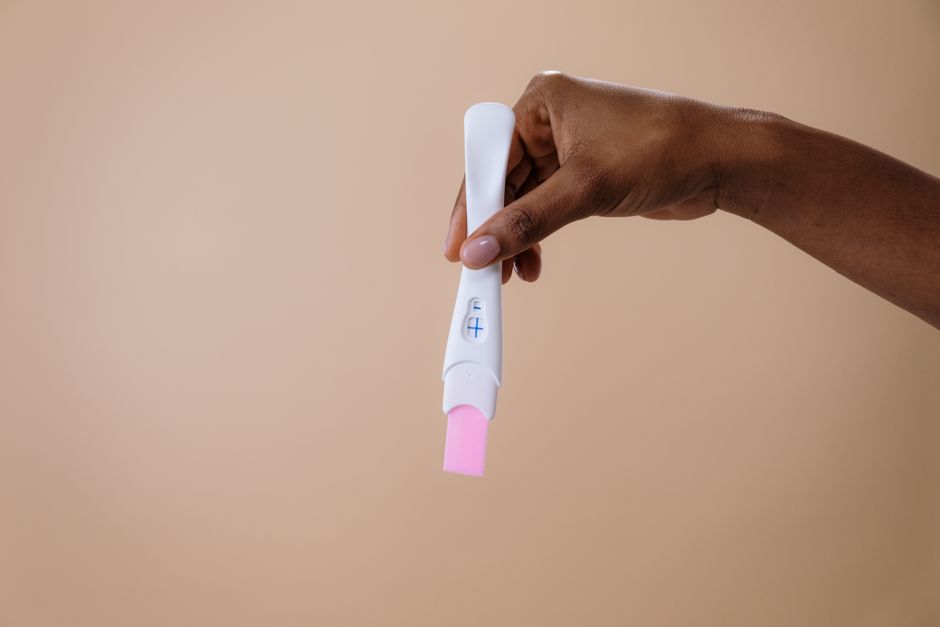
Yes, an early pregnancy test can be wrong. Home pregnancy tests are accurate most of the time when used correctly, but false negatives and false positives both happen. The most common reason is testing too soon — before the hormone hCG has risen high enough to be detected.
Understanding when and why these tests fail helps you interpret your result correctly and decide what to do next.
How Do Home Pregnancy Tests Actually Work?
Home pregnancy tests detect human chorionic gonadotropin (hCG), a hormone the body produces after a fertilized egg implants in the uterine lining. Implantation typically occurs about 6 to 12 days after ovulation, though the range varies.
Once implantation happens, hCG levels begin to rise. In early pregnancy, hCG roughly doubles every 48 to 72 hours. This rapid rise is why waiting a few extra days can make a real difference in whether a test detects the hormone.
Most home tests use a strip that changes color when hCG binds to antibodies on the strip. Different brands have different sensitivity thresholds — some claim to detect hCG at concentrations as low as 10 to 25 mIU/mL. But a test’s stated sensitivity is based on laboratory conditions, not real-world use.
This is where the gap between “clinically proven sensitivity” and actual accuracy in your bathroom becomes important. A test that can detect 10 mIU/mL in a lab may not perform the same way if you drink a lot of water beforehand, use the wrong time of day, or misread a faint line.
What Causes a False Negative on an Early Pregnancy Test?
A false negative means you are pregnant but the test says you are not. This is the most common type of error with early testing.
The leading cause is testing before hCG reaches detectable levels. If you test on the day of your missed period, most tests are designed to detect pregnancy. But if you test several days before your missed period — which many early-detection tests market themselves for — the risk of a false negative goes up significantly.
Other causes of false negatives include:
- Diluted urine: Drinking large amounts of water before testing can lower hCG concentration in your urine below the test’s detection threshold.
- Testing at the wrong time of day: First-morning urine typically has the highest hCG concentration, especially in very early pregnancy.
- Reading the result too early or too late: Most tests require you to read results within a specific window. Reading after that window can produce an evaporation line that looks like a faint positive — or cause you to miss a faint positive.
- Expired or improperly stored tests: Heat, moisture, and expiration dates can affect test performance.
- Rare medical conditions: Certain medications or medical conditions can interfere with test results, though this is uncommon.
If you get a negative result but still suspect you are pregnant, waiting 48 to 72 hours and testing again with first-morning urine is the standard approach. If your period remains absent, contact a healthcare provider.
What Causes a False Positive on a Pregnancy Test?
A false positive means the test says you are pregnant but you are not. False positives are less common than false negatives, but they do occur.
One well-documented cause is a very early miscarriage, sometimes called a chemical pregnancy. In this situation, a fertilized egg implants briefly and produces enough hCG to trigger a positive test, but the pregnancy does not continue. The test was accurate at the time — hCG was present — but the pregnancy did not progress. This is not truly a “false” positive, but it can feel like one.
Other causes include:
- Medications containing hCG: Certain fertility treatments contain hCG, which can trigger a positive test. This is why some clinicians advise waiting a specific number of days after a trigger shot before testing.
- Evaporation lines: If you read a test after the recommended window, a faint line may appear that is not a true positive. This is a common source of confusion.
- Certain medical conditions: Rare conditions such as pituitary disorders or certain types of tumors can produce hCG, though this is uncommon.
- User error: Misreading the test, using too much or too little urine, or misinterpreting the result window can all lead to a false positive.
Some clinicians recommend confirming any positive home test with a blood test, which measures the exact amount of hCG in your blood. Blood tests are more sensitive and can detect lower levels of hCG than urine tests.


Does Test Sensitivity Really Matter?
Yes, but not in the way most people think. A test labeled “early detection” or “10 mIU/mL sensitivity” is not automatically more reliable than a standard test. Sensitivity refers to the lowest concentration of hCG the test can detect under ideal conditions.
In real life, several factors affect whether your urine hCG level reaches that threshold:
- How many days past ovulation you are
- How much fluid you have consumed
- How your individual body produces hCG
- Whether the test is expired or stored improperly
A more sensitive test may detect pregnancy a day or two earlier than a less sensitive one. But it also increases the chance of detecting a very early pregnancy that might not continue — which can lead to confusion and emotional difficulty.
No home test can tell you whether a pregnancy is progressing normally. That requires serial blood tests or an ultrasound.
When Should You Test to Get the Most Accurate Result?
The single most effective way to reduce the chance of a false result is to wait until the day of your expected missed period. For many people, that is about 14 days after ovulation.
If you test before your missed period, you accept a higher chance of a false negative. Some early-detection tests claim accuracy up to 6 days before a missed period, but that accuracy is based on the percentage of pregnant people who get a positive result on that day — not on the test’s ability to rule out pregnancy.
In other words, a negative result 5 days before your missed period does not mean you are not pregnant. It means hCG may not be high enough yet to detect.
For the most reliable result:
- Wait until the day of your missed period if possible.
- Use first-morning urine.
- Follow the test instructions exactly.
- Read the result within the specified time window.
- If negative and your period is still absent, test again in 48 to 72 hours.
What If You Get Conflicting Results?
Conflicting results — a positive followed by a negative, or vice versa — are confusing but not uncommon. The most likely explanation depends on the sequence.
A positive followed by a negative could mean a chemical pregnancy, where hCG rose briefly and then fell. It could also mean the first test was a false positive due to an evaporation line or a medication. A negative followed by a positive usually means the first test was taken too early and hCG rose to detectable levels by the second test.
If you get conflicting results, the most reliable next step is a blood test. A healthcare provider can measure the exact hCG level and, if needed, repeat the test in 48 hours to see whether the level is rising appropriately. A single hCG measurement is less informative than two measurements taken 48 hours apart.
Do not rely on repeated home tests alone to determine whether a pregnancy is progressing. Home tests are designed to detect the presence of hCG, not to monitor how it changes over time.
How Accurate Are Home Pregnancy Tests Really?
When used correctly and after a missed period, home pregnancy tests are generally reported to be around 99% accurate in detecting pregnancy. That figure comes from manufacturer studies and clinical reviews, and it reflects correct use at the right time.
Accuracy drops when you test early, use diluted urine, or misread the result. The 99% figure does not mean 1 in 100 tests is wrong regardless of circumstances. It means that under optimal conditions, the test correctly identifies pregnancy almost every time.
It is also worth noting that accuracy claims are often based on detecting hCG in people who are already known to be pregnant. In real-world use — where you do not know whether you are pregnant — the chance of a false negative is higher because timing and urine concentration vary.
When to See a Healthcare Provider
Contact a healthcare provider if you have a positive home test and want to confirm the pregnancy, if you have a negative test but your period remains absent for more than a week, or if you have symptoms such as pain, heavy bleeding, or dizziness.
A blood test can confirm pregnancy earlier and more reliably than a urine test. An ultrasound can show whether a pregnancy is developing in the uterus, though it is usually not informative until hCG reaches a certain level — typically above 1,500 to 2,000 mIU/mL, though this threshold varies.
If you are using fertility medications that contain hCG, ask your provider when it is appropriate to test. Testing too soon after a trigger shot can produce a false positive.
Frequently Asked Questions
Can an early pregnancy test be wrong?
Yes. Early pregnancy tests can produce false negatives if hCG levels are not yet high enough to detect, and false positives can occur due to medications, evaporation lines, or early pregnancy loss. Testing after a missed period improves accuracy.
How common is a false negative on a pregnancy test?
False negatives are most common when testing before a missed period or with diluted urine. Waiting until the day of your missed period and using first-morning urine reduces the chance significantly.
Can a pregnancy test be positive and then negative?
Yes. This can happen with a chemical pregnancy, where hCG rises briefly and then falls, or if the first test was a false positive. A blood test can clarify what is happening.
Should I trust a faint line on a pregnancy test?
A faint line within the recommended reading window is usually a positive result, but it can be hard to interpret. Testing again in 48 hours with first-morning urine or getting a blood test provides more clarity.
