
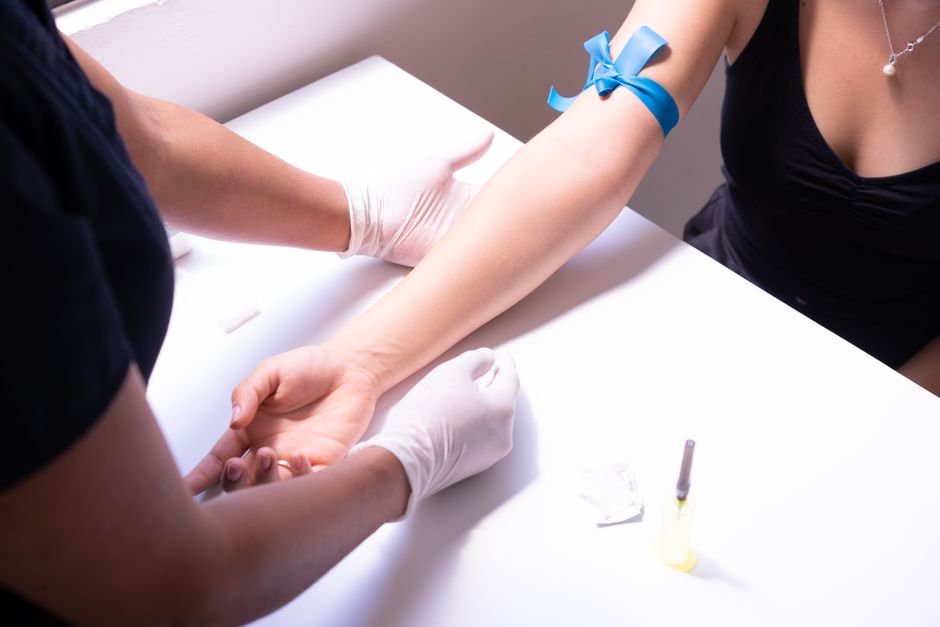
Hair follicle drug testing is known for its long detection window, but the common claim that it covers exactly 12 months is not accurate. A standard hair follicle test typically detects drug use over a period of about 90 days, or roughly three months. The 12-month figure is a myth, often confused with the length of hair itself or with other testing methods. While some specialized laboratory techniques can analyze a longer strand of hair, this is not the standard practice and comes with significant limitations. The standard 90-day window is what most employers, courts, and clinical settings rely on.
How Does a Hair Follicle Test Work?
Hair grows from follicles located under the scalp. As hair grows, it absorbs chemicals from the bloodstream, including drug metabolites. These metabolites become trapped in the core of the hair shaft. A laboratory test can then detect these trapped substances.
The average human scalp hair grows about half an inch per month, or roughly 1 to 1.5 centimeters. A standard hair follicle test uses a sample cut as close to the scalp as possible. The laboratory analyzes the 1.5 inches of hair closest to the root. At an average growth rate, that 1.5 inches represents approximately 90 days of growth. This is why the standard detection window is three months, not twelve.
Why Do People Believe It Goes Back 12 Months?
The confusion often comes from the physical length of hair. A person with hair down to their waist has years of growth on their head. It seems logical that a test could analyze all of that hair and detect years of drug use. However, standard testing protocols do not work that way.
Another source of confusion is the difference between drug testing methods. Urine tests detect recent use, typically within a few days. Blood tests detect use within hours. Hair tests extend the window to months. Some people assume that if hair extends the window to months, it must extend it to years. This is not how the standard test operates.
The 12-month figure is also common in online forums and workplace rumor mills. It is repeated so often that it becomes accepted as fact. But the laboratory standard remains 90 days for a standard hair follicle drug test.
Can a Hair Follicle Test Go Back 12 Months?
In standard practice, no. A routine hair follicle test does not go back 12 months. The testing laboratory analyzes a specific segment of hair that corresponds to about 90 days of growth.
There are specialized tests that can analyze longer periods. A laboratory can test a longer section of hair, which would represent a longer period of growth. This is sometimes called a “longer window” test or a “segmented” analysis. However, these tests are not standard and are rarely used for routine employment or legal purposes.
Even when a longer segment is analyzed, the accuracy decreases. The hair becomes more brittle and damaged over time. Environmental exposure, washing, and styling products can degrade the sample. The farther the hair is from the scalp, the less reliable the results. For this reason, most laboratories will not analyze hair beyond a certain length, and even if they do, the results are not considered as reliable as the standard 90-day window.



What Are the Limitations of Hair Testing?
Hair testing is not perfect. It has specific limitations that affect both accuracy and fairness. Understanding these limitations is important for anyone facing a hair follicle test.
Hair color bias. Some research suggests that melanin, the pigment that gives hair its color, can bind to drug metabolites. This means people with darker hair may have higher concentrations of drugs detected than people with lighter hair, even with identical drug use. This is a known concern in the field, but the extent of the bias is debated. Some studies indicate it is a real effect; others suggest it is minor.
Environmental contamination. If a person is in a room where drugs are smoked, drug particles can settle on their hair. Without proper washing procedures, a test could falsely detect drug use. Laboratories use washing protocols to remove external contamination, but these are not foolproof.
Cosmetic treatments. Bleaching, dyeing, and chemical straightening can damage the hair and reduce the amount of drug metabolites present. This can lead to false negatives. A person who used drugs but recently bleached their hair might test negative. This is a real limitation that laboratories acknowledge.
No timeline for use. A standard hair test tells you that a drug was used within the last 90 days. It does not tell you when in that 90-day period the drug was used. It cannot distinguish between use last week and use ten weeks ago. This is a critical limitation for legal or disciplinary decisions.
What Drugs Does a Hair Follicle Test Detect?
Standard hair follicle tests screen for a panel of common drugs of abuse. The exact panel varies by laboratory and by the purpose of the test. Most standard panels include the following:
- Amphetamines, including methamphetamine
- Cocaine
- Opiates, including codeine, morphine, and heroin
- Phencyclidine (PCP)
- Marijuana (THC)
Some expanded panels also test for additional drugs, such as benzodiazepines, fentanyl, and certain prescription medications. The detection window for each drug is generally the same 90-day period, but some drugs are more easily detected in hair than others. THC, for example, is often found in lower concentrations in hair compared to other drugs, which can make detection more challenging.
How Accurate Is a Hair Follicle Test?
Hair follicle tests are considered highly accurate when performed correctly in a certified laboratory. The technology is mature and well-established. Confirmatory testing, usually using gas chromatography-mass spectrometry, is used to verify positive results. This two-step process greatly reduces the risk of false positives.
However, no test is perfect. False positives are rare but possible. False negatives are more common, often due to cosmetic hair treatments or very low levels of drug use. The accuracy of the test also depends on the quality of the sample collection. A poorly collected sample, such as hair cut too far from the scalp, can affect the results.
Some research suggests that a single use of a drug may not be detected in hair. Most laboratories have cutoff levels, meaning a certain concentration of drug must be present for a positive result. A single, small exposure may fall below this cutoff. Repeated use is more likely to produce a positive result.
What Should You Do If You Are Facing a Hair Follicle Test?
If you are facing a hair follicle test, the most important step is to be honest with yourself about your drug use. If you have used drugs in the past 90 days, the test may detect it. There is no reliable way to “beat” a hair follicle test. Detoxifying shampoos and other advertised products have not been proven to work in controlled studies.
If you believe you have a false positive, you have the right to request a confirmation test. This is a more specific test that can rule out errors. You can also ask for a re-analysis of the same sample, or a split sample test where a portion of your hair is tested independently.
If you have a medical condition that requires taking a prescription medication that might show up on a drug test, tell the testing facility and the person who ordered the test before the sample is collected. You may need to provide proof of your prescription.
The evidence is clear that standard hair follicle testing looks back approximately 90 days. The 12-month figure is not supported by standard laboratory practice. If a longer window is genuinely needed for a specific legal or medical reason, a specialized analysis may be possible, but it is not the norm and comes with reliability concerns.
Frequently Asked Questions
Can a hair follicle test detect drug use from 6 months ago?
No, a standard hair follicle test cannot detect drug use from 6 months ago. The standard detection window is approximately 90 days, which corresponds to 1.5 inches of hair growth from the scalp.
Does hair length affect the drug test detection window?
Hair length does not affect the standard detection window because laboratories only analyze the 1.5 inches closest to the scalp. Longer hair beyond that segment is not included in a routine analysis.
Can hair dye or bleach affect a hair follicle test result?
Yes, hair dye and bleach can damage the hair and reduce drug metabolite levels, which may lead to a false negative result. Laboratories are aware of this limitation and may note it in their reporting.
Is a hair follicle test more accurate than a urine test?
Hair follicle tests have a much longer detection window than urine tests, but accuracy depends on the specific situation. Urine tests detect recent use within days, while hair tests detect use over months, but hair tests are more susceptible to environmental contamination and cosmetic treatment effects.
