
How Does a Hair Follicle Test Actually Work?
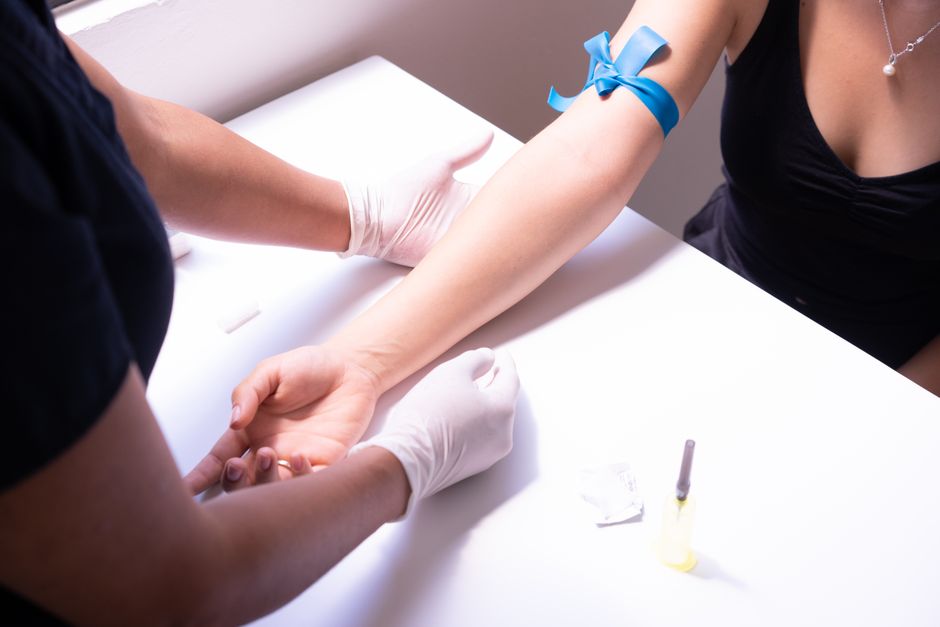
Hair follicle testing works by analyzing trace amounts of drugs and their metabolites that get trapped inside the hair shaft as hair grows. When you take a drug, it enters your bloodstream. As hair cells form at the root, small amounts of the drug and its breakdown products become incorporated into the growing hair strand.
A collector cuts about 1.5 inches of hair from the scalp, as close to the root as possible. This length represents roughly 90 days of growth, since hair grows about half an inch per month. If someone has no scalp hair, body hair from the arm, leg, or underarm may be used instead. Body hair gives a longer detection window, sometimes up to 12 months, because it grows more slowly.
The sample goes to a lab where it is washed to remove external contamination. Then the lab grinds the hair, dissolves it, and tests it using a method called liquid chromatography-tandem mass spectrometry (LC-MS/MS). This method is highly accurate and can measure drugs at very low levels.
What Does a Positive Result Look Like on the Report?
A positive result shows the drug name, the amount detected in picograms per milligram of hair, and the cutoff level used by the lab. For example, a report might say “Cocaine: 850 pg/mg, Cutoff: 500 pg/mg, Result: Positive.” The number 850 is well above the 500 cutoff, so it is clearly positive.
Most labs use cutoff levels set by the Substance Abuse and Mental Health Services Administration (SAMHSA) for workplace testing. These cutoffs are designed to avoid false positives from passive exposure, like being near someone who smoked marijuana. The cutoff for marijuana is 1 pg/mg. For cocaine it is 500 pg/mg. For opiates it is 200 pg/mg.
If the result is just above the cutoff, the lab may re-test the sample to confirm. A confirmed positive means the drug was definitely present in the hair at a level consistent with use. The report will note if the result was confirmed by a second test.
What Does a Negative Result Look Like on the Report?
A negative result shows the drug name, a number below the cutoff, and “Negative” in the result column. For example, “Cocaine: 120 pg/mg, Cutoff: 500 pg/mg, Result: Negative.” The number 120 is below the cutoff, so the lab reports a negative.
Negative does not always mean zero. It means the amount found was too low to count as a positive based on the cutoff. A tiny amount could come from external contamination that the washing process did not fully remove, or from very infrequent use that did not build up enough in the hair.
Some people assume a negative result means they are completely drug-free. That is not exactly true. It means the test did not find enough drug to meet the cutoff. For most workplace and legal purposes, that is the same as a clean result.



Can Hair Color, Bleaching, or Hair Products Affect the Result?
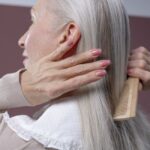
Research published in the Journal of Analytical Toxicology has found that hair treatments can lower drug levels in hair. Bleaching, dyeing, and chemical straightening can break down drug molecules trapped inside the hair shaft. This can cause a false negative, meaning the test misses a drug that was actually used.
One study found that bleaching reduced cocaine levels by up to 80 percent in some hair samples. Another study found that repeated shampooing with anti-dandruff shampoos did not change drug levels much, but aggressive chemical treatments did.
Labs are aware of this. Some test for hair damage markers to check if the sample was tampered with. If the lab finds evidence of heavy chemical treatment, they may report the result as “inconclusive” rather than negative. That can raise questions about whether someone tried to cheat the test.
How Accurate Is a Hair Follicle Test Compared to a Urine Test?
Hair follicle tests and urine tests measure different things. Urine tests detect recent use, usually within the past 1 to 3 days for most drugs. Hair tests detect use over a much longer window, up to 90 days. They are not better or worse, just different.
Hair tests are less likely to miss occasional use. If someone uses a drug once a month, a urine test might catch it only if the test happens within a few days. A hair test will catch it because the drug gets incorporated into the hair and stays there.
| Factor | Hair Follicle Test | Urine Test |
|---|---|---|
| Detection window | Up to 90 days | 1 to 3 days for most drugs |
| Sample tampering risk | Low | Higher |
| Can detect single use | Yes, if recent | Yes, if within window |
| Affected by hair treatments | Yes, can cause false negatives | No |
| Cost | Higher, often $100-$200 | Lower, often $30-$50 |
Hair tests have a lower false positive rate than urine tests because they use more precise lab methods. But they can still produce false positives for certain drugs, especially if someone is taking a prescription medication that is chemically similar to an illegal drug.
What Drugs Are Included in a Standard Hair Follicle Test?
A standard 5-panel hair test covers the same drugs as most workplace urine tests. These are marijuana, cocaine, opiates (including heroin, codeine, and morphine), amphetamines (including methamphetamine and MDMA), and phencyclidine (PCP).
Some employers use expanded panels that test for additional drugs like benzodiazepines, barbiturates, methadone, and synthetic cannabinoids (K2, Spice). The lab report will list every drug tested and its result.
One thing many people do not realize is that alcohol is not detected by standard hair drug tests. There is a separate test called ethyl glucuronide (EtG) hair testing that can detect chronic heavy alcohol use, but it is not included in standard panels.
Frequently Asked Questions
How long does it take to get hair follicle test results?
Most labs return results within 3 to 5 business days after receiving the sample. Some expedited services can deliver results in 24 to 48 hours.
Can secondhand smoke cause a positive hair follicle test?
It is very unlikely. Labs wash the hair and use high cutoff levels to avoid false positives from passive exposure. Research shows that even heavy secondhand smoke rarely produces a positive result.
What happens if my hair is too short to test?
The lab may use body hair from the arm, leg, or underarm instead. Body hair provides a longer detection window, sometimes up to 12 months.
Can I refuse a hair follicle test for a job?
You can refuse, but the employer may withdraw the job offer. Hair follicle testing is legal for pre-employment screening in most US states.
