
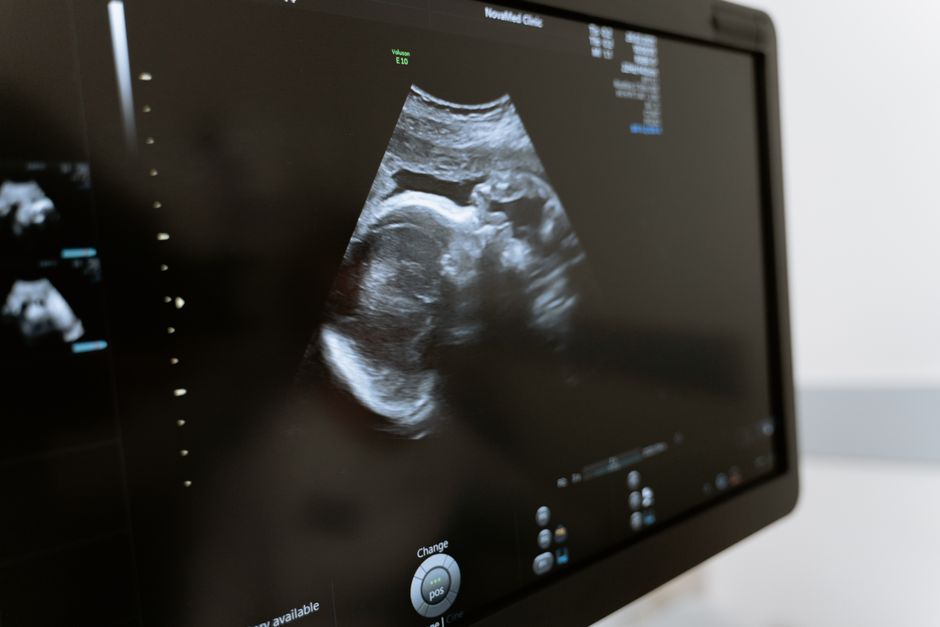
A CT scan can show a pregnancy, but it is not designed to and is not a reliable way to confirm one. A CT scan uses X-rays to create detailed cross-sectional images of the body, and a fetus can appear on those images. The larger question is safety: CT scans expose the developing fetus to ionizing radiation, so when pregnancy is known or suspected, clinicians generally choose ultrasound or MRI first.
Can A CT Scan Show Pregnancy And Is It Safe?
Yes to the first part, with major caveats. A CT scan can reveal a pregnancy, especially in later stages when the fetus is larger and more developed. But CT is a poor screening tool for pregnancy. The imaging is built to look at organs, bones, and blood vessels, not to confirm whether someone is pregnant.
The safety question is more serious. CT delivers ionizing radiation, and the fetus is more sensitive to radiation than an adult. That does not mean a single scan automatically harms a pregnancy. It means the decision needs real thought, and the medical benefit has to justify the exposure.
In practice, this situation usually comes up one of two ways. Either a person does not yet know they are pregnant and a scan is ordered for another reason, or a scan is genuinely needed to diagnose a serious condition and pregnancy is discovered along the way. Both are handled differently.
Why Is CT Not the First Choice for Confirming Pregnancy?
Ultrasound is the standard first step, and it has been for decades. It uses sound waves, not radiation, and it can detect a pregnancy very early. A transvaginal ultrasound can typically show a gestational sac in the uterus within a few weeks of a missed period. It can also confirm the pregnancy is in the uterus rather than elsewhere, check for a heartbeat, and estimate how far along it is.
CT cannot do most of that well. It shows structure and density, not the fine details of early pregnancy. A very early pregnancy may not be visible on CT at all. By the time a fetus is clearly identifiable on a CT image, ultrasound would have confirmed the pregnancy far earlier and with no radiation.
MRI is another radiation-free option. It uses magnetic fields and radio waves, and it gives excellent soft-tissue detail. For many conditions where CT is being considered, MRI can answer the same clinical question without exposing the fetus to X-rays.
So the honest summary: CT can show a pregnancy, but it is the wrong tool for confirming one. When pregnancy is possible, ultrasound and MRI are the usual choices.
How Much Radiation Does a CT Scan Deliver to a Fetus?
Radiation dose depends on what part of the body is scanned. A CT of the head or chest delivers very little radiation to the uterus because the beam is aimed elsewhere and the dose falls off with distance. A CT of the abdomen or pelvis delivers more, because the fetus is directly in or near the scanned area.
This matters because the fetal dose, not the adult dose, is what drives the risk conversation. A scan of the mother’s head is a very different situation from a scan of her pelvis.
Radiology professionals think about fetal dose in a unit called the milligray (mGy). The concern is not a single threshold where harm suddenly begins. It is a gradual relationship, and at the low doses used in most diagnostic imaging, the added risk is small and hard to measure.
I am deliberately not giving specific dose numbers per scan type here. Doses vary widely by machine, protocol, patient size, and technique, and quoting a single figure would be misleading. If you need the actual dose for a specific scan, a medical physicist or radiologist can calculate it for that exact exam.





What Are the Actual Risks of CT During Pregnancy?
The main concern is ionizing radiation’s effect on rapidly dividing cells. A developing fetus has a lot of them. Radiation exposure during pregnancy is linked in research to a small increase in the risk of childhood cancer later in life, and at higher doses to effects on fetal development.
The key word is dose. At the low doses typical of most diagnostic CT scans, the added risk is small. It is not zero, and it is not something to wave away, but it is also not the same as the much higher doses associated with known developmental harm.
Two points are worth being precise about. First, the greatest sensitivity to radiation-related effects on the brain and development is generally considered to fall in a specific window of early pregnancy, roughly the period when major organ systems are forming. Second, the risk of childhood cancer from low-dose exposure is a statistical increase across a population, not a predictable outcome for any one child.
That distinction matters. A small population-level risk is real, but it does not tell an individual parent what will happen to their child. This is exactly the kind of uncertainty that should be discussed openly with a doctor rather than reduced to a reassuring or alarming headline.
What Happens If You Had a CT Scan Before Knowing You Were Pregnant?
This is common, and it is usually not a crisis. Many people have imaging before they realize they are pregnant. The right response is not panic. It is a conversation with your doctor and, ideally, a review of the actual radiation dose to the fetus.
Your doctor can request the dose information from the imaging facility. A radiologist or medical physicist can estimate the fetal dose for that specific exam. That number, combined with how far along the pregnancy is, gives a far better basis for discussion than general worry.
For most single diagnostic scans at typical doses, the added risk is low. But “low” is not “none,” and the conversation should be honest about that. If you are pregnant or could be, tell the imaging staff before any scan. They can often adjust the protocol or choose a different test.
When Might a CT Scan Still Be Necessary During Pregnancy?
Sometimes the answer is yes. If a pregnant person has a suspected life-threatening condition, the risk of missing it can outweigh the radiation risk. A pulmonary embolism, appendicitis, kidney stones, or serious trauma can all be dangerous to both the pregnant person and the fetus if not diagnosed quickly.
In those situations, clinicians weigh the real and immediate danger of the condition against the small added radiation risk. Some scans can be modified to lower the fetal dose. Sometimes ultrasound or MRI can answer the question instead. Sometimes CT is genuinely the best option.
This is a decision for the medical team, made with the patient. It is not a decision to make alone, and it is not one that a general article can settle for a specific case.
What Should You Do If You Think You Might Be Pregnant Before a Scan?
Say so. Tell the person scheduling the scan and tell the technologist on the day. This is the single most useful thing you can do.
Imaging staff routinely ask about pregnancy and last menstrual period for exactly this reason. A negative urine or blood pregnancy test is often required before certain scans in people who could be pregnant. If there is any chance you are pregnant, raise it even if a test was not requested.
If you are trying to conceive or your period is late, mention that too. The team can then decide whether to proceed, adjust the protocol, or use a different imaging method.
- Tell the scheduler and the technologist if pregnancy is possible.
- Ask whether ultrasound or MRI could answer the same question.
- If a CT is truly needed, ask whether the protocol can be adjusted to lower fetal dose.
- If you already had a scan, ask for the fetal dose estimate rather than relying on general information.
The Bottom Line
CT can show a pregnancy, but it is not the tool for confirming one. Ultrasound and MRI are the standard choices because they work better for pregnancy and avoid ionizing radiation.
When a CT is genuinely needed during pregnancy, the decision is a careful balance between the danger of the condition being investigated and the small added radiation risk. That balance belongs in a conversation with your medical team, using the actual dose for your actual scan, not a general rule of thumb.
Frequently Asked Questions
Can a CT scan detect an early pregnancy?
It usually cannot detect a very early pregnancy, because the structures are too small to appear clearly on CT. Ultrasound can confirm a pregnancy much earlier and without radiation.
Is one CT scan during pregnancy dangerous?
A single diagnostic CT at typical doses carries a small added risk rather than a predictable harm. The actual risk depends on the dose and the stage of pregnancy, so it should be discussed with a doctor using the specific dose for that scan.
Should I tell the technologist if I might be pregnant?
Yes, always tell the scheduler and the technologist if pregnancy is possible. They can adjust the protocol or choose a different imaging method such as ultrasound or MRI.
Can I have a CT scan while pregnant if it is an emergency?
Yes, sometimes a CT is necessary when a serious condition needs fast diagnosis. In those cases the medical team weighs the immediate danger against the radiation risk and decides with the patient.
