
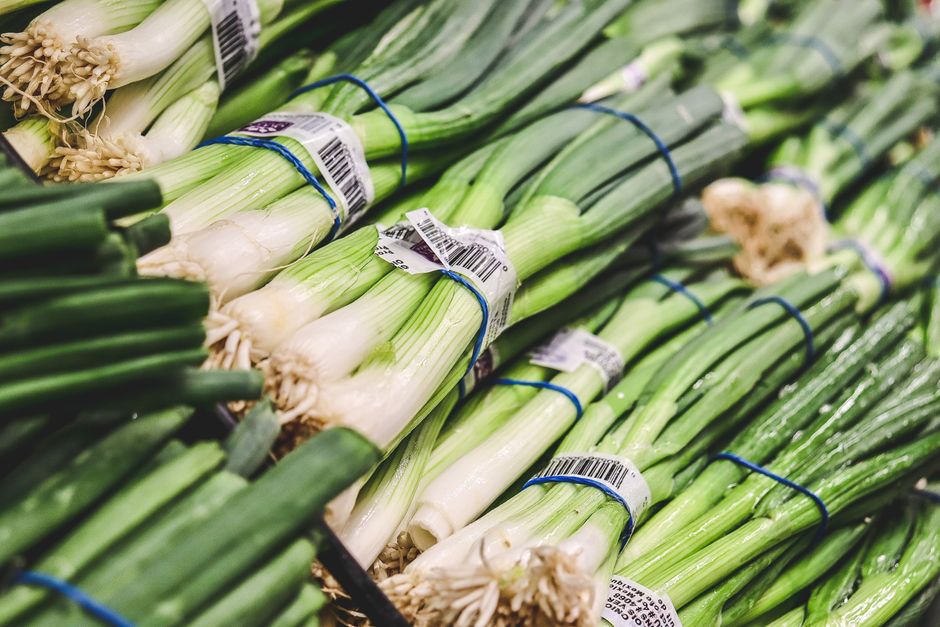
Yes. Scallions and green onions are the same thing. The two names are used interchangeably for the same vegetable in most of the United States. You can buy them labeled either way and use them the same way in cooking.
The confusion comes from regional differences and how other countries use these names. In some places, scallion refers to a specific type of young onion. In the U.S. grocery store, however, the names describe the same product: an onion harvested before the bulb fully forms, with a white base and green hollow leaves.
Are Scallions Green Onions?
Yes, scallions are green onions. Both names refer to the immature stalks of an onion plant (Allium cepa) that are pulled from the ground before the bulb swells into a round shape. The white part near the root is mild, and the green tops are fresh and grassy.
If a recipe calls for scallions and you have green onions, you have exactly what you need. No substitution is required because they are the same vegetable.
What Is the Difference Between Scallions, Green Onions, and Spring Onions?
Scallions and green onions are identical in the United States. Spring onions are a different stage of growth. Spring onions have a slightly larger bulb at the base, often the size of a small marble or larger. The bulb has more flavor than a scallion but is still milder than a mature storage onion.
Spring onions are sometimes sold in bunches with their green tops attached. If you see a bunch labeled “spring onions,” the bulbs will be rounder and more developed than scallions. You can still use the whole plant, but the bulb benefits from cooking rather than eating raw.
In some international markets, the terms are used differently. In the United Kingdom and Australia, “spring onion” is the common name for what Americans call scallions or green onions. The naming differences are regional, not botanical.
What Do Scallions Look Like?
Scallions have a straight white base that does not bulge into a round bulb. The white part extends several inches up the stalk before transitioning to green leaves. The leaves are hollow, round, and tube-shaped, similar to a giant chive.
The entire stalk is edible, from the root end to the tips of the green leaves. The white part has a sharper onion bite. The green tops are milder and often used raw as a garnish.
When shopping, look for bunches with firm white bases and crisp, upright green tops. Avoid bunches with wilted leaves, slimy bases, or brown spots. Scallions should feel crisp, not limp.





How Do Scallions Compare to Other Onions?
Scallions are much milder than mature bulb onions. A yellow or white cooking onion has a strong, pungent flavor that builds as you chop it. Scallions have a gentle onion taste with a fresh, slightly sweet quality.
Here is a quick comparison of common fresh onions:
| Type | Bulb Size | Flavor | Best Use |
|---|---|---|---|
| Scallion / Green Onion | No bulb, straight white base | Mild, fresh, slightly sweet | Raw garnish, stir-fries, salads |
| Spring Onion | Small round bulb | Mild to moderate onion bite | Grilling, roasting, cooking |
| Leeks | Thick cylindrical stalk | Very mild, sweet | Soups, braising, slow cooking |
| Shallots | Clustered bulbs with papery skin | Delicate, garlic-like | Vinaigrettes, sauces, fine cooking |
| Storage Onions (yellow, white, red) | Large round bulb | Strong, pungent | Cooking, caramelizing, raw when sharp bite is wanted |
Shallots and leeks are not scallions, but they are the closest relatives in the allium family. If you are out of scallions, a shallot can work in a pinch for cooked dishes. The flavor will be slightly different, but the result will still be good.
Can You Substitute Scallions for Other Onions?
Yes, with some adjustments. Scallions are milder than bulb onions, so you may need more of them to reach the same onion flavor.
If a recipe calls for one medium yellow onion and you want to use scallions instead, use about one cup of chopped scallions. This works best in dishes where the onion is not the main flavor, such as stir-fries, omelets, or sauces.
The reverse substitution is trickier. Replacing scallions with bulb onions changes the texture and bite. Raw bulb onion is much sharper than raw scallion. If you must substitute, use a sweet onion variety like Vidalia or Walla Walla, and chop it very finely.
For raw applications like garnishing a soup or finishing a dish, no good substitute exists for the fresh, mild crunch of sliced scallions. Chives are the closest option for the green tops, but chives are thinner and have a more delicate onion flavor.
How Do You Store Scallions?
Scallions last longer in the refrigerator than many people expect. The key is moisture control.
The best method is to trim the root ends slightly and stand the bunch upright in a glass or jar with about an inch of water. Cover the green tops loosely with a plastic bag and refrigerate. This method keeps scallions crisp for up to a week or longer.
Alternatively, wrap the scallions in a damp paper towel and place them in a plastic bag in the crisper drawer. This works well for about five to seven days. Check the paper towel periodically and remoisten it if it dries out.
Scallions do not freeze well if you plan to use them raw. Freezing damages the cell walls, turning the greens limp and watery when thawed. If you only need them for cooked dishes, you can chop them and freeze them in a sealed bag. Add them directly to the pan while frozen; do not thaw first.
How Do You Cut Scallions?
Rinse the scallions under cold water first. Dirt can collect between the layers at the white base and near the root. Trim off the root end and any wilted tips.
For most dishes, slice the scallion crosswise into thin rounds. Use a sharp knife and a gentle sawing motion rather than pressing down hard. Pressing crushes the hollow green leaves.
Separate the white parts from the green parts if a recipe asks for them at different times. The whites take longer to cook and are often added to the pan first. The greens are usually added at the end or used raw as a garnish.
For long, thin strips that work well as a garnish, cut the scallion into two-inch lengths, then slice each piece lengthwise into thin matchsticks. Soak them in ice water for a few minutes and they will curl slightly. This is a common technique in Asian cooking.
What Nutrients Do Scallions Provide?
Scallions are low in calories and provide useful amounts of several nutrients. A half-cup serving of chopped scallions contains roughly 15 to 20 calories.
Scallions are a good source of vitamin K. They also provide vitamin C, folate, and small amounts of other B vitamins. Like all allium vegetables, they contain organosulfur compounds that give them their characteristic smell and taste.
Some research suggests that regular consumption of allium vegetables is associated with certain health benefits, but the evidence is not strong enough to make specific health claims about scallions. They are a healthy, flavorful addition to a varied diet, but no single vegetable determines health outcomes.
Are Scallions Safe to Eat Raw?
Yes. Scallions are commonly eaten raw in salads, salsas, and as garnishes. They are safe for most people.
One food safety note applies to all fresh produce. Scallions grow close to the ground, and soil can harbor bacteria. Always rinse them thoroughly under running water before eating, even if you plan to remove the root end.
People with irritable bowel syndrome or other digestive sensitivities to fermentable carbohydrates may find scallions trigger symptoms. The white part is higher in fermentable fibers than the green tops. If you are sensitive, the green parts are often better tolerated.
Frequently Asked Questions
Are scallions the same as green onions?
Yes, they are the same vegetable. The names are used interchangeably in the United States.
Can I eat the white part of a scallion?
Yes, the entire scallion is edible. The white part has a stronger onion flavor and is often cooked, while the green tops are milder and commonly used raw.
What is the difference between scallions and spring onions?
Spring onions have a small round bulb at the base, while scallions have a straight white base with no bulb. Spring onions are a later stage of growth and have a stronger flavor.
Can I substitute a regular onion for scallions?
You can, but the flavor will be much stronger. Use a sweet onion variety and chop it finely, and expect a sharper bite than scallions provide.
