
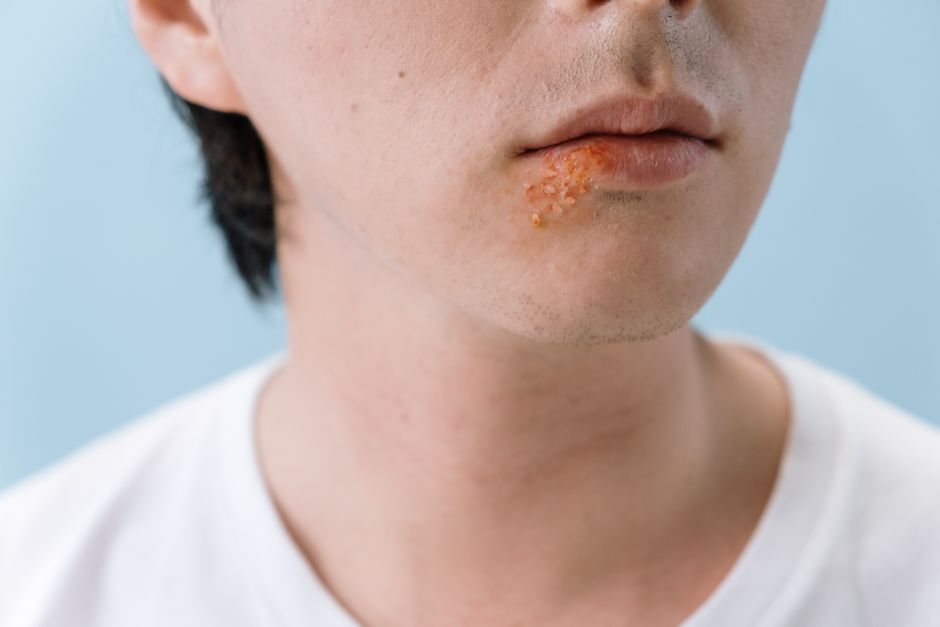
You have probably heard someone say cold sores are just herpes. Maybe you have even said it yourself. The short answer is yes — the virus that causes cold sores is a type of herpes. But the longer answer matters more for your health. Cold sores and genital herpes are caused by different strains of the same family of viruses. They are not the same infection, and they do not behave the same way. This distinction affects how you treat them, how you talk about them, and how you think about transmission.
What Virus Actually Causes Cold Sores?
Cold sores are caused by the herpes simplex virus. Specifically, about 80 percent of cold sores come from HSV-1. The other 20 percent come from HSV-2. That second type is the one most people associate with genital herpes.
HSV-1 is incredibly common. The World Health Organization estimates that roughly 67 percent of the global population under 50 carries it. Most people get it in childhood from non-sexual contact like a kiss from a parent or sharing a cup. Once you have it, the virus stays in your body for life. It lives dormant in nerve cells near your ear. When it reactivates, you get a cold sore.
So yes — cold sores are herpes. But they are not the same as having genital herpes, even though the viruses are closely related. The distinction matters because the social stigma and the medical management are different.
Are Cold Sores And Herpes Really The Same Virus If They Come From Different Strains?
This is where the confusion lives. HSV-1 and HSV-2 are both herpes simplex viruses. They share about 50 percent of their DNA. They both cause sores. They both stay in your body forever. But they prefer different parts of the body.
HSV-1 prefers the mouth and face. HSV-2 prefers the genital area. This preference is called site tropism. It is not a hard rule. You can get HSV-1 on your genitals through oral sex. You can get HSV-2 on your mouth through genital contact. But the virus strains are not identical.
One key difference is recurrence rate. HSV-1 on the mouth tends to reactivate less often than HSV-2 on the genitals. Research published in the New England Journal of Medicine found that people with HSV-2 genital infections have about four times more outbreaks per year than those with HSV-1 oral infections. The virus type matters for how often you deal with symptoms.
Another difference is shedding. People with HSV-2 shed the virus more frequently even when they have no sores. This means they can transmit the virus without knowing it. HSV-1 sheds less often, though it still happens.
Can You Get Genital Herpes From Someone With a Cold Sore?
Yes. This is not a theoretical risk. It happens regularly. If someone with an active cold sore performs oral sex, they can transmit HSV-1 to the genitals of their partner. This is now one of the leading causes of new genital herpes cases.
Data from the CDC shows that HSV-1 now causes more new genital herpes infections than HSV-2 among young adults. This shift happened because fewer people get HSV-1 in childhood now. More people reach sexual activity without immunity. When they encounter HSV-1 through oral sex, it establishes a genital infection.
The reverse is also possible but less common. Someone with genital HSV-2 can transmit it to the mouth of a partner through oral sex. Oral HSV-2 infections tend to be mild and recur rarely. But they still count as herpes.
This is why the question “Are cold sores and herpes really the same virus?” matters for real-world decisions. If you have a cold sore, you can give someone genital herpes. That is not fearmongering. It is virology.




What Does Having HSV-1 Mean for Your Health Long Term?
For most people, HSV-1 is a nuisance. You get a sore, it heals in a week or two, and you move on. Some people have triggers: stress, sunlight, illness, or hormonal changes. Not everyone gets frequent outbreaks. Some people carry the virus and never have a single visible sore.
But there are two situations where HSV-1 becomes a bigger concern. The first is in newborns. If a pregnant woman has a first-time genital HSV-1 infection near delivery, the baby can get neonatal herpes. This is rare but serious. The CDC reports about 1 in 3,200 babies born in the US get neonatal herpes. It can cause brain damage or death.
The second concern is ocular herpes. This is when HSV-1 infects the eye. It can cause scarring and vision loss. It usually happens when someone touches a cold sore and then touches their eye. The American Academy of Ophthalmology says herpes simplex keratitis is a leading cause of infectious blindness in developed countries.
For healthy adults with normal immune systems, HSV-1 is not dangerous. It is uncomfortable and socially awkward. But it is not a threat to your overall health. The stigma often causes more distress than the virus itself.
How Are Cold Sores Treated and Can You Prevent Outbreaks?
There is no cure for HSV-1 or HSV-2. Once you have the virus, you have it for life. But you can manage outbreaks and reduce their frequency.
Antiviral medications are the standard treatment. The three main drugs are acyclovir, valacyclovir, and famciclovir. They work by stopping the virus from replicating. If you take them at the first sign of a sore — that tingle or burn — they can shorten the outbreak by a day or two. Some people take them daily as suppressive therapy to reduce outbreak frequency.
Over-the-counter creams like docosanol (Abreva) can help slightly. They are less effective than prescription antivirals but are available without a doctor visit. Some evidence suggests they reduce healing time by about half a day.
Home remedies are popular but have weak evidence. Lysine supplements are widely claimed to prevent outbreaks. Some small studies suggest a benefit. Larger, well-designed trials have not confirmed it. The National Institutes of Health lists lysine as having insufficient evidence for cold sore prevention. Lemon balm, tea tree oil, and propolis have some antimicrobial properties but no strong clinical data showing they work better than placebo.
What does work for prevention is identifying your triggers. If sunlight triggers your outbreaks, use SPF lip balm. If stress is your trigger, focus on sleep and stress management. This is not vague wellness advice. It is practical. The virus reactivates when your immune system is distracted. Keeping your immune system in good shape reduces outbreaks.
Comparing HSV-1 and HSV-2 at a Glance
| Feature | HSV-1 (Cold Sores) | HSV-2 (Genital Herpes) |
|---|---|---|
| Typical location | Mouth, lips, face | Genitals, anus, thighs |
| Global prevalence | About 67% under age 50 | About 13% aged 15-49 |
| Recurrence rate | Lower — average 1-2 per year | Higher — average 4-6 per year |
| Viral shedding | Less frequent | More frequent |
| Transmission without sores | Possible but less common | Common — up to 70% from asymptomatic shedding |
| Neonatal risk | Low unless first infection in late pregnancy | Higher risk overall |
| Stigma level | Lower — seen as “just cold sores” | Higher — seen as sexually transmitted |
This table makes one thing clear: these are not the same virus in different locations. They have different behaviors, different risks, and different social meanings. But they are both herpes simplex viruses. The question “Are cold sores and herpes really the same virus?” gets a qualified yes at the family level and a clear no at the strain level.
Common Misconceptions About Cold Sores and Herpes
One persistent myth is that you can only get cold sores from being sick or run down. Not true. The virus reactivates for many reasons, and sometimes for no clear reason at all. Healthy people with no obvious stress get outbreaks.
Another myth is that cold sores are only contagious when you can see them. This is false. The virus can shed from the skin even when no sore is visible. This is called asymptomatic shedding. It is less common with HSV-1 than HSV-2, but it still happens. A study in the Journal of the American Medical Association found that people with oral HSV-1 shed the virus on about 9 percent of days without any symptoms.
A third misconception is that having a cold sore means you have an STD. While HSV-1 can be transmitted sexually, most people get it in childhood from non-sexual contact. Calling every cold sore an STD is inaccurate and adds unnecessary shame. The virus does not care how you got it. It just cares that it has a home.
Finally, some people believe that once you have had a cold sore, you are immune to getting herpes elsewhere on your body. This is partially true but not completely. Having oral HSV-1 does provide some protection against getting HSV-1 on your genitals because your immune system already recognizes the virus. But it does not protect you against HSV-2. You can have oral HSV-1 and still acquire genital HSV-2.
What to Avoid When You Have a Cold Sore
Do not pick at the sore. This can spread the virus to other parts of your face or fingers. It can also cause bacterial infection and scarring. Let it heal on its own or with medication.
Do not share items that touch your mouth. This includes lip balm, utensils, towels, razors, and toothbrushes. The virus can survive on surfaces for a few hours. Sharing these items during an outbreak is a direct transmission risk.
Do not kiss anyone, especially babies or people with weakened immune systems. Newborns and people on chemotherapy or immunosuppressants are at higher risk for severe complications. A cold sore that is harmless to you can be dangerous to them.
Do not assume you are safe because the sore is small or almost healed. The virus is most contagious when the blister is present, but it can still spread during the healing phase. Wait until the sore is completely healed and the skin has returned to normal before close contact.
Do not rely on makeup to cover the sore. Lipstick or concealer can trap moisture and slow healing. It can also contaminate the makeup product, turning it into a source of reinfection. If you must cover it, use a clean applicator each time and throw away the product after the outbreak.
Frequently Asked Questions
Can you get cold sores from stress even if you have never had one before?
No. Stress can trigger a reactivation of the virus, but you cannot get a first-time cold sore from stress alone. You must already carry the virus.
Is it safe to have sex if you have a cold sore?
No. Oral sex can transmit HSV-1 to your partner’s genitals. Wait until the sore is fully healed before any intimate contact.
Does having a cold sore mean you have an STD?
Not necessarily. Most people get HSV-1 in childhood from non-sexual contact. It is not automatically a sexually transmitted infection.
Can cold sores spread to other parts of your own body?
Yes. If you touch a cold sore and then touch your eye or a cut on your skin, you can spread the virus. Wash your hands after touching the sore.
