
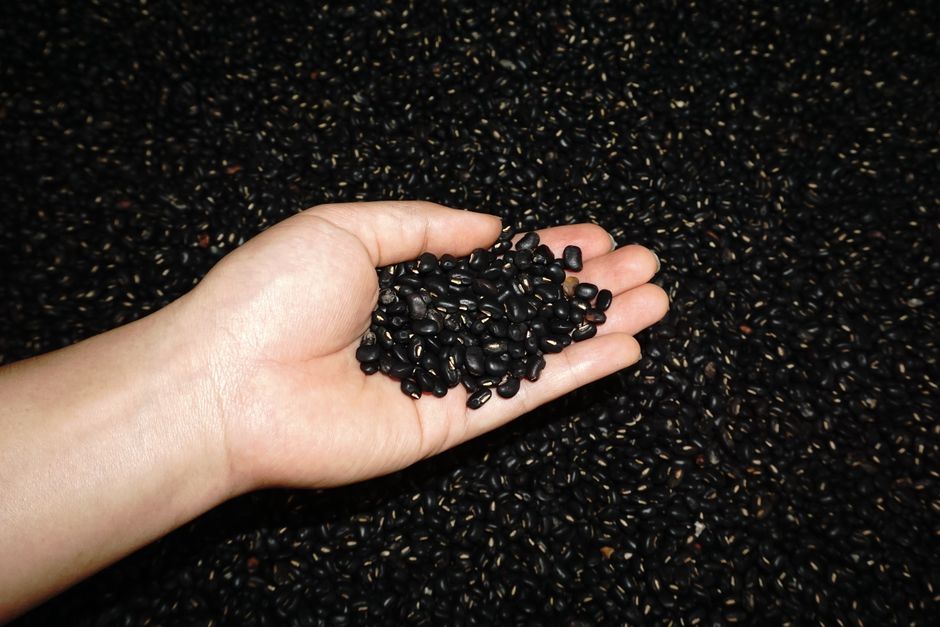
Black beans are not low FODMAP in normal serving sizes. A standard half-cup serving of cooked black beans is high in oligosaccharides — a type of FODMAP — and is one of the foods most likely to trigger digestive symptoms in people following a low FODMAP diet. Smaller portions may be tolerated by some people, but “low FODMAP” is a portion-dependent label, not a fixed property of a food.
That answer surprises a lot of people. Black beans have a reputation as a health food, and they are. But healthy and low FODMAP are two different questions. This article explains why black beans sit where they do, what the portion thresholds actually look like, and what your options are if you want the nutrition without the symptoms.
Why Are Black Beans High in FODMAPs?
The FODMAP in black beans is a group of carbohydrates called galacto-oligosaccharides, usually shortened to GOS. These are short chains of sugar molecules that human digestive enzymes cannot break apart.
Because we cannot digest them, they travel intact to the large intestine. There, gut bacteria ferment them. That fermentation produces gas — hydrogen, carbon dioxide, and in some people methane. In most people this is harmless. In people with irritable bowel syndrome and other sensitive guts, the extra gas and the osmotic pull of undigested carbohydrates can cause bloating, cramping, and changes in bowel habits.
This is not an allergy. It is not a sign the food is bad for you. It is a mechanical consequence of how these carbohydrates behave in the gut. The same GOS is found in chickpeas, lentils, kidney beans, and most other legumes.
It is a dose problem, not a yes-or-no problem
This is the part most food lists gloss over. FODMAP sensitivity depends on how much you eat. A tablespoon of black beans in a salad is a very different exposure than a full half-cup side dish. Monash University, which develops and maintains the FODMAP food database used widely in clinical practice, rates foods by portion. Black beans are typically listed as high FODMAP at a half-cup serving and lower at smaller amounts.
So the practical question is never “is this food allowed?” It is “how much, and how does my gut respond?”
What Portion of Black Beans Is Low FODMAP?
Portion thresholds are where people get into trouble, because the numbers vary by source and by individual. The most reliable reference is the Monash University FODMAP app, which is updated as testing evolves. At the time of writing, black beans are generally rated high FODMAP at a half-cup cooked serving and moderate or lower at roughly a quarter cup or less.
That said, I want to be careful here. Portion thresholds are not universal constants. They are based on lab testing of specific samples, and individual tolerance varies considerably. Someone with mild sensitivity may handle a third of a cup without symptoms. Someone with pronounced IBS may react to a few tablespoons.
The honest guidance: treat any portion number as a starting point for your own trial, not a guarantee. A registered dietitian trained in the low FODMAP diet can help you find your personal threshold safely.
Can You Reduce the FODMAPs in Black Beans?
Canned black beans are generally lower in FODMAPs than beans cooked from dry. The reason is simple — the canning liquid contains GOS that has leached out of the beans during soaking and processing. Draining and rinsing canned beans removes a meaningful portion of the water-soluble carbohydrates.
For dry beans, soaking and discarding the soaking water, then cooking in fresh water and discarding that too, reduces GOS content. Some studies suggest longer soaking times and repeated water changes reduce oligosaccharides further. But here is the caveat: no method removes them completely. Rinsing and soaking lower the load. They do not make black beans a low FODMAP food at a full serving.
Some clinicians recommend a product called alpha-galactosidase enzyme, taken with legume-containing meals, to help break down GOS. Beano is the best-known brand in the US. The evidence for it is modest and it does not work for everyone. It is widely used in practice but not a substitute for portion control.


How Do Black Beans Compare to Other Beans?
Most legumes carry GOS, but the amounts differ. Here is a general comparison based on commonly cited FODMAP ratings at standard serving sizes. Portion thresholds vary by source.
| Legume (cooked) | Typical FODMAP rating | Notes |
|---|---|---|
| Black beans | High at ½ cup | Lower at ~¼ cup or less |
| Chickpeas | High at ½ cup | Small portions often tolerated |
| Kidney beans | High at ½ cup | Similar GOS content |
| Lentils | High at ½ cup | Red lentils often better tolerated |
| Canned, rinsed black beans | Lower than cooked from dry | Rinsing removes some GOS |
| Firm tofu | Low FODMAP | Processing removes most GOS |
Notice the tofu row. Firm tofu is low FODMAP because the manufacturing process — coagulating soy milk and pressing out the liquid — removes most of the oligosaccharides. This is a useful illustration of a broader point: processing changes FODMAP content, sometimes dramatically. The same principle is why canned beans are gentler than dry.
Are Black Beans Good for You if You Are Not on a Low FODMAP Diet?
Yes. For people without FODMAP sensitivity, black beans are a genuinely strong food. They provide plant protein, fiber, folate, iron, magnesium, and potassium. The fiber includes both soluble and insoluble types, and the GOS itself acts as a prebiotic — it feeds beneficial gut bacteria.
That last point deserves emphasis. The very compounds that cause symptoms in sensitive people are the ones that nourish gut microbes. GOS is not a toxin. It is food for your microbiome. The problem is purely one of tolerance, not of the food being harmful.
For most healthy adults, regular legume consumption is associated with favorable health outcomes in large observational studies. US dietary guidance encourages beans as part of a healthy eating pattern. The low FODMAP diet is a short-term clinical tool for people with diagnosed IBS, not a general health diet.
What Should You Do If You React to Black Beans?
First, get clarity on what is actually happening. Bloating after beans is common and does not automatically mean IBS. If symptoms are severe, persistent, or accompanied by weight loss, blood in the stool, or fever, see a doctor. Those are not FODMAP issues — they need proper evaluation.
If you have diagnosed IBS and want to keep beans in your diet, a few approaches are commonly used in clinical practice:
- Start with small portions — a few tablespoons — and increase gradually over weeks.
- Choose canned beans, drain and rinse them thoroughly before eating.
- Pair beans with other foods rather than eating them alone.
- Consider alpha-galactosidase enzyme products, understanding the evidence is limited.
- Work with a registered dietitian rather than eliminating foods on your own.
The low FODMAP diet is a three-phase protocol — elimination, reintroduction, and personalization. It is not meant to be followed indefinitely. Long-term restriction of FODMAP-rich foods can reduce fiber intake and narrow diet diversity, which has its own downsides. The goal is to identify your personal triggers and liberalize your diet as much as your gut allows.
The Bottom Line on Black Beans and FODMAPs
Black beans are high FODMAP at standard serving sizes. That is a fact, not a criticism. They remain a nutritious food for most people, and small portions or properly prepared canned beans may work for some sensitive individuals. The right answer for you depends on your gut, your portion size, and whether you have a diagnosed condition that calls for FODMAP restriction in the first place.
Frequently Asked Questions
Are black beans low FODMAP?
No. Black beans are high FODMAP at a standard half-cup cooked serving because they contain galacto-oligosaccharides. Very small portions may be tolerated by some people.
How much black beans can you eat on a low FODMAP diet?
Monash University rates black beans as high FODMAP at half a cup and lower at roughly a quarter cup or less. Individual tolerance varies, so a dietitian can help you find your own threshold.
Are canned black beans lower in FODMAPs than dry beans?
Yes, generally. Draining and rinsing canned beans removes some of the GOS that leaches into the liquid, though it does not make them low FODMAP at a full serving.
Do black beans cause gas because of FODMAPs?
Yes, in sensitive people. The GOS in black beans is fermented by gut bacteria, which produces gas and can trigger bloating or cramping in people with IBS.
