
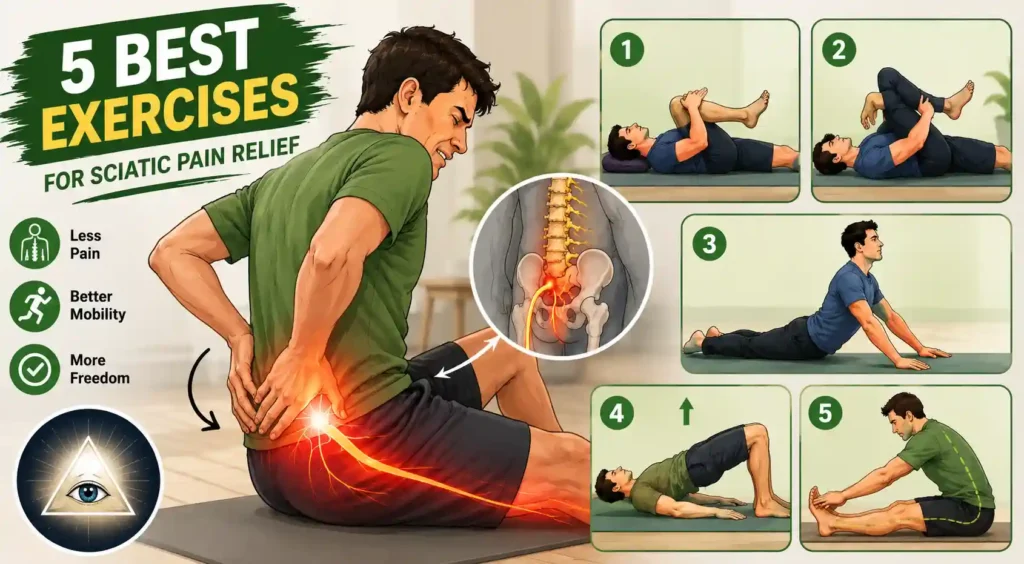
The best exercises for sciatic nerve pain usually combine gentle nerve movement, hip mobility, and core support. These movements may help reduce pressure on the sciatic nerve and improve movement without placing heavy stress on the lower back. Exercises work best when matched to the cause of the Nerve pain, not just the location of the symptoms.
Sciatica is often treated online like a stretching problem. That’s part of the picture, but not the whole thing. Some people improve with stretching. Others feel worse because the nerve itself is irritated, not just the muscles around it.
⚡Key Takeaway
- Stretching is not always the answer for sciatic nerve pain.
- Nerve glides and stability exercises often help more than aggressive stretching.
- Pain shooting farther down the leg during exercise usually means backing off.
- Walking can help, but long walks during flare-ups sometimes worsen symptoms.
- The cause of sciatica matters. Disc irritation behaves differently from hip-related compression.
What Is the Best Exercise for Sciatic Nerve Pain?
The best exercise for sciatic nerve pain is usually a gentle movement that reduces nerve irritation without increasing pressure on the lower back. For many people, that means a mix of nerve glides, spinal extension exercises, and light hip strengthening rather than aggressive stretching alone.
A lot depends on what is causing the symptoms.
If the pain comes from a lumbar disc issue, extension-based movements like the McKenzie stretch often help. If the problem is more related to hip tightness or piriformis irritation, targeted hip stretches may feel better. These are not interchangeable problems, even though they both get labeled “sciatica.”
Research published in the Journal of Orthopaedic & Sports Physical Therapy has also found that movement-based rehabilitation may help reduce pain and improve function in some people with lumbar radiculopathy, a common cause of sciatica.
One thing that stood out while reviewing competitor content: almost every article repeats the same stretches without explaining why they work — or why they sometimes don’t.
Quick Takeaway: The best sciatic exercises reduce irritation while improving movement, not just flexibility.
Why Some Sciatica Exercises Help — and Others Make Pain Worse
Sciatica is not one condition. It is a symptom pattern. That distinction matters more than most internet advice admits.
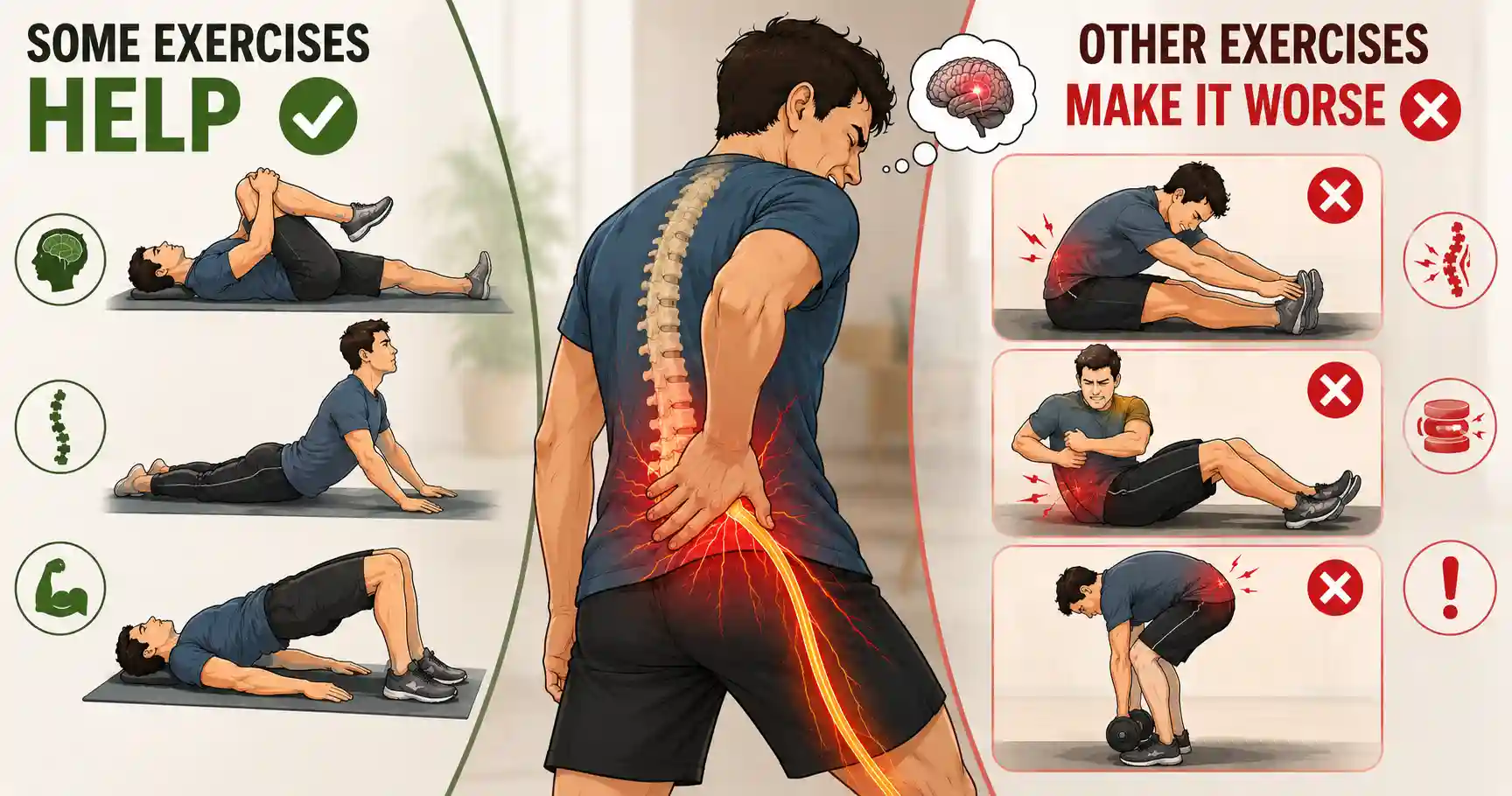
Some people have:
- disc-related nerve irritation
- spinal stenosis
- piriformis-related compression
- inflammation around the nerve root
- muscle tightness around the hip
The same stretch can help one person and aggravate another.
For example, aggressive hamstring stretching during an acute flare can sometimes increase nerve tension rather than relieve it. That sharp pulling feeling down the leg is not always “a good stretch.” In some cases, it is direct nerve irritation.
A lot of online content misses the difference between:
- stretching a muscle, and
- mobilizing a nerve
Those are not the same thing.
| Exercise Type | Usually Helps With | May Aggravate |
|---|---|---|
| Nerve glides | Mild nerve irritation | Aggressive pulling |
| Hamstring stretching | Tight muscles | Acute flare-ups |
| Cobra extensions | Disc-related sciatica | Some stenosis cases |
| Deep forward bends | Flexibility | Disc irritation |
| Glute strengthening | Pelvic support | Poor form overload |
Another thing competitors rarely explain: pain location matters.
Pain mostly in the buttock or hip behaves differently from pain shooting below the knee. Symptoms traveling down the leg often suggest more nerve involvement.
That does not automatically mean severe damage. But it changes which exercises tend to work best.
Quick Takeaway: Sciatica exercises fail when people treat every type of nerve pain exactly the same.
What Are the 5 Best Exercises for Sciatic Nerve Pain Relief At Home?
For nerve pain relief, physical therapists commonly recommend these exercises because they target different parts of the problem:
- nerve mobility
- spinal pressure
- hip tension
- pelvic stability
The goal is controlled movement, not pushing through pain.
1. Sciatic Nerve Glide
This is one of the most useful exercises for irritated nerves because it focuses on movement, not deep stretching.
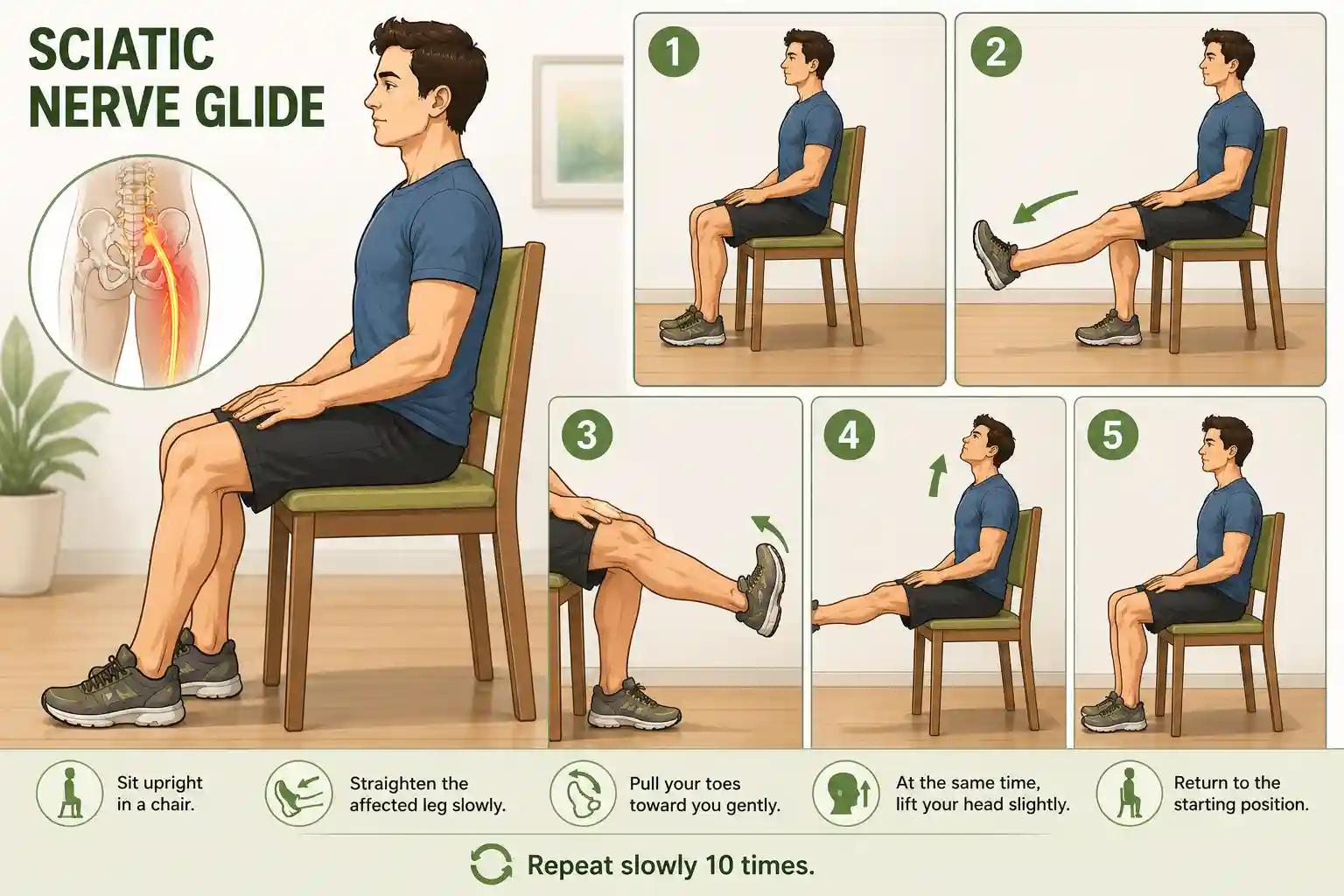
How to do it
- Sit upright in a chair.
- Straighten the affected leg slowly.
- Pull your toes toward you gently.
- At the same time, lift your head slightly.
- Return to the starting position.
- Repeat slowly 10 times.
- Why it may help: Nerve glides may improve how the sciatic nerve moves through surrounding tissues without aggressively stretching it.
- Common mistake: People often pull too hard trying to “stretch the nerve.” That usually backfires. You should feel mild movement, not sharp pain.
2. McKenzie Extension (Cobra Position)
This exercise is commonly used for disc-related sciatic symptoms.
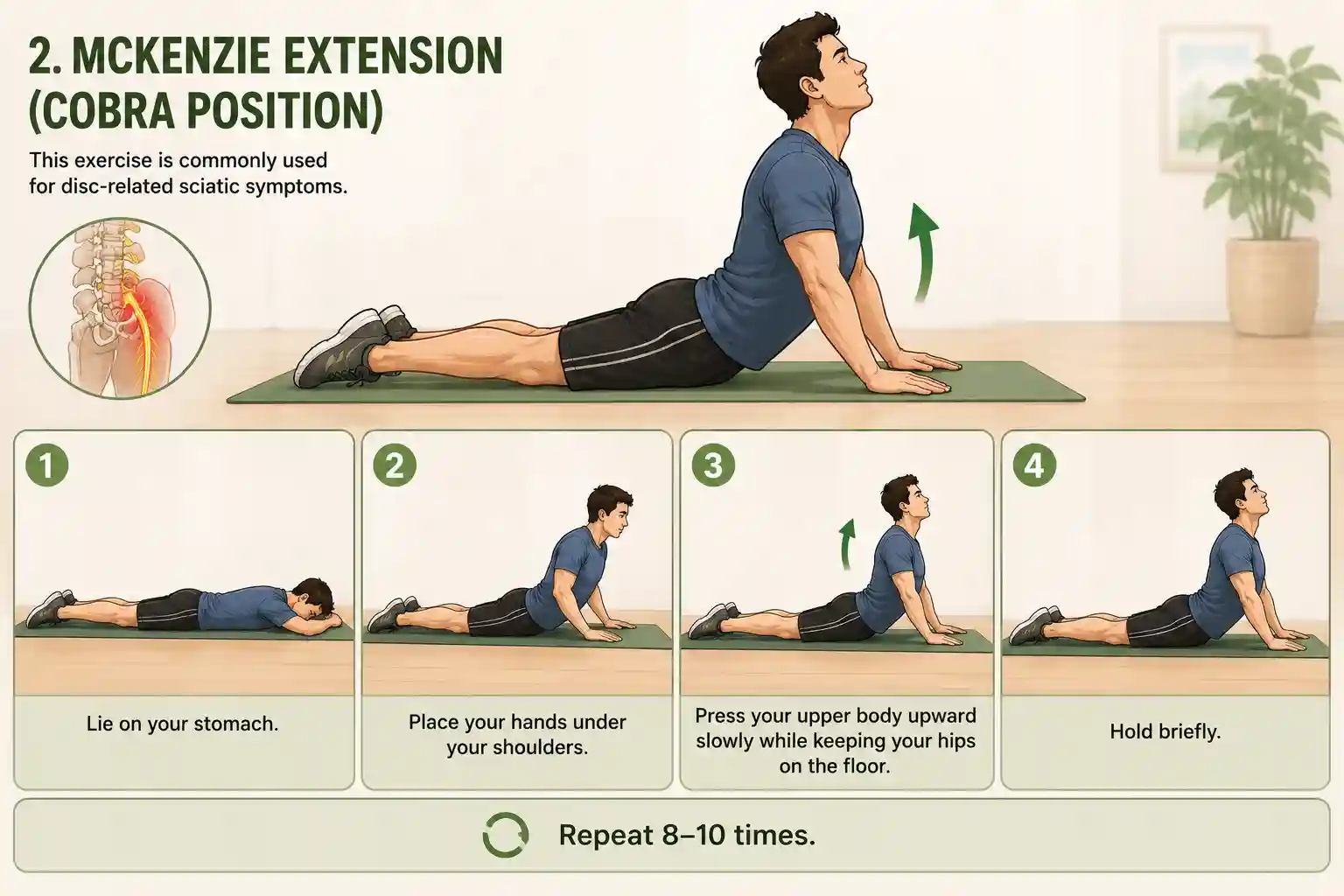
How to do it
- Lie on your stomach.
- Place your hands under your shoulders.
- Press your upper body upward slowly while keeping your hips on the floor.
- Hold briefly.
- Repeat 8–10 times.
- Why it may help: Extension movements sometimes reduce pressure from bulging discs pressing on nerve roots. Research around directional-preference therapy suggests some people respond strongly to extension-based movement patterns.
- Common mistake: Lifting too high, too fast. If symptoms travel further down the leg during the movement, stop. People with spinal stenosis sometimes tolerate this exercise poorly.
3. Piriformis Stretch
The piriformis muscle sits deep in the hip near the sciatic nerve.
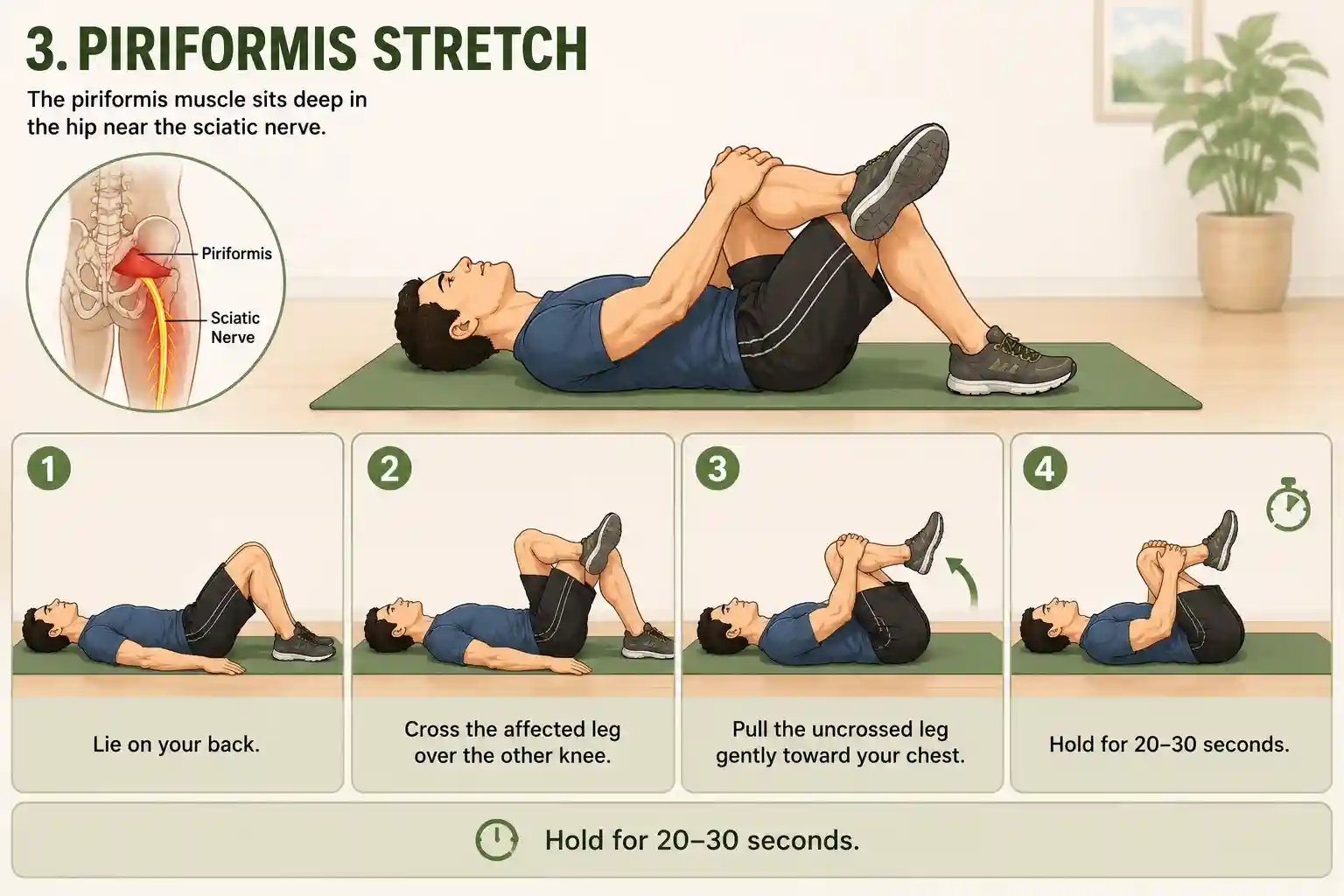
How to do it
- Lie on your back.
- Cross the affected leg over the other knee.
- Pull the uncrossed leg gently toward your chest.
- Hold for 20–30 seconds.
- Why it may help: Tight hip muscles can increase pressure around the sciatic nerve area in some people.
- Common mistake: Twisting the lower back aggressively instead of isolating the hip. This stretch should feel controlled, not intense.
4. Pelvic Tilt
Pelvic tilts help improve core support without heavily loading the spine.
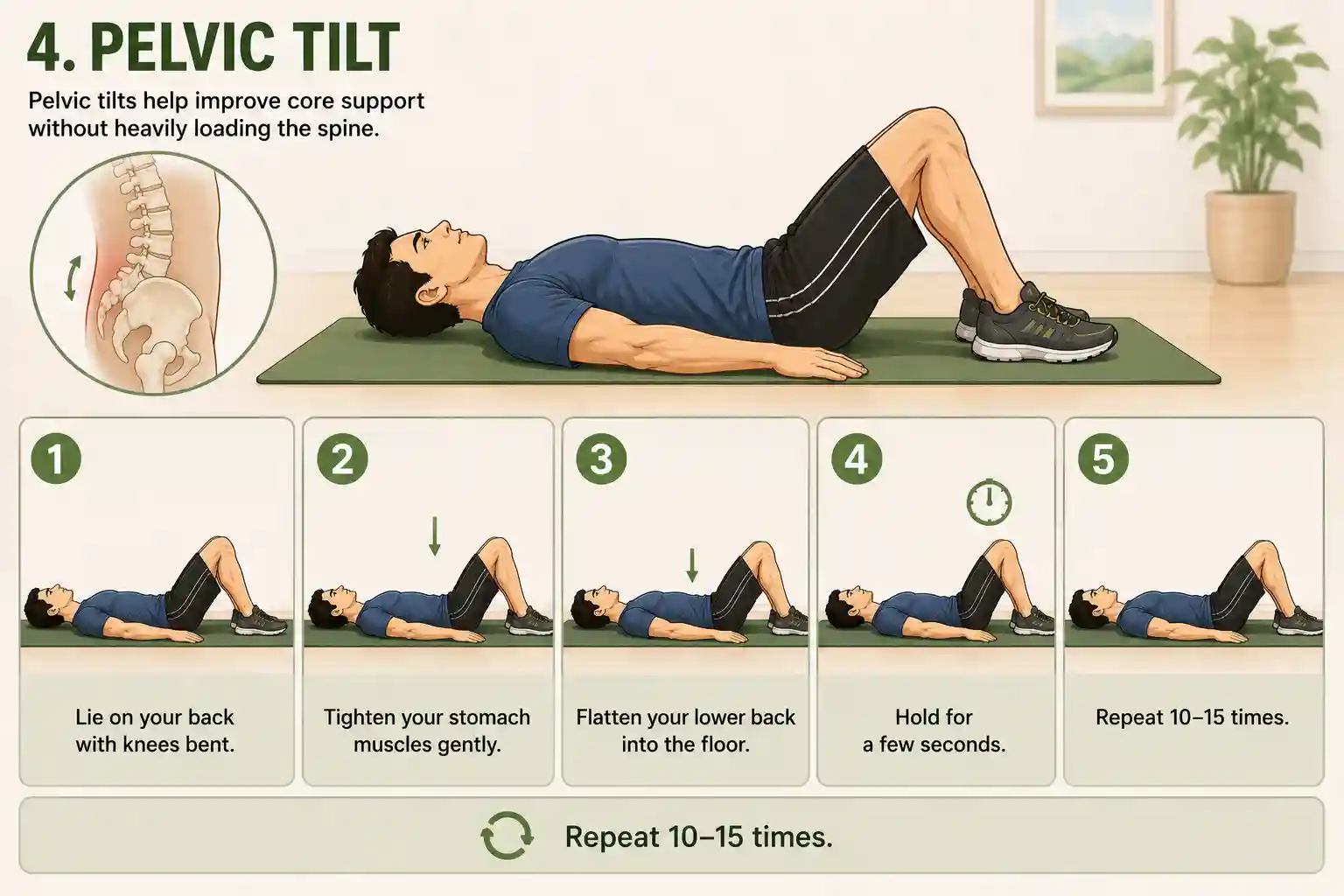
How to do it
- Lie on your back with knees bent.
- Tighten your stomach muscles gently.
- Flatten your lower back into the floor.
- Hold for a few seconds.
- Repeat 10–15 times.
- Why it may help: Weak trunk support often contributes to recurring lower back stress. Many people focus only on flexibility while ignoring stability. Physical therapists usually care about both.
- Common mistake: Holding your breath or forcing the movement too hard.
5. Glute Bridge
This exercise strengthens the hips and glutes, which help support pelvic alignment.
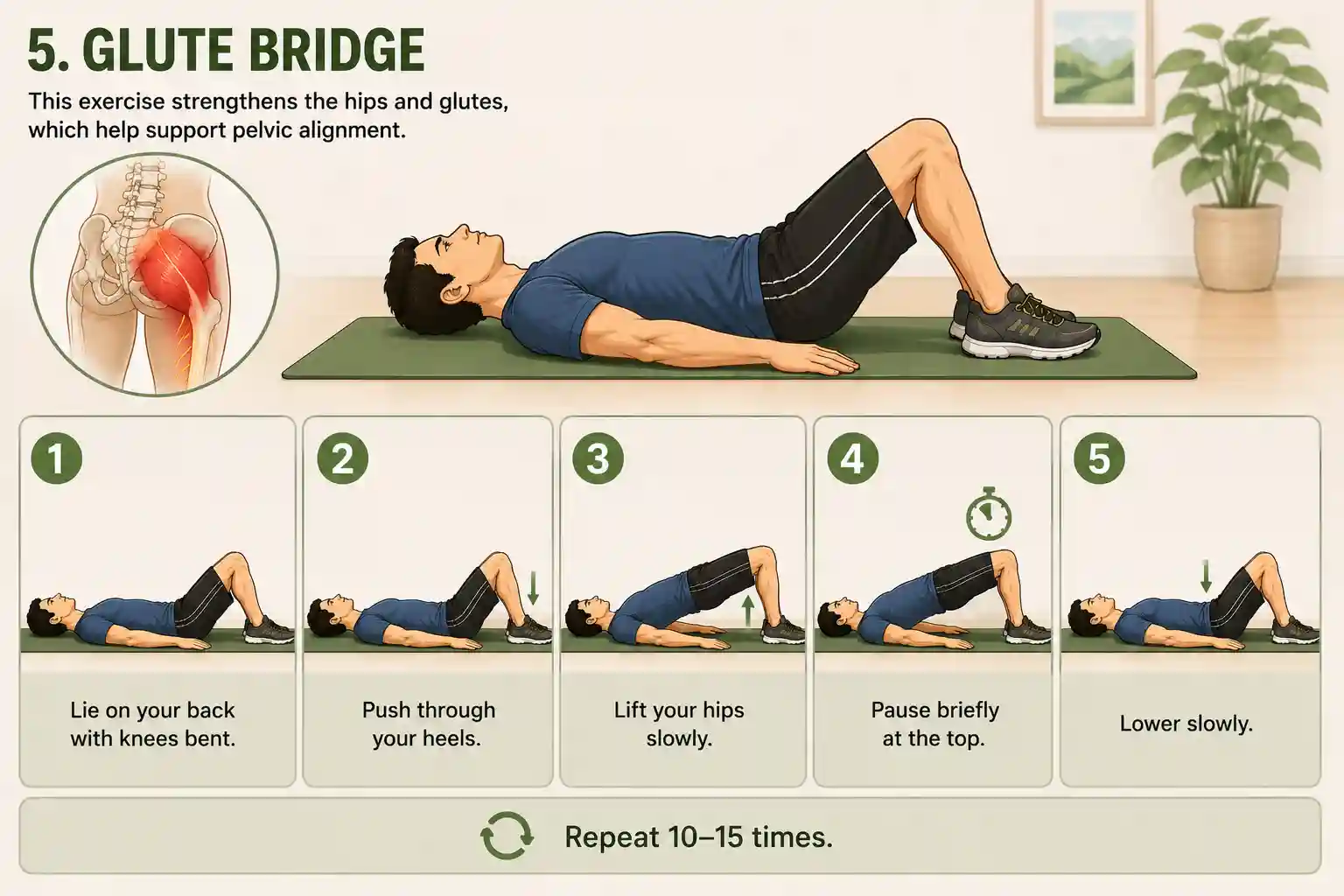
How to do it
- Lie on your back with knees bent.
- Push through your heels.
- Lift your hips slowly.
- Pause briefly at the top.
- Lower slowly.
- Why it may help: Weak glutes can shift extra workload onto the lower back during walking and standing. That compensation pattern shows up constantly in chronic sciatica cases.
- Common mistake: Arching the lower back instead of driving through the hips.
Quick Takeaway: The best sciatic exercises improve movement control and reduce irritation instead of forcing deeper stretches.
What Exercises Should You Avoid With Sciatica?
Some exercises increase nerve irritation, especially during flare-ups. The biggest mistake is assuming pain automatically means you are “loosening things up.”
Exercises that commonly worsen symptoms include:
- deep toe-touch stretching
- ballistic bouncing stretches
- heavy twisting movements
- high-impact jumping
- prolonged sit-up variations
- heavy deadlifts during active flare-ups
Long periods of bed rest are also outdated advice. The NHS and Mayo Clinic both generally recommend staying gently active instead of avoiding movement completely.
Still, “keep moving” gets oversimplified online. Walking through worsening leg pain is not always smart rehab. There is a difference between mild discomfort and increasing nerve irritation.
Signs you should back off:
- pain shooting farther down the leg
- growing numbness
- increasing weakness
- burning or electric pain worsening after exercise
Quick Takeaway: Exercises that sharply increase radiating leg pain usually do not help the nerve calm down.
Other Helpful Neuropathy Posts
- Is Heat or Ice Better for Nerve Pain? What Science Says!

- 5 Best Exercises for Sciatic Nerve Pain Relief At Home.

- How to Alleviate Sciatic Nerve Pain Naturally.
- Best Thing For Sciatic Nerve Pain: At Home What Really Work?
- How To Reduce Neuropathy Pain Naturally. 7 Remedies Methods.

- What Is Neuropathy? Symptoms, Causes & Stages




Is Walking Good for Sciatica Relief?
Walking is often one of the safest starting points for mild-to-moderate sciatica.
Short, controlled walks may help:
- improve circulation
- reduce stiffness
- maintain mobility
- prevent prolonged compression from sitting
But more is not always better.
Some people worsen symptoms by taking long walks during active flare-ups because the nerve remains irritated with repetitive motion. Walking posture also matters more than people think. Leaning forward heavily or taking oversized strides sometimes increases lower back stress.
A useful rule:
- Symptoms staying stable or easing during walking is usually a good sign
- Symptoms intensifying down the leg usually mean scaling back
As of 2026, most rehab guidance supports gradual movement progression rather than complete inactivity.
Quick Takeaway: Walking often helps sciatica, but intensity and symptom response matter more than distance.
What Is the Best Exercise for Sciatic Nerve Pain During Pregnancy?
Pregnancy-related sciatica behaves differently because posture, pelvic pressure, and hormone changes all affect the lower back and hips.
The safest exercises are usually:
- pelvic tilts
- gentle walking
- supported piriformis stretches
- light mobility work
Deep twisting and aggressive stretching are usually poor choices during pregnancy.
One thing that gets overlooked: many pregnant women are not dealing with classic nerve compression from a spinal disc.
The discomfort is often more positional and pelvic-related. Those changes that movements feel are helpful.
What Is a Good 5 Minute Sciatic Nerve Exercise Routine?
A short daily routine works better for many people than occasional aggressive stretching sessions.
Try this simple sequence:
| Exercise | Time |
|---|---|
| Pelvic tilt | 1 minute |
| Nerve glide | 1 minute |
| Cobra extension | 1 minute |
| Piriformis stretch | 1 minute |
| Easy walking or marching | 1 minute |
The goal is consistency, not intensity. A surprising number of people flare themselves up by treating rehab like a workout challenge. That mentality usually slows recovery.
When Should You Stop Exercising and See a Doctor?
Sciatica sometimes improves with time and movement. Sometimes it signals a more serious nerve problem.
Get medical attention if you develop:
- Loss of bladder or bowel control
- Rapidly worsening weakness
- Numbness in the groin area
- Severe pain after injury
- Symptoms lasting several weeks without improvement
Those symptoms need proper evaluation, not another YouTube stretching video.
Quick Takeaway: Progressive weakness or loss of bladder control requires urgent medical attention.
FAQs
What is the fastest way to calm sciatic nerve pain?
The fastest relief usually comes from reducing positions that irritate the nerve while staying gently active. Short walks, position changes, heat, ice, and controlled exercises often help more than complete rest. Severe flare-ups may still require medical treatment or physical therapy evaluation.
Is stretching bad for sciatica?
Stretching is not always bad for sciatica, but aggressive stretching during active nerve irritation can worsen symptoms. Many people assume stronger stretching equals better relief. That is not always true. Gentle movement and nerve glides are sometimes tolerated better than deep static stretches.
Can walking make sciatica worse?
Yes. Walking sometimes worsens symptoms during active flare-ups, especially if pain intensifies down the leg over time. Short, controlled walks are usually better tolerated than long distances. Monitoring symptom response matters more than forcing a specific step count.
What is the best sleeping position for sciatica?
Side sleeping with a pillow between the knees often reduces pressure on the lower back and hips. Some people prefer sleeping on their backs with a pillow under their knees. Stomach sleeping usually increases lower back extension and may aggravate symptoms in some cases.
Are nerve glides better than stretching for sciatica?
Nerve glides may work better when the sciatic nerve itself feels irritated or sensitive. Traditional stretching may help more when the surrounding muscles are tight. Many rehab programs combine both approaches carefully instead of relying on only one method.
Sciatica recovery is usually less about finding one magical stretch and more about calming irritation while restoring normal movement gradually. The best exercises for sciatic nerve pain are the ones that reduce symptoms consistently without increasing nerve sensitivity over time.
⚠️ Medical Disclaimer
This content is for informational and educational purposes only and is based on online research, publicly available health sources, and general exercise guidance. It is not medical advice, diagnosis, or treatment.
Sciatic nerve pain can have different causes, including disc problems, nerve irritation, muscle compression, or spinal conditions. Some exercises may help certain people while worsening symptoms in others.
Always consult a qualified doctor, physiotherapist, or healthcare professional before starting any new exercise program, especially if you have severe pain, numbness, weakness, balance issues, or an existing spinal condition.

Recent Posts