
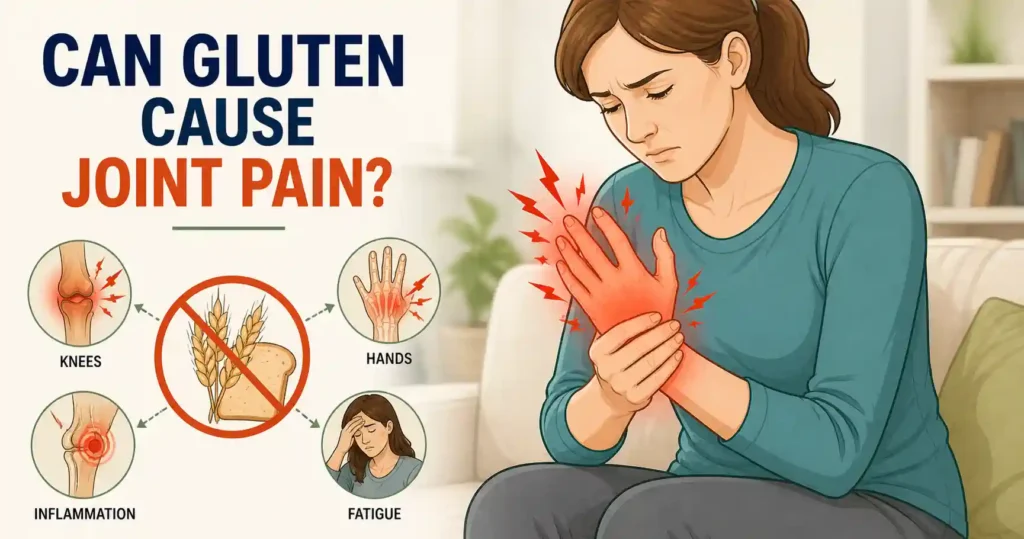
Yes, gluten can cause joint pain in certain people, especially those with celiac disease or gluten sensitivity. This happens when the immune system reacts to gluten and triggers inflammation that can affect joints. Not everyone experiences this, but for some, the link is clear and repeatable.
Key Takeaways
- Gluten can trigger joint pain in some people — but not everyone is affected the same way.
- The connection is strongest in celiac disease — where gluten causes an immune-driven inflammatory response.
- Joint pain often starts as stiffness — not sharp pain, especially in early stages.
- Timing of symptoms is a key clue — pain or stiffness appearing after gluten intake suggests a possible link.
- Accurate testing requires elimination — removing gluten strictly and tracking symptom changes is the only reliable way.
Can gluten cause joint pain?
Gluten can cause joint pain, but only in specific conditions. It is not a universal trigger.
There are three main groups where this shows up:
- Celiac disease (autoimmune reaction to gluten)
- Non-celiac gluten sensitivity (less defined, but real in some cases)
- People with existing inflammatory conditions
In celiac disease, the immune system attacks the small intestine when gluten is consumed. That same immune activity doesn’t stay isolated. It can spill over into other tissues, including joints.
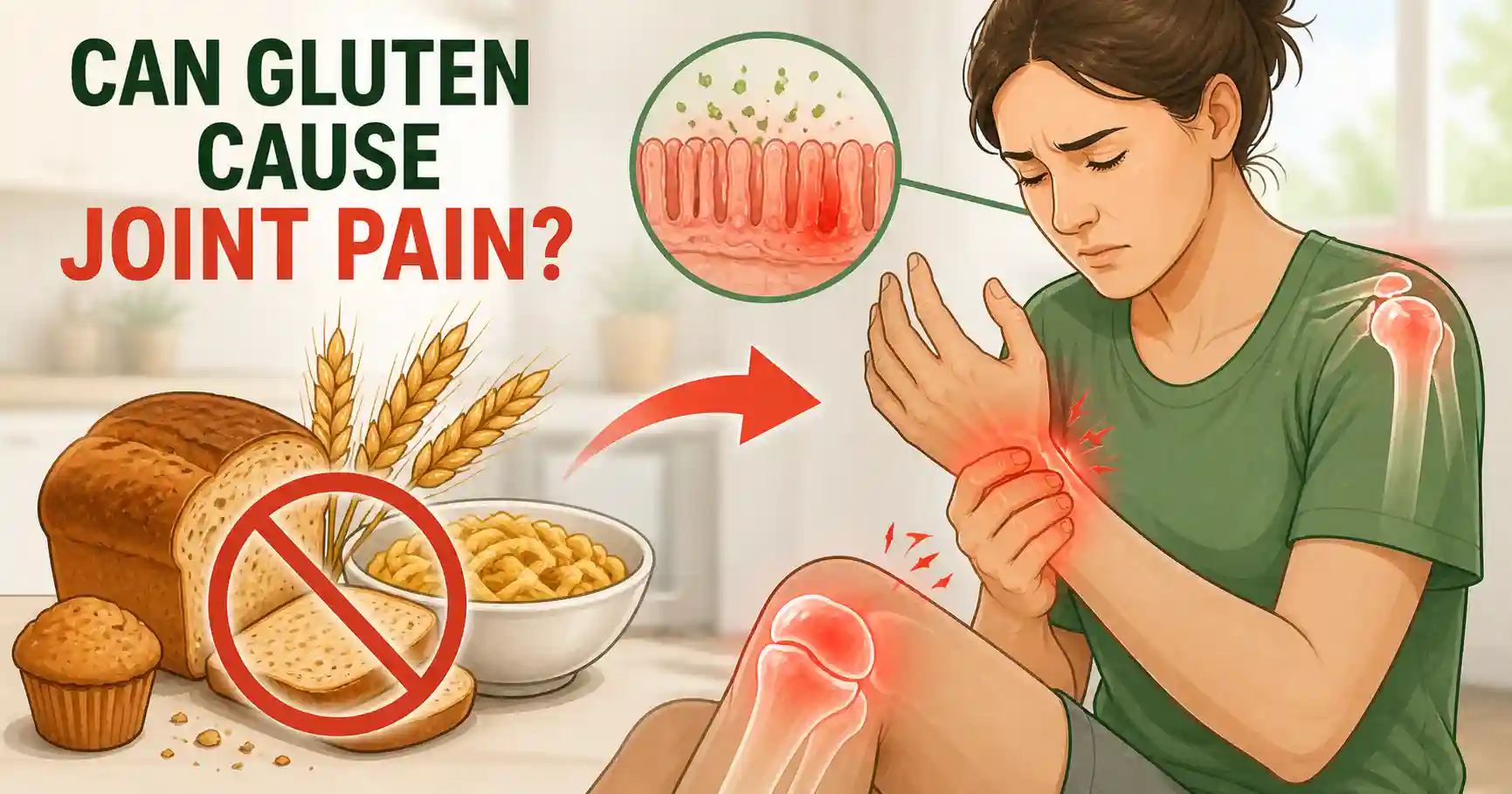
Non-celiac gluten sensitivity is less clear. Some people report joint pain that improves when gluten is removed, but the mechanism isn’t fully understood. As of 2026, research still debates how consistent this link is.
Here’s the uncomfortable truth: For most people, gluten does not cause joint pain. The problem is real—but not widespread.
Quick Takeaway: Gluten can trigger joint pain, but mainly in people with immune-related sensitivity to it.
Related Contents
- Vitamins for Joint Pain and Stiffness: What Actually Helps?

- Joint Genesis Reviews 2026: Honest Look at Complaints & Results
- Can Gluten Cause Joint Pain? Causes & Symptoms Explained
- Big Toe Joint Pain Walking, Bending & Standing: Causes & Treatment
- Home Remedies for Gout Flare Up: What Works and What Fails
- Joint Genesis Reviews 2026: What Complaints Real Users Have!






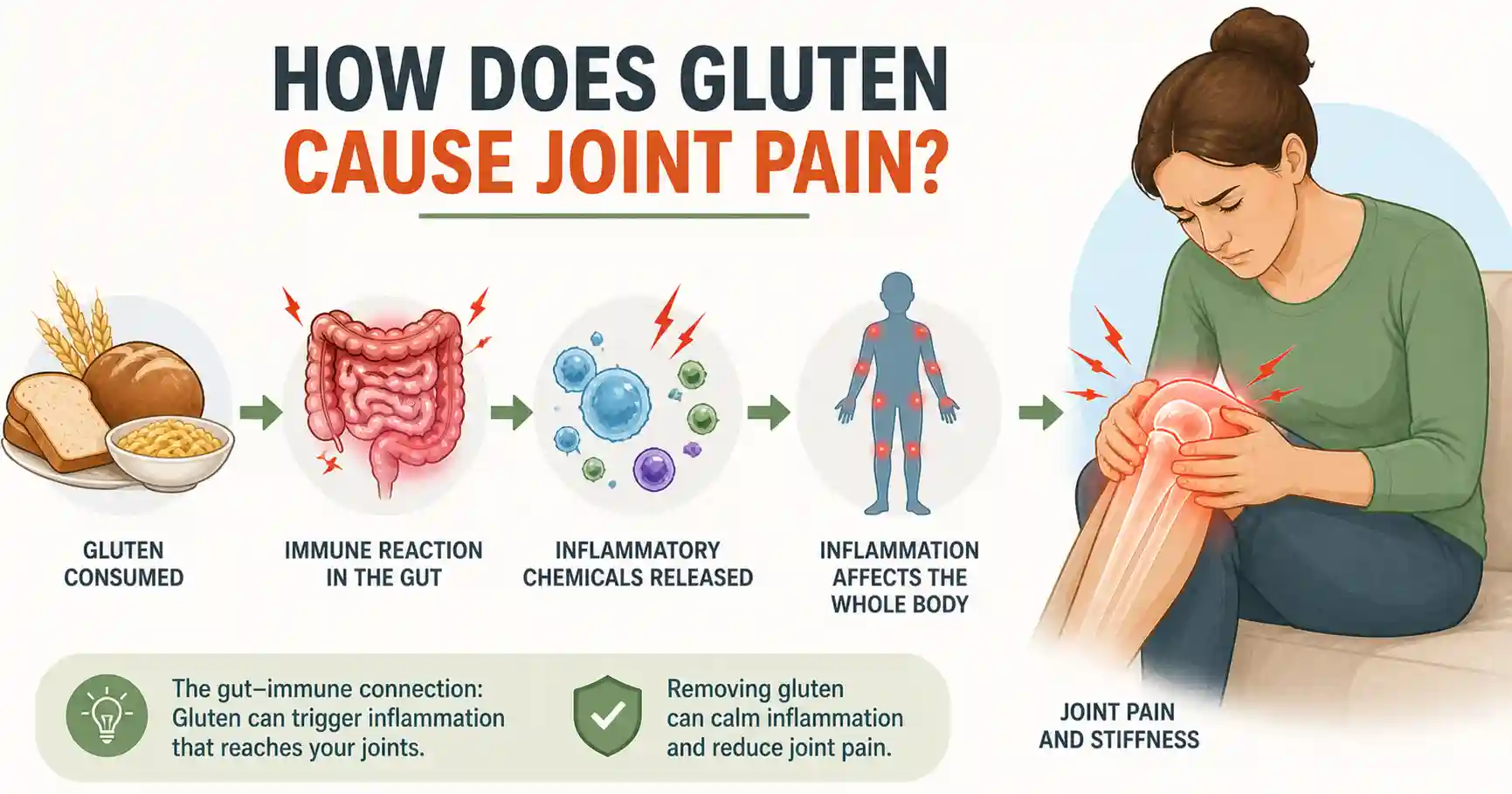
How does gluten cause joint pain?
Gluten-related joint pain happens through an immune-driven inflammation pathway.
The process looks like this:
- Gluten enters the digestive system
- The immune system reacts (in sensitive individuals)
- Inflammatory chemicals are released
- Inflammation spreads beyond the gut
- Joints become affected
In people with celiac disease, this response is well-documented. A review in Nutrients (2020) showed that systemic inflammation in celiac patients can affect joints, skin, and the nervous system, not just the gut.
One limitation: many studies focus on diagnosed cases, so milder sensitivity is harder to measure.
That’s why treating only the joint pain (ice, rest, painkillers) doesn’t solve the issue if gluten is the trigger. Another detail is that inflammation doesn’t always feel dramatic. It can show up as stiffness, not sharp pain.
Quick Takeaway: Gluten doesn’t damage joints directly—it triggers immune inflammation that can reach them.
What does gluten-related joint pain feel like?
Gluten-related joint pain has patterns. It’s not random.
Common characteristics:
- Stiffness, especially in the morning
- A dull, aching sensation rather than sharp pain
- Flare-ups after eating gluten (often within hours to a day)
- Multiple joints are involved, not just one
What stands out is timing. People often notice:
- Symptoms worsen after meals containing gluten
- Symptoms improve after avoiding it
This isn’t always immediate. Some reactions take 24–48 hours, which makes the connection harder to spot.
- Arthritis → steady progression
- Gluten-related pain → fluctuates based on diet
Can gluten cause joint pain and inflammation, swelling, or stiffness?
Yes, gluten can trigger inflammation, swelling, and stiffness, but the pattern matters.
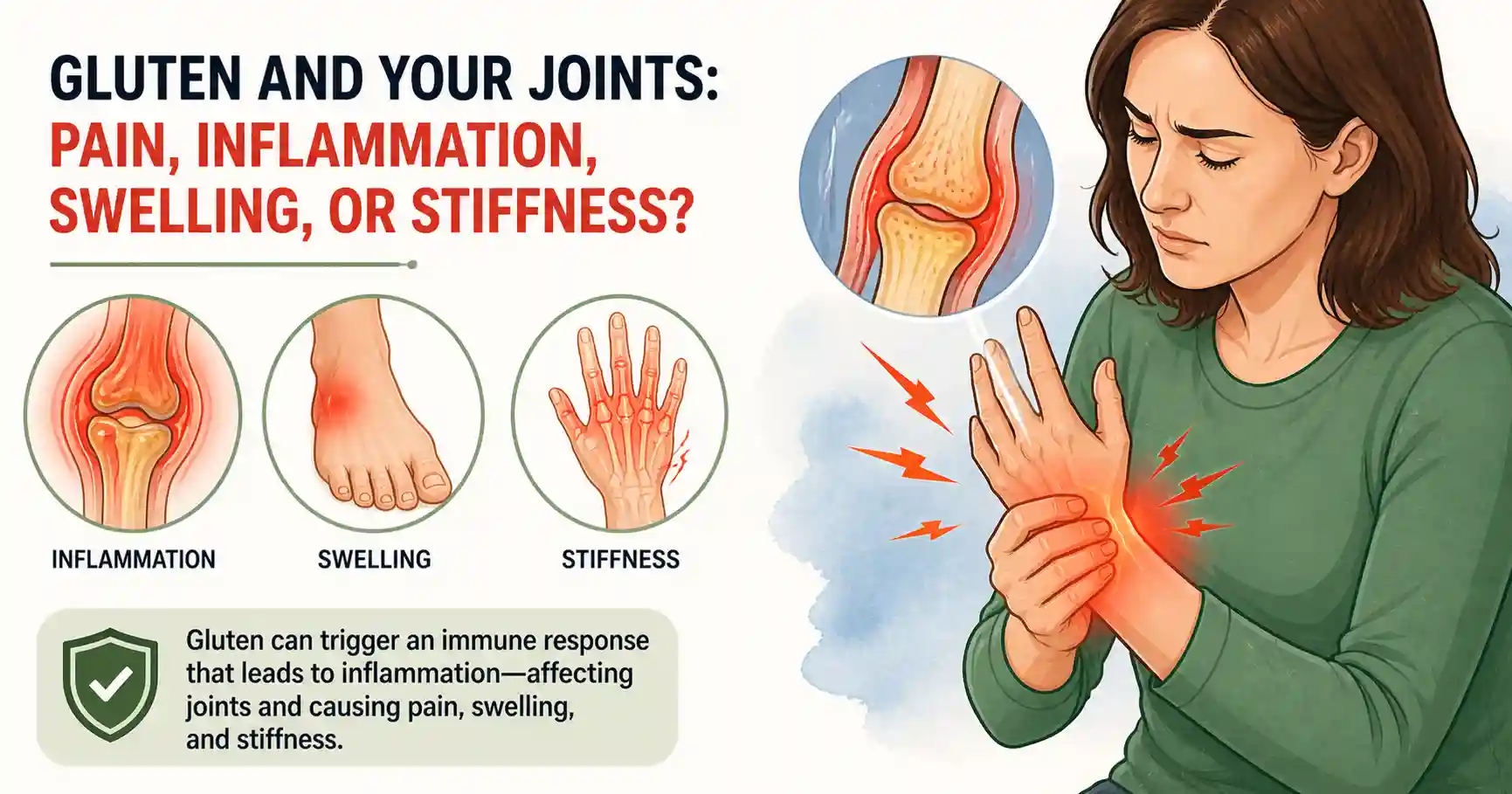
- Inflammation → underlying immune response
- Swelling → more common in stronger reactions (like celiac flare-ups)
- Stiffness → often the earliest sign
Stiffness is the one thing people ignore. It doesn’t feel serious, so it gets dismissed. But in gluten-related cases, stiffness is often the first signal before pain increases.
The Arthritis Foundation (2022) notes that inflammatory responses can present as joint stiffness and discomfort even without visible swelling.
>> What most advice gets wrong: People wait for swelling. By then, the reaction is already stronger.
Quick Takeaway: Gluten-related joint issues often start as stiffness before progressing to pain or swelling.
Can gluten cause joint pain in hands, fingers, or knees?
Yes, gluten-related joint pain can show up in different areas, and the location is not random.
| Joint Area | Common Pattern | Why It Happens |
|---|---|---|
| Hands & fingers | Stiffness, mild swelling | Smaller joints react quickly to inflammation |
| Knees | Aching, pressure-like pain | Weight-bearing joints amplify inflammation |
| Multiple joints | Symmetrical discomfort | Immune response affects the body systemically |
Hands and fingers are often the first place people notice stiffness. Knees tend to feel it more during movement.
Important distinction: If pain is isolated to one joint, gluten is less likely to be the cause. System-wide patterns point more toward immune triggers.
Can celiac disease cause joint pain?
Yes. This is the clearest and most supported link.
Celiac disease is an autoimmune condition. When gluten is consumed, the immune system reacts aggressively. That reaction can extend beyond the gut.
Joint pain is considered an extraintestinal symptom of celiac disease. It doesn’t happen in every case, but it is well recognized.
A study in The American Journal of Gastroenterology (2019) found that musculoskeletal symptoms, including joint pain, were present in a notable portion of celiac patients, sometimes even before digestive symptoms appeared.
That last part matters. Some people have joint pain without obvious gut issues, which delays diagnosis.
Quick Takeaway: Celiac disease can cause joint pain, sometimes even before digestive symptoms show up.
Does gluten cause arthritis?
No. Gluten does not directly cause arthritis. But it can make symptoms worse in some people.
There’s a difference between:
- Causing a disease
- Triggering symptoms of an existing condition
For example:
- Someone with rheumatoid arthritis may notice worse symptoms after gluten
- Someone without underlying issues likely won’t
This is where a lot of misinformation spreads. Gluten is often blamed for arthritis itself, which isn’t supported by strong evidence.
That said, some people report improvement in symptoms on a gluten-free diet. That may relate to reduced inflammation—but it’s not universal.
How do you know if gluten is causing your joint pain?
You don’t guess. You test it properly. The most practical method is an elimination diet.
Step-by-step approach:
- Remove gluten completely for 2–6 weeks
- Track symptoms daily
- Reintroduce gluten
- Watch for symptom return
If pain improves off gluten and returns after reintroduction, that’s a strong signal.
Common mistakes:
- Not removing gluten fully (hidden sources)
- Testing for too short a period
- Ignoring delayed reactions
Here’s the reality: Most people do this casually and get misleading results.
Consistency matters more than speed.
What helps if gluten is the cause of joint pain?
If gluten is confirmed as a trigger, the approach is simple—but not easy.
- Strict gluten avoidance
- A balanced diet to reduce inflammation
- Medical evaluation for celiac disease if suspected
What doesn’t work well:
- Occasional avoidance
- “Low gluten” diets
- Only treating symptoms (painkillers, icing)
If gluten is the trigger, partial changes won’t give clear results. The difficult part is not removing gluten—it’s maintaining it long term.
Our End Note
Can gluten cause joint pain? Yes—but only under specific conditions tied to immune response. For most people, gluten isn’t the problem. For others, removing it changes everything. The difference comes down to how your body reacts, not the food itself.
FAQs
Can gluten cause joint pain and fatigue?
Yes, in some people. Gluten-related immune responses can lead to both joint discomfort and fatigue. These symptoms often appear together, especially in celiac disease or gluten sensitivity, where inflammation affects multiple systems in the body.
Can gluten intolerance cause joint pain without stomach symptoms?
Yes, it can. Some people experience joint pain without obvious digestive issues. This is more common in celiac disease, where symptoms can appear outside the gut, including in joints, skin, or the nervous system.
How quickly does gluten cause joint pain after eating?
It varies. Some people notice symptoms within hours, while others experience them 24–48 hours later. This delay makes it harder to connect gluten intake with joint pain without tracking patterns carefully.
Can gluten cause joint pain in fingers and hands?
Yes, smaller joints like fingers and hands often show early signs of inflammation. Stiffness and mild swelling are common patterns, especially in people with immune sensitivity to gluten.
Should I stop eating gluten if I have joint pain?
Not immediately. It’s better to test it properly using a structured elimination diet. Removing gluten without tracking results can lead to confusion rather than clarity.

Recent Posts