
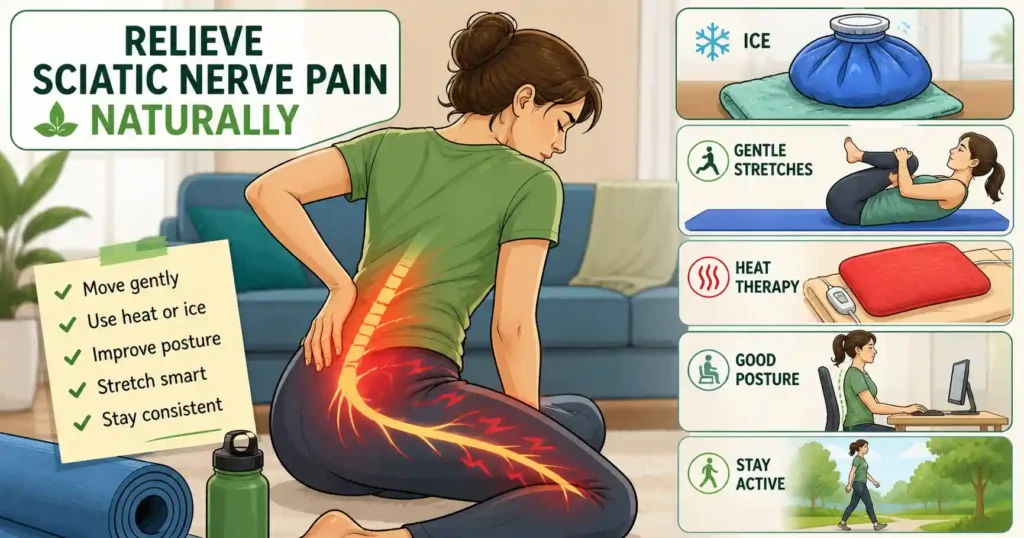
Sciatic nerve pain can be reduced by relieving pressure on the nerve, calming inflammation, and restoring normal movement. The fastest relief usually comes from a mix of targeted positioning, gentle movement, and correct use of heat or ice. Long-term improvement depends on fixing the cause, not just masking the pain.
Key Takeaways
- Sciatic pain is a nerve problem — it’s caused by irritation or compression, not just tight muscles.
- Relief starts with reducing pressure — simple positioning changes can quickly ease nerve stress.
- Timing matters for ice and heat — use ice early to calm inflammation, then heat later to relax muscles.
- Movement helps—but only in moderation — too much activity can irritate the nerve further.
- Sleep posture has a major impact — poor positioning at night can worsen pain by morning.
- Overstretching can backfire — aggressive stretching often increases nerve irritation instead of relieving it.
What is Sciatic Nerve Pain and Why Does It Hurt So Much?
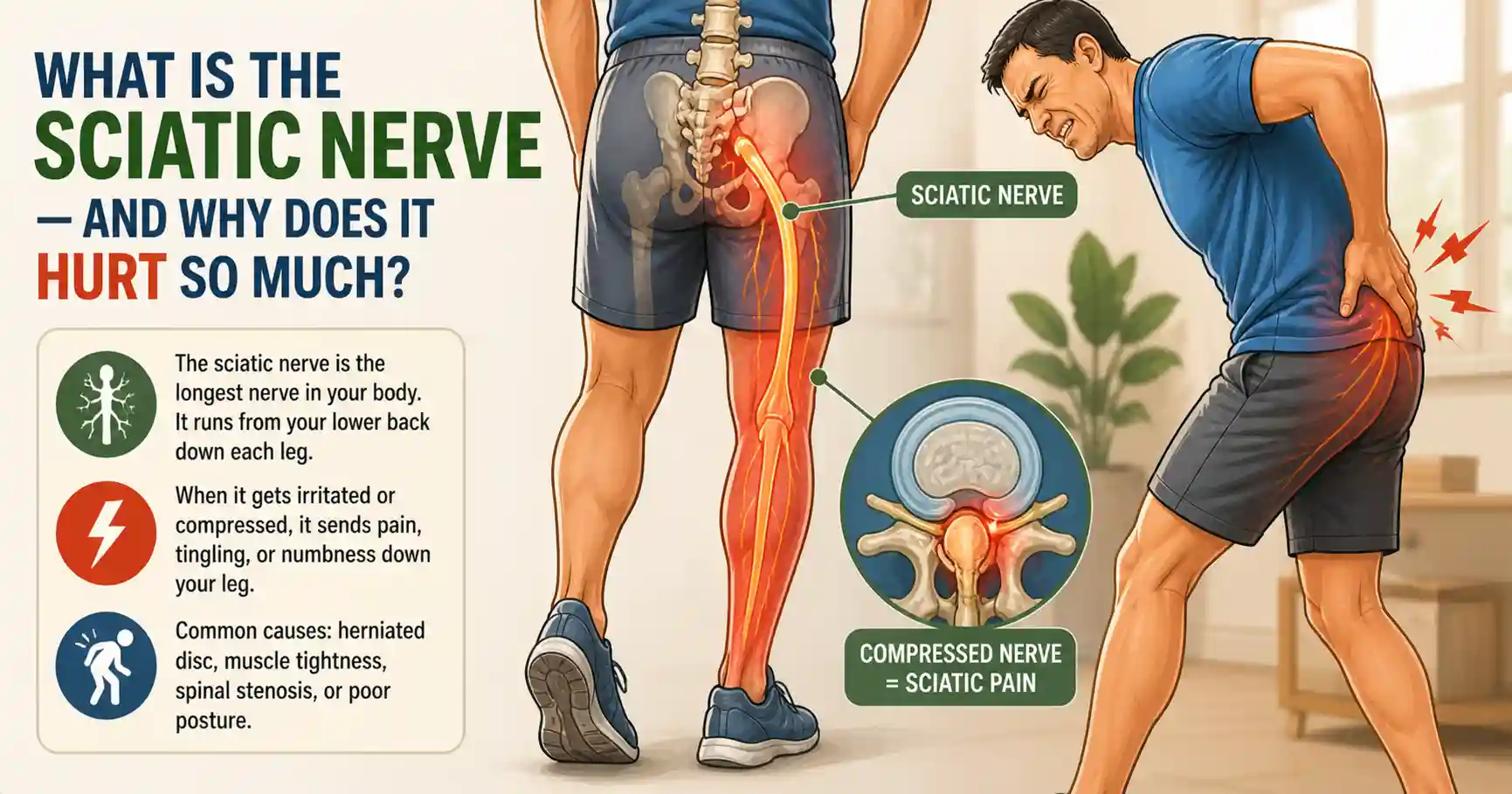
Sciatic nerve pain happens when the sciatic nerve gets compressed or irritated, usually in the lower back. This nerve runs from your spine down to your leg, which is why pain often shoots down one side.
The most common causes are:
- Herniated disc
- Tight muscles (especially the piriformis)
- Spinal narrowing (stenosis)
What most people miss: the pain you feel in your leg is often not coming from your leg at all. It’s referred pain from nerve irritation higher up.
That’s also why random leg stretches don’t always work—and sometimes make things worse.
A 2022 review in the Journal of Orthopaedic & Sports Physical Therapy found that targeted movement therapy works better than general stretching for nerve-related pain.
Quick Takeaway: Sciatica is a nerve problem, not just a muscle problem—treat it like one.
How to Alleviate Sciatic Nerve Pain Immediately
If you want fast relief, you need to reduce pressure on the nerve right now.
Here’s what actually works in the first 15–30 minutes:
1. Change your position (fastest fix)
- Lie on your back
- Put a pillow under your knees
- Keep your spine neutral
This reduces nerve compression instantly.
2. Use cold first, not heat
- Apply ice for 15–20 minutes
- Especially in the first 24–48 hours
Most people get this wrong. Heat feels good, but early inflammation responds better to cold.
3. Gentle nerve glide (not aggressive stretching)
- Slowly extend your leg while lying down
- Stop before sharp pain
This helps “decompress” the nerve slightly.
4. Avoid sitting
Sitting increases disc pressure. A Harvard Health report (2023) noted that sitting can worsen sciatica more than standing or walking.
Quick Takeaway: Immediate relief comes from positioning and reducing inflammation—not from stretching hard or pushing through pain.
Related Posts
- Is Heat or Ice Better for Nerve Pain? What Science Says!

- 5 Best Exercises for Sciatic Nerve Pain Relief At Home.

- How to Alleviate Sciatic Nerve Pain Naturally.
- Best Thing For Sciatic Nerve Pain: At Home What Really Work?
- How To Reduce Neuropathy Pain Naturally. 7 Remedies Methods.

- What Is Neuropathy? Symptoms, Causes & Stages





What Is the Best Way to Alleviate Sciatic Nerve Pain at Home?
The best approach is not to rest. It’s controlled movement + smart positioning.
Here’s a simple daily structure:
Morning
- Gentle movement (5–10 min walk)
- Light mobility (not deep stretching)
Midday
- Avoid long sitting sessions (max 30–40 min at a time)
- Stand or walk regularly
Evening
- Heat therapy (after inflammation phase)
- Light stretching if pain allows
What works vs what doesn’t
| Approach | Works | Why |
|---|---|---|
| Short walks | ✅ Yes | Improves circulation, reduces stiffness |
| Bed rest | ❌ No | Weakens muscles, increases stiffness |
| Deep stretching | ⚠️ Sometimes | Can irritate nerve if too aggressive |
| Posture correction | ✅ Yes | Reduces pressure on the spine |
The key insight: Too much rest slows recovery. Too much intensity worsens pain. You need the middle ground.
Which Exercises Actually Help Sciatic Nerve Pain?
Most exercise advice online is lazy. It throws random stretches at you.
These 3 are actually useful:
1. McKenzie extension (press-up)
- Lie face down
- Push the upper body up with the arms
- Keep hips on the floor
Why it works: helps push disc material away from the nerve.
2. Knee-to-chest (gentle)
- Pull one knee toward your chest
- Hold briefly
Why it works: reduces lower back tension.
3. Sciatic nerve glide
- Extend the leg slowly
- Flex your foot toward you
Why it works: improves nerve mobility without overstretching.
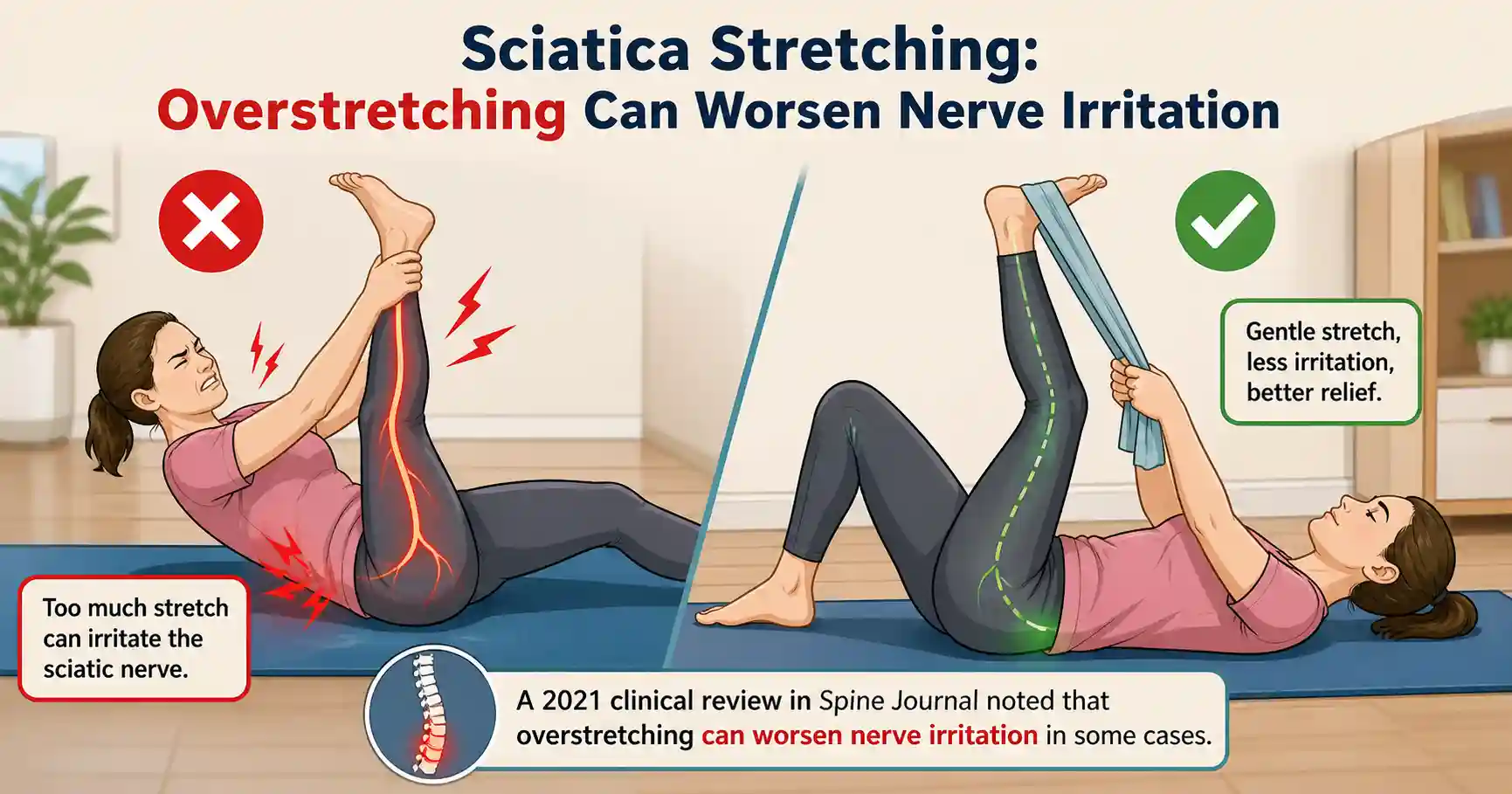
What most people get wrong:
- They stretch too hard
- They hold stretches too long
- They ignore pain signals
A 2021 clinical review in Spine Journal noted that overstretching can worsen nerve irritation in some cases.
Quick Takeaway: Use controlled movements, not aggressive stretches.
How to Alleviate Sciatic Nerve Pain While Sleeping
Sleep is where many people struggle the most.
Here’s what actually helps:
Best positions:
- On your back: pillow under knees
- On your side: pillow between knees
What to avoid:
- Sleeping on the stomach
- Twisted spine positions
Small adjustment that matters:
If your mattress is too soft, your spine sinks and worsens nerve compression. If it’s too hard, pressure increases. There’s no perfect mattress—but neutral spine alignment matters more than brand or firmness claims.
Quick Takeaway: Your sleep position can either reduce pressure or silently make it worse every night.
How to Alleviate Sciatic Nerve Pain Naturally Without Medication
You don’t need medication in many cases—but you do need to use the right tools at the right time.
Heat vs Ice (timing matters)
| Method | When to Use | Why |
|---|---|---|
| Ice | Early stage | Reduces inflammation |
| Heat | Later stage | Relaxes muscles |
Other natural methods:
- Massage: helps muscle-related compression
- Walking: improves blood flow
- Posture correction: reduces repeated irritation
What’s overhyped:
- Fancy gadgets
- Random “miracle stretches.”
- Supplements claiming nerve repair
There’s weak evidence for most of these.
What Mistakes Make Sciatic Nerve Pain Worse?
This is where most people sabotage themselves.
Common mistakes:
- Stretching through sharp pain
- Using heat too early
- Sitting for long periods
- Doing intense workouts too soon
- Ignoring posture during recovery
The biggest one:
Trying to “push through it.”
That works for muscle soreness.
It backfires for nerve pain.
Quick Takeaway: Most flare-ups happen because people treat nerve pain like muscle pain.
Comparison Table — What Works Fast vs Long-Term
| Method | Works Fast | Long-Term Fix | Risk |
|---|---|---|---|
| Position change | ✅ High | ❌ Low | None |
| Ice therapy | ✅ Medium | ❌ Low | Minimal |
| Walking | ⚠️ Medium | ✅ High | Low |
| Exercises | ❌ Slow | ✅ High | Medium (if done wrong) |
| Heat therapy | ⚠️ Medium | ⚠️ Medium | Wrong timing risk |
When Should You See a Doctor?
Most cases improve within a few weeks.
But you should get checked if you have:
- Severe or worsening pain
- Numbness or weakness in the leg
- Loss of bladder or bowel control
Cleveland Clinic (2024) notes that progressive neurological symptoms need immediate evaluation.
FAQs
How to alleviate sciatic nerve pain fast at home?
Fast relief comes from reducing pressure on the nerve. Lie on your back with knees supported, apply ice for 15–20 minutes, and avoid sitting. Gentle movement helps, but aggressive stretching often worsens pain in the short term.
Can sciatic nerve pain go away on its own?
Yes, many cases improve within a few weeks. The body can heal mild nerve irritation over time. However, poor posture, prolonged sitting, or incorrect exercises can delay recovery and make symptoms last longer.
What is the fastest exercise for sciatic nerve pain relief?
The McKenzie press-up is often effective because it reduces pressure on spinal discs. It works best when the pain is disc-related. Not all exercises work for every cause, so results vary depending on the underlying issue.
Is walking good for sciatic nerve pain?
Yes, walking is one of the safest and most effective activities. It improves circulation and prevents stiffness. Short, frequent walks are better than long sessions, especially during early recovery.
How do I sleep with sciatic nerve pain in my leg?
Sleep on your back with a pillow under your knees or on your side with a pillow between your legs. These positions keep your spine aligned and reduce pressure on the sciatic nerve during the night.

Recent Posts