
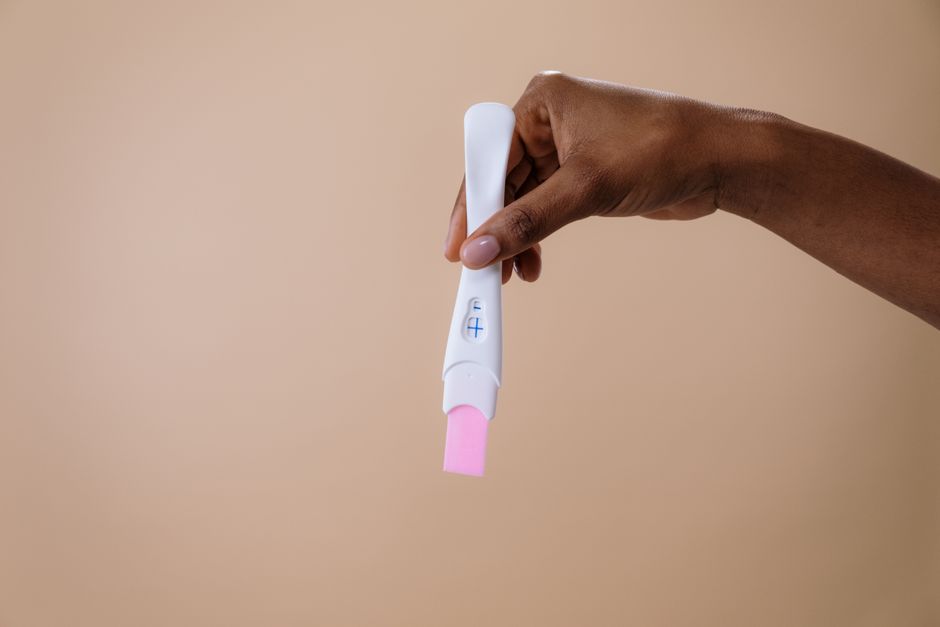
A pregnancy test measures a hormone called hCG, which your body only produces when a fertilized egg implants somewhere. An ectopic pregnancy, including a tubal pregnancy, still produces this hormone. So yes, a tubal pregnancy will test positive on a standard home pregnancy test, often very early and very clearly. The test cannot tell you where the pregnancy is located; it only confirms that a pregnancy exists.
How Does a Tubal Pregnancy Produce hCG?
When a fertilized egg implants outside the uterus — most commonly in a fallopian tube — the tissue still develops into early placental cells. These cells produce human chorionic gonadotropin (hCG), the exact hormone home pregnancy tests detect. The amount of hCG rises quickly in early pregnancy, regardless of where the embryo settles.
This means a standard urine pregnancy test will turn positive. A blood test ordered by a doctor will also show elevated hCG levels. The positive result is real and accurate — the pregnancy exists, just in the wrong location.
The key limitation is that the test gives no information about location. A positive test only tells you that implantation occurred. It cannot distinguish between a normal uterine pregnancy and a tubal pregnancy. That distinction requires medical imaging, typically an ultrasound.
Why Do hCG Levels Rise Slower in Some Tubal Pregnancies?
In a healthy uterine pregnancy, hCG levels typically double every 48 to 72 hours during the first several weeks. In many tubal pregnancies, the rise is slower or irregular. Some studies show that abnormal hCG patterns — levels that plateau or rise sluggishly — can be a warning sign of an ectopic pregnancy.
But this pattern is not universal. Some tubal pregnancies produce perfectly normal hCG rises in the early weeks. A normal doubling time does not rule out an ectopic pregnancy. Conversely, a slow rise does not automatically confirm one; a failing uterine pregnancy can also produce sluggish hCG patterns.
Doctors use serial hCG blood tests as one piece of the diagnostic puzzle, but never as the sole indicator. The combination of symptoms, ultrasound findings, and hCG trends together guide the diagnosis.
What Symptoms Should Prompt Immediate Medical Attention?
A tubal pregnancy is a medical emergency when it ruptures. Recognizing the warning signs early can be lifesaving. The most common symptoms include sharp pelvic or abdominal pain, often on one side, and vaginal bleeding that may be lighter or heavier than a normal period.
Other signs include shoulder tip pain — which occurs when internal bleeding irritates the diaphragm — dizziness, fainting, or signs of shock like rapid heartbeat and pale skin. If you have a positive pregnancy test and any of these symptoms, seek emergency care immediately. Do not wait for a scheduled appointment.
Many women experience no symptoms at all in the early weeks. A tubal pregnancy can be completely silent until rupture. This is why any positive pregnancy test in a woman with risk factors or unusual symptoms warrants early medical evaluation.





How Do Doctors Confirm a Tubal Pregnancy?
Diagnosis requires more than a positive pregnancy test. The standard approach combines a blood test for hCG with a transvaginal ultrasound. The ultrasound looks for a gestational sac inside the uterus. If the sac is not visible in the uterus when hCG levels are above a certain threshold, an ectopic pregnancy becomes the primary concern.
The hCG threshold varies by institution and ultrasound equipment, but the general principle holds: a normal uterine pregnancy should be visible on ultrasound once hCG reaches a certain level. When it is not visible, doctors investigate further. They may repeat blood tests to track hCG trends or perform additional imaging.
In some cases, the ultrasound directly visualizes the pregnancy in the fallopian tube. This provides a definitive diagnosis. In other cases, the diagnosis is made indirectly — no uterine pregnancy visible, abnormal hCG trends, and symptoms consistent with ectopic pregnancy.
Can a Home Pregnancy Test Be Negative with a Tubal Pregnancy?
Yes, but this is uncommon and usually relates to timing rather than location. If a woman tests very early — before implantation has produced enough hCG — the test can be negative. This can happen with any pregnancy, not just tubal ones.
Some ectopic pregnancies produce lower overall hCG levels than normal pregnancies. If a woman tests extremely early, the hormone concentration may fall below the test’s detection threshold. A repeat test a few days later would typically turn positive as hCG continues to rise.
However, a negative test does not completely rule out an ectopic pregnancy in rare situations. If symptoms strongly suggest ectopic pregnancy — severe pain, bleeding, risk factors — a negative home test should not delay medical evaluation. A blood test is more sensitive and can detect lower hCG levels than most urine tests.
What Are the Risk Factors for Tubal Pregnancy?
Several factors increase the likelihood of an ectopic pregnancy. Previous ectopic pregnancy is the strongest predictor — the risk of recurrence is elevated after one episode. Prior tubal surgery, including sterilization procedures or surgery to repair the tubes, also raises risk.
Pelvic inflammatory disease, often caused by chlamydia or gonorrhea, can scar the fallopian tubes and interfere with the egg’s journey. Endometriosis, which can distort tubal anatomy, is another risk factor. Women who conceive with in vitro fertilization have a higher rate of ectopic pregnancy compared with natural conception.
Smoking is a modifiable risk factor. It impairs tubal function and increases the risk of ectopic implantation. Age also plays a role — women over 35 have higher rates of ectopic pregnancy than younger women. Having none of these risk factors does not eliminate the possibility; ectopic pregnancies occur in women with no identifiable risk factors.
What Happens After a Tubal Pregnancy Is Diagnosed?
Treatment depends on the size of the pregnancy, hCG levels, symptoms, and whether the tube has ruptured. Options include medication, surgery, or — in very early, stable cases — careful monitoring. The medication methotrexate stops cell division and allows the body to absorb the ectopic tissue. It is only suitable when the pregnancy is small and the tube has not ruptured.
Surgery, typically laparoscopic, may remove the ectopic pregnancy and either repair or remove the affected tube. In an emergency rupture with internal bleeding, surgery is urgent and lifesaving. The affected tube is often removed in these situations.
After treatment, hCG levels are monitored until they return to zero. This confirms that no ectopic tissue remains. Future fertility depends on the condition of the remaining tube and the underlying cause of the ectopic pregnancy. Many women conceive successfully afterward, but the risk of another ectopic pregnancy remains elevated.
Frequently Asked Questions
Will a tubal pregnancy show positive on a home test?
Yes. A tubal pregnancy produces hCG, and home pregnancy tests detect this hormone. The test will be positive, but it cannot tell you the pregnancy is located in the tube.
How early will a pregnancy test detect a tubal pregnancy?
Around the same time as a normal pregnancy — typically by the first day of a missed period or shortly after. Some sensitive tests detect hCG a few days before that.
Can a tubal pregnancy test negative at first?
Yes, if tested very early before enough hCG has accumulated. A repeat test days later usually turns positive, but a negative test does not rule out ectopic pregnancy if symptoms are present.
What should I do if I have a positive test and pelvic pain?
Seek medical care promptly. Pelvic pain with a positive pregnancy test warrants evaluation for ectopic pregnancy, especially if the pain is one-sided or severe.
