
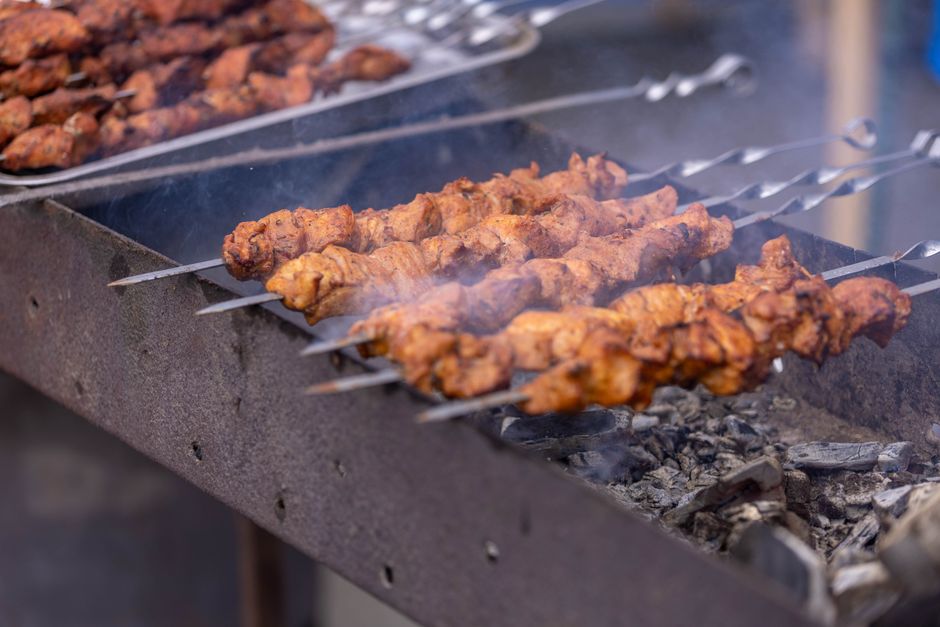
Yes, cooking meat properly kills the bacteria that cause most foodborne illness. Heat destroys bacterial cells when the meat reaches a high enough internal temperature for a long enough time. But “cooked” is not a guarantee of safety. Some bacteria produce toxins that survive heat. Some meats carry pathogens that cooking does not reliably eliminate. And how the meat was handled before it hit the pan matters as much as the temperature on the thermometer.
How Does Heat Kill Bacteria in Meat?
Bacteria are single-celled organisms. Their survival depends on proteins staying folded in specific shapes so they can do their jobs. Heat breaks those shapes apart, a process called denaturation. Once enough of a bacterium’s proteins lose their structure, the cell dies.
This is not a gradual weakening. It follows a predictable relationship between temperature and time. At higher temperatures, bacteria die faster. At lower temperatures, they die slower. The same principle is why sous vide cooking works — meat held at a lower temperature for a long time reaches the same level of bacterial kill as meat cooked fast at high heat.
The USDA publishes time-and-temperature tables for poultry, beef, pork, and other meats. These tables reflect the actual kill rates for the pathogens of concern in each type of meat. They are not arbitrary safety margins. They are calculated from microbiological data.
What matters is the temperature at the center of the meat, not the surface. A roast can look browned and steaming on the outside while the middle stays cool enough for bacteria to survive. A food thermometer inserted into the thickest part is the only reliable way to know.
What Internal Temperature Kills Bacteria in Meat?
The USDA sets minimum internal temperatures for different meats based on the pathogens most likely to be present and the kill rates needed to eliminate them.
| Meat | USDA Minimum Internal Temperature | Rest Time |
|---|---|---|
| Poultry (all types, including ground) | 165°F (74°C) | None |
| Ground meats (beef, pork, lamb) | 160°F (71°C) | None |
| Whole cuts of beef, pork, lamb, veal | 145°F (63°C) | 3 minutes |
| Fish and shellfish | 145°F (63°C) | None |
| Leftovers and casseroles | 165°F (74°C) | None |
The rest time matters. During those minutes off the heat, the meat’s internal temperature either holds steady or continues to rise slightly. That extra time adds to the bacterial kill. Skipping the rest means the meat may not have reached the effective kill threshold even if the thermometer briefly touched the target number.
Poultry gets the highest target because Salmonella and Campylobacter are common in raw poultry and both cause significant illness. Ground meat needs a higher temperature than whole cuts because grinding mixes surface bacteria throughout the interior. A whole steak’s surface bacteria get killed by the heat of searing. Ground beef has no “surface” — the bacteria are already inside.
Will Cooking Meat Kill Bacteria Not Always — What Survives Heat?
Bacterial cells die with heat. Bacterial toxins do not.
Some bacteria release toxins into the meat as they grow. Staphylococcus aureus and Bacillus cereus are two examples. These toxins are proteins too, but many are heat-stable — meaning they can withstand temperatures that would kill the bacteria that made them. Reheating food contaminated with these toxins does not make it safe. The bacteria may be dead. The toxin is still there.
This is why food left at room temperature for too long is a problem even if you cook it thoroughly afterward. The bacteria had time to multiply and produce toxin. Cooking kills the bacteria. It does not remove the toxin.
Spore-forming bacteria present a different problem. Clostridium perfringens and Clostridium botulinum form spores — dormant structures with tough outer coats that resist heat. Standard cooking temperatures do not reliably destroy these spores. When the meat cools slowly and sits in the temperature range where bacteria grow, the spores can germinate and the bacteria can multiply again. This is why rapid cooling and proper refrigeration of cooked meat matters as much as thorough cooking.
Clostridium botulinum is rare in properly handled meat, but it is the organism behind botulism. Its spores survive boiling. The toxin it produces, however, is destroyed by heat. This is why canned foods are boiled before eating if botulism is suspected — the goal is destroying the toxin, not the spores.





Does Cooking Kill All Parasites and Viruses in Meat?
Parasites in meat are generally more heat-sensitive than bacterial spores. Toxoplasma gondii, which can be present in undercooked pork and lamb, is killed by cooking meat to safe internal temperatures. Trichinella — the roundworm behind trichinosis — is also killed by proper cooking. The USDA temperature for whole cuts of pork, 145°F with a 3-minute rest, is sufficient for Trichinella based on current data. Some people still cook pork to higher temperatures out of habit, but the lower temperature is considered safe under current guidelines.
Viruses in meat are less of a concern than bacteria in most contexts. Hepatitis E can be transmitted through undercooked pork liver and game meat. Cooking to safe internal temperatures reduces this risk. The evidence on exactly how much heat is needed for complete inactivation of hepatitis E in all meat types is less well established than the bacterial data.
Prions are the exception that proves the rule. Prion diseases — including variant Creutzfeldt-Jakob disease linked to beef — are caused by misfolded proteins, not bacteria or viruses. Prions are not killed by normal cooking temperatures. They resist heat, radiation, and standard sterilization. This is a rare concern in the US due to feed regulations, but it is the clearest example of why “cooked” and “safe” are not always the same thing.
Why Does How Meat Was Handled Before Cooking Matter?
Cooking can only do so much. If meat was contaminated heavily before it reached the kitchen, or if it sat in the temperature danger zone too long, cooking may not make it safe.
The temperature danger zone is between 40°F and 140°F (4°C and 60°C). Bacteria multiply rapidly in this range. The USDA advises against leaving perishable food at room temperature for more than 2 hours — or 1 hour if the temperature is above 90°F. After that window, bacterial populations can reach levels where toxin production becomes a real concern.
This is why the “cook it and it’s fine” approach fails in some cases. If raw meat sat out for hours, cooking kills the bacteria but does not eliminate the heat-stable toxins they produced. The meat may be pathogen-free but still make you sick.
Cross-contamination is the other piece. Cutting raw chicken on a board and then slicing cooked meat on the same board without washing it reintroduces bacteria to food that was already safe. The cooking killed the bacteria in the chicken. The board put them back on the cooked food. This is a common source of foodborne illness that has nothing to do with whether the meat was cooked properly.
- Refrigerate raw meat within 2 hours of purchase or within 1 hour if the outdoor temperature is above 90°F.
- Thaw frozen meat in the refrigerator, in cold water changed every 30 minutes, or in the microwave — never on the counter.
- Use separate cutting boards for raw meat and ready-to-eat foods, or wash thoroughly with hot soapy water between uses.
- Refrigerate cooked leftovers within 2 hours and reheat to 165°F.
- Never taste raw or partially cooked meat to check seasoning.
Does Reheating Meat Kill Bacteria That Grew After Cooking?
Reheating to 165°F kills bacteria that grew on cooked meat during storage. It does not destroy heat-stable toxins those bacteria may have produced. This distinction matters most for leftovers that were stored improperly or kept too long.
The bacteria most often responsible for foodborne illness from reheated meat is Clostridium perfringens. It is common in meat and poultry, forms heat-resistant spores, and grows rapidly in food left in the danger zone. Cooking kills the active bacteria but not the spores. If the meat cools slowly — say, a large pot of stew left on the stove — the spores germinate and the bacteria multiply. Reheating kills the bacteria. If they had time to produce toxin, the toxin remains.
The practical takeaway: cooling leftovers quickly and refrigerating them promptly is not optional. It is the step that prevents the spore-forming bacteria from getting a growth window. Spread leftovers in shallow containers so they cool faster. Do not stack hot containers in the refrigerator.
What Should You Do If You Think Meat Was Undercooked?
If you or someone else ate meat that may not have reached a safe internal temperature, the risk depends on what pathogens were present and how much was eaten. Most people who eat undercooked meat do not get sick. But the risk is real, especially for poultry, ground meat, and meat that was mishandled.
Symptoms of foodborne illness typically appear within hours to days after eating contaminated food. Common symptoms include nausea, vomiting, diarrhea, and stomach cramps. Most cases resolve on their own within a few days. Some pathogens cause more serious illness, particularly in young children, older adults, pregnant women, and people with weakened immune systems.
Seek medical care if symptoms are severe, if there is blood in the stool, if there are signs of dehydration, or if the person is in a high-risk group. Do not take anti-diarrheal medication without asking a doctor — in some bacterial infections, slowing the gut can make things worse.
The best approach is prevention. A food thermometer costs a few dollars and removes the guesswork. Color and texture are not reliable indicators of doneness. Ground beef can brown before it reaches 160°F. Chicken can look white and still be under 165°F at the bone. The thermometer is the only tool that tells you what is actually happening inside the meat.
Frequently Asked Questions
Does cooking meat always kill bacteria?
Cooking to the correct internal temperature kills the bacteria that cause most foodborne illness. It does not destroy heat-stable toxins that some bacteria produce before cooking, and it does not reliably kill bacterial spores.
Can you get food poisoning from properly cooked meat?
Yes, if the meat was contaminated with toxin-producing bacteria before cooking or if it was mishandled after cooking. Cooking kills bacteria but not all toxins they leave behind.
What temperature kills all bacteria in meat?
There is no single temperature that kills all bacteria instantly. The USDA sets specific internal temperatures for different meats — 165°F for poultry, 160°F for ground meat, and 145°F with a 3-minute rest for whole cuts.
Does reheating food kill bacteria?
Reheating to 165°F kills bacteria that grew during storage. It does not destroy heat-stable toxins, so food that sat out too long before refrigeration may still cause illness even after reheating.
