
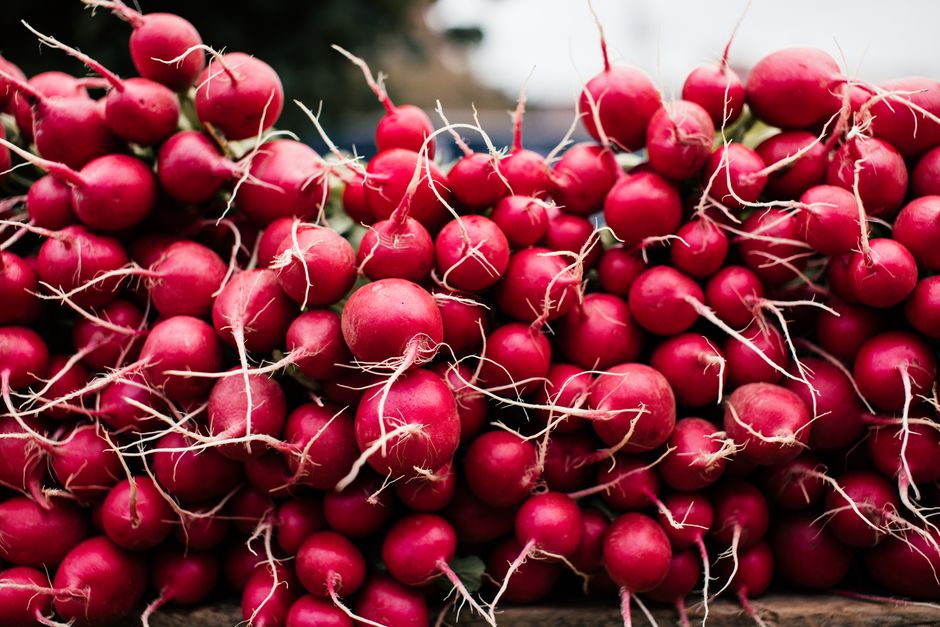
That sharp, peppery jolt you feel when you bite into a radish is not your imagination. It comes from natural chemical compounds the plant makes as a defense, and your own biology turns those compounds into a mild burning sensation on your tongue and lips. You can reduce the burn by eating radishes with fat, dairy, salt, or something sweet, and by choosing milder varieties or cooking them.
Radishes belong to a family of plants that includes mustard, horseradish, and wasabi. All of them produce the same family of irritant chemicals. Understanding how that reaction works explains why some radishes are gentle and others feel like they bite back — and what actually helps when one does.
Why Do Radishes Burn Your Mouth?
The burn is a chemical defense system, not a sign that anything is wrong with the vegetable. Radish cells store two separate ingredients that stay apart until the plant is damaged. One is a group of compounds called glucosinolates. The other is an enzyme called myrosinase.
When you bite, chew, or cut a radish, you break open the cells and the two ingredients mix. That reaction produces new compounds, including a family called isothiocyanates. These are the molecules responsible for the sharp taste and the burning feeling. The same reaction happens in mustard seeds, horseradish root, and wasabi, which is why they all share that pungent kick.
Isothiocyanates interact with pain and heat receptors on your tongue and in your mouth. Specifically, they activate a receptor known as TRPA1, which normally responds to irritants and to some types of physical heat. When that receptor fires, your brain interprets the signal as a burning sensation even though no real heat is present. This is the same general mechanism behind the burn of mustard and the sting of wasabi.
Because the reaction depends on cells being broken, a whole radish barely smells or tastes sharp. The heat develops the moment the tissue is damaged. This is also why a grated radish gets hotter the longer it sits — more cells break down and more of the reaction takes place.
Are All Radishes Equally Hot?
No. The level of burn varies a lot depending on the variety, how it was grown, and how old it is. Some radishes are crisp and mild. Others are genuinely spicy.
Several factors influence how much of the irritating compound a radish produces:
- Variety. Small red radishes tend to be milder. Daikon, a long white radish, is usually mild. Black radishes and some Asian varieties are noticeably sharper.
- Growing conditions. Stress on the plant, such as heat, drought, or pests, tends to increase the compounds that cause the burn.
- Age and size. Older and larger radishes often taste hotter. Smaller, younger ones are usually more tender and mild.
- Freshness. The reaction builds over time, so a radish that has been cut or grated and left to sit will taste stronger than one eaten right away.
The same plant can produce different levels of heat from one growing season to the next. If you have ever had a radish that seemed unusually mild and another from the same bag that was fiery, that is why. The chemistry is not fixed.
Why Radishes Burn Your Mouth And How To Reduce It: Practical Methods
The most effective way to reduce the burn is to change what the irritating compounds come into contact with, or to remove them before they form. Here are approaches that work for different reasons.
Eat radishes with fat or dairy
Isothiocyanates dissolve in fat. Eating radishes with butter, cheese, yogurt, or a creamy dressing means some of the irritating compounds get carried away in fat rather than sitting on your tongue. Dairy also contains proteins that can help mellow the sharpness. This is why a radish spread with butter tastes far milder than a plain one.
Add salt, sugar, or acid
Salt draws moisture out of the radish and can pull some of the pungent compounds with it. A pinch of salt on sliced radishes softens the bite. Sugar and acid, such as vinegar or lemon juice, balance the sharpness on your palate. Quick-pickling radishes in vinegar is a common way to tame them, and the acid also slows the enzyme reaction that creates the heat.
Cook the radishes
Heat deactivates the enzyme myrosinase. Without that enzyme, the reaction that produces the burning compounds cannot happen. Roasting, sautéing, or boiling radishes turns them sweet and mild. Cooked radishes lose almost all of their peppery kick. Roasted radishes are often compared to small potatoes in texture and flavor.
Chill them and eat them fresh
Cold temperatures slow the enzyme reaction. Radishes straight from the refrigerator, sliced and eaten right away, tend to be milder than ones that have been sitting out. Grate or slice them just before serving rather than in advance.
Choose milder varieties
If you want the crunch without the burn, small red radishes and daikon are good starting points. Save black radishes and sharper Asian varieties for when you want the heat.





Does Soaking Radishes in Water Help?
Soaking cut radishes in cold water can reduce the burn somewhat, but it is not a complete fix. The irritating compounds are not stored as a ready-made liquid inside the radish. They form when cells are damaged. Soaking a cut radish lets some of the already-formed compounds leach into the water, and it keeps the enzyme reaction slower because of the cold.
The effect is real but limited. Soaking will not turn a hot radish completely mild. It works best as a supporting step alongside refrigeration and quick serving. If you want a genuinely mild radish, cooking is the more reliable method.
Is the Burn From Radishes Harmful?
For most people, the burning sensation is harmless and temporary. It fades within minutes once you stop eating. The compounds responsible are the same ones studied for various roles in plant defense, and radishes are a normal part of diets around the world.
Some people are more sensitive than others. If you have a known sensitivity to mustard, horseradish, or wasabi, you may react more strongly to radishes because they share the same irritant chemistry. A small number of people find the sensation genuinely uncomfortable rather than just sharp.
There is no established evidence that the normal burning from eating radishes causes lasting harm to the mouth or digestive tract. That said, if you experience swelling of the lips, tongue, or throat, or any difficulty breathing after eating radishes, that is a possible sign of an allergic reaction and needs medical attention right away. That kind of reaction is not the ordinary burn and should not be treated as one.
What Actually Tames the Burn in the Moment?
Once the burn is on your tongue, a few things help more than others. Fat and dairy are the most reliable because they physically remove and dilute the irritant. A sip of milk, a spoon of yogurt, or a bite of cheese often calms the sensation faster than water.
Water helps less than people expect. The irritating compounds are not very water-soluble, so rinsing does not carry them away efficiently. It may spread the sensation around your mouth instead. Bread, rice, or another bland starch can help by absorbing some of the compounds and coating your tongue.
Sugar and honey can also take the edge off, which is part of why sweet-and-sharp combinations work so well in cooking. None of these methods reverse the chemical reaction. They reduce how much of the irritant is in contact with the receptors that signal burn.
Can You Build a Tolerance to the Burn?
People who eat pungent foods regularly often report that the same food bothers them less over time. This kind of desensitization is well described for other irritants, such as chili peppers, where repeated exposure can reduce the perceived intensity. Whether the same effect applies strongly to radishes specifically is less well studied.
What is clear is that perception plays a role. The burn is a signal from irritant receptors, and attention, expectation, and repeated exposure all shape how intense it feels. If you eat radishes often, you may notice the sharpness bothers you less — not because the chemistry changed, but because your response to it did.
Frequently Asked Questions
Why do radishes burn my mouth?
When you bite a radish, an enzyme mixes with stored compounds and creates irritant molecules called isothiocyanates. These activate pain and heat receptors on your tongue, which your brain reads as a burning sensation.
How do I stop radishes from burning my mouth?
Eat them with fat or dairy, add salt, sugar, or acid, or cook them, since heat deactivates the enzyme that creates the burn. Chilling radishes and slicing them just before eating also helps.
Does soaking radishes in water make them less spicy?
Soaking cut radishes in cold water reduces the burn somewhat by letting some irritant compounds leach out and slowing the enzyme reaction. It helps but does not make a hot radish fully mild.
Are spicy radishes dangerous to eat?
No, the ordinary burn from radishes is harmless and fades within minutes for most people. Swelling of the lips, tongue, or throat or trouble breathing after eating them is a separate concern that needs immediate medical attention.
