
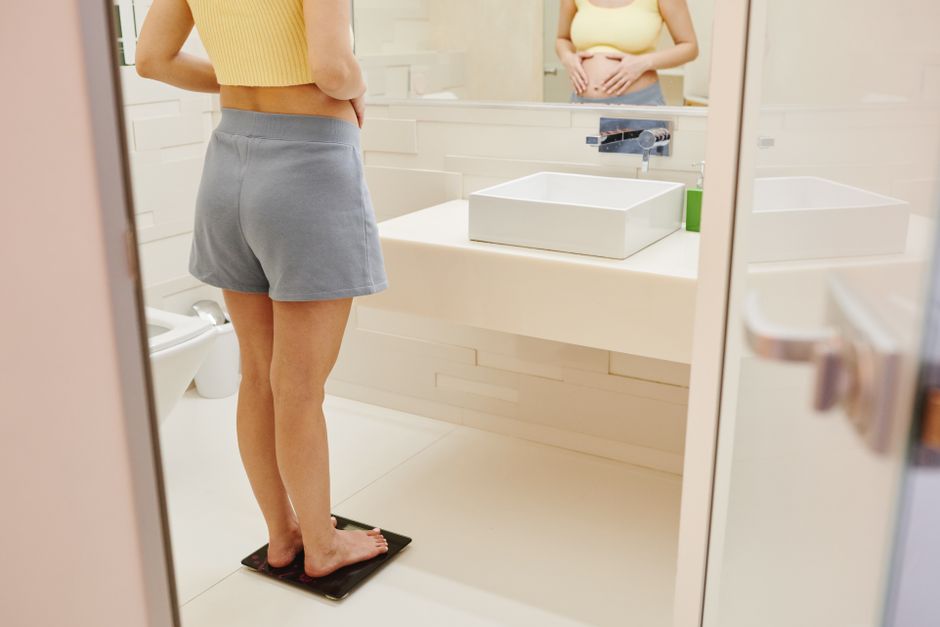
Weight gain during pregnancy is normal and necessary. Your body needs extra fat stores to support your baby’s growth and prepare for breastfeeding. But some women gain more weight than is healthy, which can raise the risk of complications like gestational diabetes, high blood pressure, and a larger baby. The goal is not to lose weight during pregnancy. The goal is to slow your weight gain if you are gaining too fast, or to manage your weight within a healthy range.
What Is a Healthy Weight Gain During Pregnancy?
Healthy weight gain depends on your weight before pregnancy. Your doctor calculates your Body Mass Index (BMI) at your first prenatal visit to set a target range.
For a woman who starts at a normal BMI (18.5–24.9), a total gain of 25 to 35 pounds is typical. Women who start underweight (BMI below 18.5) should gain a bit more — about 28 to 40 pounds. Women who start overweight (BMI 25–29.9) should aim for 15 to 25 pounds. Women who start with obesity (BMI 30 or above) should aim for 11 to 20 pounds.
These ranges come from the Institute of Medicine and are widely used by obstetricians in the United States. Your own doctor may adjust the target based on your specific health history.
Weight gain in pregnancy is not linear. In the first trimester, most women gain only 1 to 5 pounds total. The bulk of the gain happens in the second and third trimesters — about 1 pound per week in the later months for women at a normal starting weight.
How To Reduce Weight In Pregnancy Without Harming Your Baby
The safest approach is to prevent excess gain rather than actively lose weight. If you are already gaining faster than recommended, you can make changes now to slow the pace.
Focus on food quality first. Whole foods — vegetables, fruits, lean proteins, whole grains, and legumes — provide more nutrients per calorie than processed foods. A 300-calorie snack of nuts and fruit is not the same as a 300-calorie snack of crackers and soda. The first feeds you and your baby; the second mostly adds empty calories.
Protein matters during pregnancy. It supports the baby’s tissue growth and helps you feel full longer. Aim to include a protein source at every meal — eggs, Greek yogurt, beans, lentils, chicken, fish, or tofu.
Fiber also helps. High-fiber foods slow digestion and stabilize blood sugar. This can reduce cravings and prevent the rapid hunger spikes that lead to overeating. Vegetables, fruits with skin, oats, and beans are good sources.
Do not skip meals. Skipping meals often leads to overeating later in the day. Smaller, more frequent meals can help manage nausea in the first trimester and heartburn in the third.
Which Foods Should You Limit During Pregnancy?
Some foods are worth limiting not just for weight control but for overall pregnancy health.
Sugary drinks are a major source of empty calories. A single 12-ounce soda has about 150 calories and no nutritional value. Fruit juice is also high in sugar — whole fruit is a better choice because it includes fiber. Water, sparkling water, and milk are better options.
Refined carbohydrates — white bread, white rice, pastries, and many breakfast cereals — break down quickly into sugar. This can cause rapid blood sugar spikes and crashes. Choosing whole-grain versions provides more nutrients and steadier energy.
Highly processed foods are often calorie-dense and low in nutrients. Fast food, packaged snacks, and frozen meals frequently contain more sodium, sugar, and unhealthy fats than home-cooked versions of the same foods.
This does not mean you must eliminate treats entirely. A small dessert now and then is fine. The problem is when treats become daily habits.





Safe Exercise During Pregnancy
Physical activity is safe and beneficial for most pregnancies. If you had a healthy, uncomplicated pregnancy, regular exercise is encouraged — not just allowed.
The general guidance is 150 minutes of moderate-intensity aerobic activity per week. That breaks down to about 30 minutes on most days. Moderate intensity means you can talk but not sing while moving.
Good options include brisk walking, swimming, stationary cycling, and prenatal yoga. Walking is the simplest and requires no equipment beyond comfortable shoes.
Exercise during pregnancy helps control weight gain, improves sleep, reduces back pain, and lowers the risk of gestational diabetes. It also prepares your body for labor.
Some women should not exercise during pregnancy. If you have certain conditions — such as placenta previa, cervical insufficiency, or severe anemia — your doctor may advise against it. Always check with your obstetrician before starting or continuing an exercise program.
Stop exercising and call your doctor if you experience chest pain, dizziness, fluid leaking, vaginal bleeding, or painful contractions while active.
How Many Extra Calories Do You Actually Need?
The old saying “eating for two” is misleading. You do not need double the food.
In the first trimester, your calorie needs barely change. Most women need no extra calories at all during these first three months.
In the second trimester, you need roughly 340 extra calories per day. In the third trimester, about 450 extra calories per day. These numbers come from the Dietary Guidelines for Americans.
To put that in perspective: 340 calories is roughly a banana with two tablespoons of peanut butter. 450 calories is about a turkey sandwich on whole-grain bread. You do not need a second dinner.
This modest increase assumes you are starting at a healthy weight. Women who start overweight or with obesity may need fewer additional calories.
What If You Are Already Gaining Too Fast?
If your weight gain is outpacing the recommended range, you can take corrective steps without resorting to dieting.
First, track what you eat for a few days. Most people underestimate their intake. Write down everything — including beverages, snacks, and “tastes” while cooking. This often reveals obvious sources of excess calories.
Next, identify one or two changes you can sustain. Swapping soda for water, adding a vegetable to lunch, or taking a 15-minute walk after dinner are realistic starting points. Drastic overhauls rarely last.
Weigh yourself consistently — once a week at the same time of day is reasonable. Your doctor will also track your weight at each visit. If you are concerned about your pace of gain, raise it directly at your next appointment.
Do not attempt to actively lose weight while pregnant without medical supervision. Intentional calorie restriction during pregnancy can deprive your baby of essential nutrients. Some women do lose weight in early pregnancy due to severe nausea, but this is not a goal to pursue.
Managing Cravings and Emotional Eating
Cravings during pregnancy are real and common. The exact cause is not fully understood, but hormonal changes likely play a role.
Giving in occasionally is fine. The problem is when cravings drive frequent overeating. A practical strategy is to satisfy the craving in a smaller portion — a few squares of chocolate instead of the whole bar, or a small scoop of ice cream instead of a bowl.
Sometimes what feels like a craving is actually thirst. Drink a glass of water and wait ten minutes before acting on the urge.
Emotional eating can also increase during pregnancy. Stress, anxiety about the baby, and disrupted sleep all contribute. If you notice yourself eating when you are not hungry, pause and ask what you are actually feeling. Talking to a partner, friend, or counselor can help more than food.
When To Talk To Your Doctor
Your prenatal visits are the right time to discuss weight. Your doctor or a registered dietitian can give you personalized guidance based on your medical history.
Seek help if you are gaining much more than the recommended range, or if you are gaining very little. Both extremes deserve attention.
Be honest about your eating and activity patterns. Doctors are not there to judge — they are there to help you and your baby stay healthy. If you have a history of an eating disorder, tell your care team. Pregnancy can be a vulnerable time, and specialized support may be needed.
Gestational diabetes screening usually happens between 24 and 28 weeks. If you are diagnosed, you will receive specific dietary guidance. Managing gestational diabetes often involves controlling carbohydrate intake and monitoring blood sugar — which can also help moderate weight gain.
Frequently Asked Questions
Is it safe to lose weight while pregnant?
Active weight loss is generally not recommended during pregnancy. Slowing excessive weight gain is the safer goal, and any weight loss should only happen under direct medical supervision.
How much weight should I gain if I am already overweight?
If your pre-pregnancy BMI is 25–29.9, the recommended total gain is 15 to 25 pounds. If your BMI is 30 or above, the target is 11 to 20 pounds.
What exercises are safe during pregnancy?
Walking, swimming, stationary cycling, and prenatal yoga are generally safe for uncomplicated pregnancies. Check with your doctor before starting any exercise program.
Can I diet during pregnancy to avoid gaining too much?
Strict dieting is not safe during pregnancy. Instead, focus on nutrient-dense foods, portion control, and regular physical activity to manage weight gain within a healthy range.
