
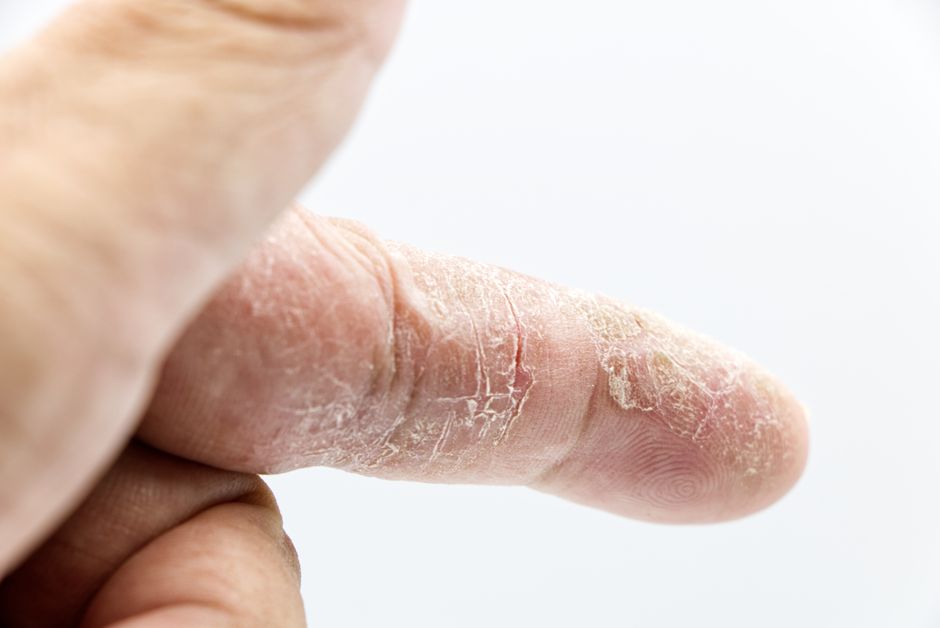
Peeling skin on your fingers is your body telling you something. Most of the time the cause is something external — a soap, a cleaning product, dry winter air, or a habit like picking at your cuticles. Sometimes it signals an underlying skin condition or a vitamin deficiency. And occasionally it points to something that needs a doctor’s attention.
The medical term for peeling skin is desquamation. It happens when the outer layer of skin — the stratum corneum — loses its ability to hold together and sheds in flakes or sheets. Your fingers are especially vulnerable because they touch everything and have relatively thin skin compared to your palms.
Figuring out why it is happening starts with looking at the pattern, the timing, and what else is going on with your skin and your health.
Why Is The Skin Peeling Off My Fingers?
The most common reason is contact irritation. Your hands are the first line of defense against everything you touch — dish soap, laundry detergent, hand sanitizer, cleaning sprays, even frequent handwashing with hot water. These strip oils from the skin barrier. When the barrier breaks down, water escapes and the top layer of skin starts to flake and peel.
This is called contact dermatitis, and it is extremely common. It is not an allergy in most cases. It is simple irritation from repeated exposure. The peeling usually appears on the fingertips and between the fingers first, because those areas have the most contact with whatever is causing the problem.
Dry skin alone can cause peeling. Cold weather, low humidity indoors, and aging all reduce the skin’s natural oil production. After age 40, sebum production drops noticeably, which is one reason peeling skin becomes more common with age.
Other frequent causes include:
- Exfoliative keratolysis — a condition where the top layer of skin separates in circular patches, usually on the fingertips and palms. It tends to flare in warm weather and is more common in people who sweat heavily or work with their hands.
- Eczema (atopic dermatitis) — causes dry, itchy, inflamed skin that can peel and crack.
- Psoriasis — causes rapid skin cell turnover, leading to scaling and peeling, often with well-defined patches.
- Fungal infections — like tinea manuum, which can cause peeling, especially on the palm and between fingers, often on just one hand.
- Vitamin or mineral deficiencies — low levels of vitamin B3 (niacin), vitamin B7 (biotin), or zinc can affect skin integrity, though this is less common in people eating a varied diet.
- Hypothyroidism — an underactive thyroid can cause dry, flaky skin as one of several symptoms.
- Kawasaki disease — a rare condition in children that causes peeling of the fingers and toes during recovery. This requires immediate medical care.
The pattern matters. Peeling that affects only the fingertips after using a new product points to contact irritation. Peeling that comes with redness, itching, and spreads to other parts of the body suggests a systemic skin condition. Peeling on just one hand raises suspicion for a fungal infection.
What Does It Mean When Your Fingertips Peel in Layers?
Peeling in layers — where you can see distinct sheets or thin flakes coming off — usually means the outermost skin layer has separated from the layer beneath it. This happens when the bonds between skin cells weaken.
In exfoliative keratolysis, the separation is caused by an enzyme that breaks down the glue holding skin cells together. The result is circular or oval patches of peeling, often with a red rim where the skin has lifted. It is not dangerous, but it can be persistent and uncomfortable.
Layered peeling can also happen after a sunburn, a chemical exposure, or an allergic reaction. The skin peels in sheets because the damaged layer is shedding all at once.
If the peeling is deep enough to expose raw skin or cause pain, that is a sign to see a doctor. Superficial peeling that does not hurt is usually not a medical emergency.
When Is Finger Peeling a Sign of Something More Serious?
Most finger peeling is benign and resolves with better skin care. But certain signs suggest you should get evaluated.
See a doctor if:
- The peeling spreads to your palms, feet, or other parts of your body
- You have blisters, open sores, or signs of infection (pus, warmth, swelling)
- The peeling is painful or the skin underneath is raw and bleeding
- You have other symptoms like fever, joint pain, fatigue, or hair loss
- The peeling does not improve after several weeks of consistent moisturizing and avoiding irritants
- It affects only one hand and does not respond to basic care
Peeling skin can be a symptom of a systemic condition. For example, people with hypothyroidism often have dry, coarse skin that peels easily. Those with type 2 diabetes may have poor circulation and dry skin that leads to peeling and cracking, especially on the feet and hands.
Rarely, peeling fingers can be a sign of a severe drug reaction, such as Stevens-Johnson syndrome. This is a medical emergency and comes with fever, mouth sores, and a spreading rash. It is not something you would miss.



What Causes Skin Peeling on Fingers in Children?
Children get peeling fingers for many of the same reasons adults do — dry skin, harsh soaps, and frequent handwashing. But there are a few causes more specific to kids.
Hand, foot, and mouth disease is a viral illness that commonly causes peeling of the fingers and toes about one to three weeks after the initial rash and blisters heal. It is caused by coxsackievirus and is most common in children under 5. The peeling is temporary and not contagious at that stage.
Kawasaki disease is a rare but serious condition that causes inflammation in blood vessels. It primarily affects children under 5. Peeling of the fingers and toes typically happens in the second week of illness, along with fever, red eyes, rash, and swollen lymph nodes. It requires hospital treatment.
Scarlet fever, caused by group A strep bacteria, can cause peeling on the fingers and toes during recovery, usually about one to two weeks after the rash appears.
In most cases, though, a child’s peeling fingertips are simply from dry skin or irritation. If your child seems well otherwise, start with gentle moisturizing and avoiding harsh soaps.
How Do You Stop Your Fingers From Peeling?
Treatment depends on the cause. For contact irritation and dry skin, the approach is straightforward: protect the skin barrier and let it heal.
Here is what helps:
- Moisturize often. Use a thick cream or ointment, not a thin lotion. Products with ceramides, glycerin, or petrolatum help rebuild the skin barrier. Apply after every handwash.
- Wear gloves. Use cotton-lined rubber gloves for dishwashing and cleaning. For dry tasks, cotton gloves alone can help.
- Switch to gentle cleansers. Avoid antibacterial soaps and anything with fragrance. Lukewarm water is less drying than hot.
- Stop picking. Picking at peeling skin damages the healthy layer underneath and can lead to infection.
- Use a humidifier. Indoor humidity below 30% pulls moisture from your skin. Aim for 40–50% if you can.
- Try an overnight treatment. Apply a thick ointment and cover your hands with cotton gloves while you sleep.
If these steps do not help within a few weeks, a doctor can check for eczema, psoriasis, fungal infection, or thyroid issues. A dermatologist may prescribe a topical steroid for inflammation or an antifungal for a fungal infection.
There is no evidence that drinking more water alone fixes peeling skin. Hydration matters for overall health, but the skin barrier is more affected by what you put on it than by how much water you drink.
Does Diet Affect Peeling Skin on Fingers?
Diet can play a role, but it is rarely the main cause in people who eat a varied diet. Severe deficiencies in certain nutrients can affect skin health.
Biotin deficiency can cause dry, scaly, and peeling skin. But true biotin deficiency is rare. It is seen mostly in people who take certain anti-seizure medications, those with long-term antibiotic use, or people who eat raw egg whites in large amounts over time. Raw egg whites contain a protein called avidin that blocks biotin absorption.
Zinc deficiency can cause skin lesions, delayed wound healing, and peeling. It is more common in people with digestive disorders, those who drink heavily, and vegetarians who do not get enough zinc from plant sources.
Niacin (vitamin B3) deficiency, called pellagra, causes dermatitis, diarrhea, and dementia. It is rare in countries with fortified foods but can occur in people with severe malnutrition or alcohol use disorder.
For most people, a balanced diet with fruits, vegetables, whole grains, lean proteins, and healthy fats provides enough of these nutrients. If you suspect a deficiency, a blood test can confirm it. Taking supplements without a confirmed deficiency is unlikely to help and can cause harm in high doses.
Frequently Asked Questions
Why is the skin peeling off my fingertips?
The most common cause is contact irritation from soaps, cleaning products, or frequent handwashing, which strips oils from the skin barrier. Dry skin, eczema, and exfoliative keratolysis are other frequent causes.
Is peeling skin on fingers a sign of a vitamin deficiency?
It can be, but this is uncommon in people who eat a varied diet. Biotin, zinc, and niacin deficiencies can cause peeling skin, but a blood test is needed to confirm before taking supplements.
When should I worry about peeling fingertips?
See a doctor if the peeling spreads to other body parts, causes pain or bleeding, comes with fever or joint pain, or does not improve after several weeks of gentle skin care and moisturizing.
Can stress cause skin to peel on fingers?
Stress does not directly cause peeling, but it can worsen conditions like eczema and psoriasis that lead to peeling. Stress also increases habits like picking at skin, which damages the barrier.
