
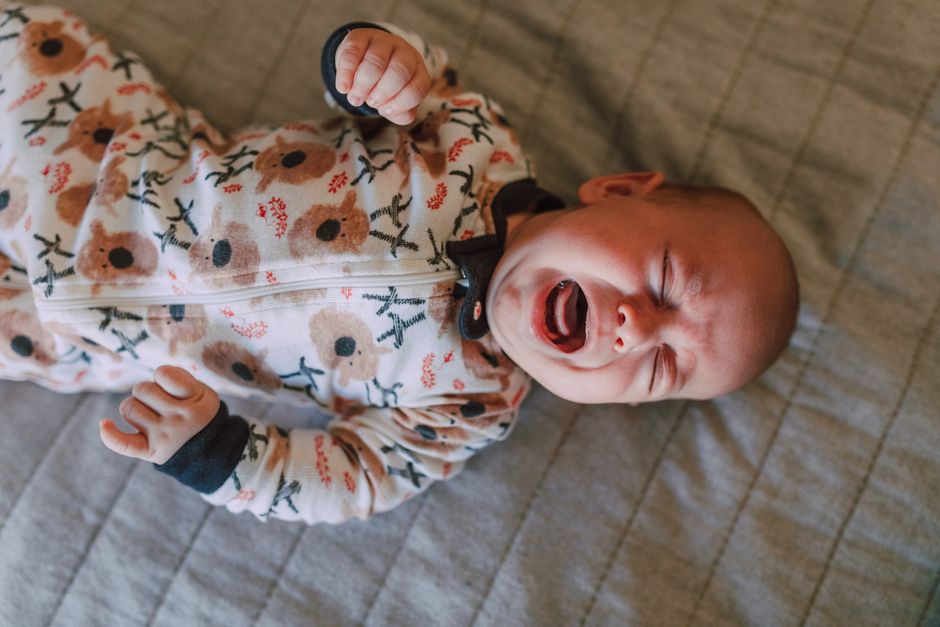
A toddler crying out in her sleep is usually not awake, and usually not in distress. The most common causes are confusional arousals and night terrors — both part of a group of sleep behaviors called parasomnias. These happen when a child gets stuck partway between deep sleep and waking. She may cry, thrash, sit up, or call out while her brain is still mostly asleep. Most episodes last a few minutes, and she often has no memory of them the next morning.
That is the short answer. The longer answer involves the sleep cycle, what triggers these episodes, and when crying in sleep points to something else entirely.
Why Is My Toddler Crying In Her Sleep Key Causes?
Toddlers spend a large share of the night in deep non-REM sleep, and that is the stage where most sleep crying starts. During deep sleep the brain is hard to wake fully. If something partially rouses a child — a noise, a full bladder, a shift in sleep stage — she can surface into a half-awake state where crying and movement happen automatically. The thinking part of the brain is still offline.
Doctors group these events by when they occur and what they look like. The main ones in toddlers are:
- Confusional arousals. The child partially wakes, seems upset or disoriented, may cry or whimper, and settles without fully waking. This is the most common sleep-related crying in young children.
- Night terrors. A more dramatic episode. The child may scream, sit up, sweat, breathe fast, and stare with eyes open but not really see you. She is not awake and is not dreaming in the usual sense.
- Sleepwalking and sleep talking. Related events that can include crying or mumbling.
- Nightmares. These are different. They happen during REM sleep, usually in the second half of the night, and the child wakes up, remembers the dream, and can be comforted.
The key difference is awareness. In a confusional arousal or night terror, your child is not awake and cannot be fully consoled in the moment. In a nightmare, she wakes, recognizes you, and seeks comfort.
What Triggers Sleep Crying In Toddlers?
Most episodes do not come out of nowhere. Something is fragmenting sleep and pushing the child toward that half-waking state. Common triggers include:
- Not enough sleep. Overtiredness is one of the strongest triggers. When a toddler is short on sleep, her body pushes harder into deep sleep, which makes partial arousals more likely.
- Irregular sleep schedule. Bedtimes that shift a lot, missed naps, or travel across time zones can all set off episodes.
- Illness or fever. Being sick disrupts sleep and is a frequent short-term trigger.
- Discomfort. Teething pain, a full bladder, a stuffy nose, or being too hot or cold can partially wake a child.
- Noise and light. Sudden sounds or bright light can rouse a child into a partial waking.
- Stress or big changes. A new sibling, starting daycare, or a move can affect sleep, though the link to specific episodes is not always clear.
- Family tendency. These sleep behaviors often run in families, which suggests a genetic component.
Keeping a simple log of when episodes happen and what happened that day can reveal a pattern. Many parents find that a run of episodes follows a stretch of late bedtimes or a missed nap.
Is Crying In Sleep the Same as a Nightmare?
No, and the difference matters for how you respond. Nightmares and night terrors look similar from the hallway but work in opposite ways.
A nightmare happens during REM sleep, the stage tied to vivid dreaming. The child wakes up, is frightened, remembers the dream, and wants you. She can be calmed, and she will likely recall it the next day.
A night terror happens during deep non-REM sleep, usually in the first few hours after falling asleep. The child does not wake up in any meaningful sense. Her eyes may be open. She may scream or push you away. Trying to wake or comfort her often makes it worse, and she usually will not remember it.
Here is a non-obvious point that trips up many parents: a night terror is not a sign of emotional distress or bad parenting. It is a glitch in the sleep-wake switch, not a reaction to something upsetting. A child who has night terrors is not more anxious or troubled than one who does not.





When Should You Worry About Sleep Crying?
Most sleep crying in toddlers is harmless and outgrown. The events tend to fade as the brain matures, and many children stop having them by the time they reach school age. Frequency usually drops on its own.
There are situations that call for a doctor’s input. These include:
- Episodes that happen many times a night, most nights.
- Behavior that could cause injury, such as thrashing near the edge of a bed or walking into things.
- Events that continue well past early childhood.
- Crying that comes with rhythmic jerking, stiffening, or a loss of bladder control that suggests a possible seizure.
- Daytime sleepiness, breathing pauses, or loud snoring, which can point to a sleep disorder such as sleep apnea.
- Any episode that seems different from the usual pattern, or that concerns you.
Distinguishing a night terror from a seizure can be hard for a parent, and it is a reasonable thing to ask a doctor about. Do not try to diagnose it yourself from a video alone. Bring the concern to a clinician.
What Helps Reduce These Episodes?
The most reliable step is protecting sleep. Since overtiredness is a leading trigger, a consistent bedtime and enough total sleep are the foundation. For most toddlers that means a predictable routine and an age-appropriate bedtime every night, including weekends.
A few practical approaches:
- Keep the schedule steady. Aim for the same bedtime and wake time, and protect the nap.
- Wind down before bed. Dim lights, quiet play, and a calm routine help signal that sleep is coming.
- Stay calm during an episode. Do not try to wake your child. Keep her safe, speak softly, and let it pass. Most episodes end on their own within minutes.
- Make the sleep space safe. Clear the floor, block stairs, and consider a bed close to the ground if she moves around.
- Note the pattern. If episodes happen at a predictable time, some clinicians suggest briefly rousing the child shortly before that time. This is a known technique, though the evidence for how well it works is limited.
What does not help: waking your child fully, scolding her, or trying to reason with her mid-episode. She is not awake and cannot process it.
Can Medical Conditions Cause Sleep Crying?
Sometimes crying in sleep is a symptom of something else. Sleep-disordered breathing is one to know about. If a toddler snores loudly, pauses in breathing, or seems to struggle to breathe at night, that can fragment sleep and lead to restless, crying nights. This is worth raising with a doctor.
Reflux, ear infections, and other sources of pain can also disrupt sleep and cause crying. So can eczema and other itchy skin conditions. In these cases the crying is usually part of a broader pattern of poor sleep and daytime symptoms, not a lone nighttime event.
Seizures during sleep are uncommon but possible, and they can be mistaken for night terrors. Features that raise concern include episodes that are very brief and repetitive, rhythmic movements, or events that cluster around sleep onset or waking. A doctor may recommend a sleep study or a neurology evaluation if the picture is unclear.
Do Most Toddlers Outgrow Night Terrors and Confusional Arousals?
Yes. The great majority of children outgrow these sleep behaviors as their sleep architecture matures. The nervous system becomes better at staying asleep or waking cleanly, and the partial arousals that cause the crying become less frequent.
The timeline varies. Some children stop within months, others continue on and off for a few years. There is no single age when it ends for everyone. If episodes are frequent, disruptive to the household, or worrying, that is reason enough to talk to a pediatrician — not because something is necessarily wrong, but because a clinician can help sort out triggers and rule out other causes.
Frequently Asked Questions
Why does my toddler cry in her sleep but not wake up?
She is in a partial waking state between deep sleep and full wakefulness, so her crying is automatic and she is not truly conscious. This is typical of confusional arousals and night terrors, which happen during non-REM sleep.
Should I wake my toddler during a night terror?
No. Trying to wake her usually makes the episode worse and can leave her more confused. Keep her safe, stay calm, and let it pass, since most episodes end on their own within a few minutes.
How can I tell a night terror from a nightmare?
Night terrors happen in the first few hours of sleep, the child does not wake or recognize you, and she usually has no memory of it. Nightmares happen later in the night, the child wakes, remembers the dream, and can be comforted.
When should I call the doctor about sleep crying?
Call if episodes are frequent, risk injury, include rhythmic jerking or breathing pauses, or continue well past early childhood. Any pattern that concerns you is a good reason to check in with a pediatrician.
