
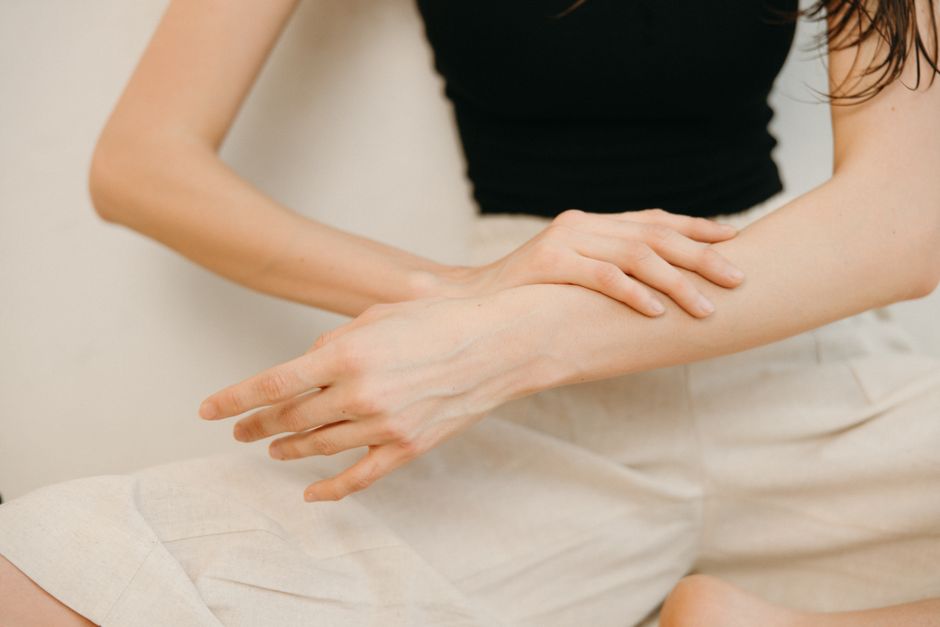
An itchy right hand is one of the most common skin complaints, and in most cases it comes down to dry skin, contact with an irritant, or a mild form of eczema. The itch is your nervous system reacting to something on or inside the skin, not a random event. Most cases settle with basic skin care, but itching that lasts for weeks, comes with a rash, or appears out of nowhere deserves a closer look.
There is no medical reason itching would favor the right hand over the left. When people notice it on one side only, it usually reflects which hand touches a trigger more often — a cleaning product, a doorknob, a pet, or a work tool. That detail matters more than the side itself.
Why Is My Right Hand Itching Causes Relief?
Itching on one hand almost always has a local cause sitting on or just under the skin. The most frequent ones are dry skin, irritation from a substance you touched, and eczema.
Dry skin is the single most common reason. When the outer layer of skin loses water and oils, it cracks at a microscopic level and exposes nerve endings that fire itch signals. Winter air, frequent hand washing, and hot water all strip those oils faster.
Contact dermatitis is next. This happens when your skin reacts to something it touched. It splits into two types. Irritant contact dermatitis is a direct chemical injury to the skin and can happen to anyone with enough exposure. Allergic contact dermatitis is an immune reaction that only develops in people who have become sensitized to a specific substance.
Eczema, also called atopic dermatitis, causes patches of dry, inflamed, intensely itchy skin. On the hands it often shows up as redness, small bumps, or tiny fluid-filled blisters along the sides of the fingers.
Less common causes include fungal infections, psoriasis, scabies, and nerve-related itching. Each has a different pattern, which is why a doctor looks at the skin rather than just asking about the itch.
What Does the Location on the Hand Tell You?
Where the itch sits gives real clues about the cause. The pattern matters more than the fact that it is the right hand.
- Palm and fingertips: often points to contact with an irritant or an allergy to something handled directly, such as cleaning agents, metals, or certain foods.
- Back of the hand: common in eczema and in reactions to gloves, leather, or rubber.
- Sides of the fingers: small blisters here are a classic pattern of a type of hand eczema called dyshidrotic eczema.
- Between the fingers: itching and a rash in the webbing can suggest a fungal infection, especially if it spreads.
- Wrist and forearm edge: often linked to jewelry, watchbands, or clothing dyes.
A rash that stays on one hand and does not spread is usually a local contact problem. A rash that appears on both hands at once, or moves around the body, points toward a systemic or immune cause.
What Are the Most Common Causes of an Itchy Hand?
The causes below account for the large majority of itchy hand complaints seen in primary care. The list is ordered by how often each one turns up.
Dry skin (xerosis) is the leading cause. It is not a disease — it is a loss of the skin’s moisture barrier. Itching tends to be worse in winter, after washing, and on the backs of the hands.
Irritant contact dermatitis develops from repeated exposure to soaps, detergents, disinfectants, solvents, or even water alone. It does not require an allergy. Nurses, cleaners, cooks, and hairdressers get it often because their hands are wet or exposed to chemicals all day.
Allergic contact dermatitis is a delayed immune reaction. It can take hours to days after contact to appear, which makes the trigger hard to spot. Common culprits include nickel in jewelry and tools, fragrances, preservatives in creams, rubber accelerators in gloves, and some plant oils.
Hand eczema is chronic and tends to run in families with a history of asthma, hay fever, or eczema. It flares and settles in cycles.
Fungal infection of the hand is less common than on the feet but does happen. It usually comes with a scaly, defined edge and may involve the nails.
Psoriasis causes well-defined red patches with silvery scale. On the palms it can look like thickened, cracked skin.
Scabies is a mite infestation that causes intense itching, often worse at night. It usually affects the webbing between fingers and the wrists before spreading.
Nerve-related itching comes from a problem in the nerve itself rather than the skin. Carpal tunnel syndrome, which compresses a nerve at the wrist, can cause burning or itching in the hand, though numbness and tingling are more typical.





When Should You See a Doctor About an Itchy Hand?
See a doctor if the itch lasts more than two weeks, keeps getting worse, or comes with a rash that spreads. Most simple cases of dry skin or mild irritation improve within days of removing the trigger and moisturizing.
Get medical attention sooner if you notice any of the following:
- Blistering, open sores, or signs of infection such as pus, warmth, or spreading redness.
- Severe itching that disrupts sleep for several nights.
- A rash that appears on both hands or spreads to other parts of the body.
- Numbness, tingling, or weakness in the hand.
- Itching that started suddenly with no change in products or routine.
- Signs of a whole-body reaction, such as swelling of the face or lips, or trouble breathing — this is a medical emergency.
A doctor will usually examine the skin, ask about products and work exposure, and sometimes order a patch test to identify an allergy. Patch testing places small amounts of common allergens on the back and checks the skin’s reaction over a few days.
What Actually Relieves an Itchy Hand?
Relief depends on the cause, but a few steps help across most situations. The goal is to stop the itch signal and repair the skin barrier.
Stop the trigger. If you suspect a product, stop using it and see if the itch settles over the next week or two. This is the single most effective step for contact dermatitis, and it costs nothing.
Moisturize often. A thick, fragrance-free cream or ointment applied right after washing helps rebuild the barrier. Ointments hold water in better than lotions. Applying several times a day works better than once.
Wash with lukewarm water. Hot water strips oils faster. Use a mild, fragrance-free cleanser and pat dry rather than rubbing.
Protect your hands. Wear gloves for cleaning, dishes, and any wet work. Cotton liners under rubber gloves reduce sweating and irritation for people with eczema.
Cool the itch. A cool compress or cool running water can calm the nerve signals temporarily. This does not treat the cause but can make the wait more bearable.
Over-the-counter hydrocortisone cream can reduce inflammation in mild eczema and contact dermatitis. It is not appropriate for every cause — for example, it can worsen a fungal infection — so it is worth confirming the cause first. Antihistamine pills help mainly when itching is driven by an allergy or happens at night, and they are less useful for itch caused by dry skin or irritation.
Prescription treatments, including stronger topical steroids, other topical medications, or oral drugs, are used for stubborn cases. These require a doctor’s diagnosis because the right choice depends on what is actually causing the itch.
Can Itching Be a Sign of Something Else?
Rarely, itching on the hands can reflect a problem elsewhere in the body. This is uncommon, and it almost never appears alone.
Some liver, kidney, and thyroid conditions cause generalized itching, but they typically affect the whole body rather than one hand. Diabetes can cause itching through nerve damage or dry skin, and it usually comes with other symptoms. Iron deficiency and some blood disorders have been linked to itching, though the evidence is not strong enough to call these common causes of an itchy hand.
If your only symptom is an itchy right hand with no rash, no spread, and no other complaints, a serious underlying disease is unlikely. If you also have fatigue, weight change, night sweats, or itching across your body, that combination is worth a medical visit.
Does the Right Hand Mean Anything Special?
No. There is no medical condition that specifically targets the right hand. The nervous system does not distinguish left from right when generating an itch.
What does differ is behavior. Most people have a dominant hand that touches more surfaces, holds more tools, and gets washed more often. If your right hand is dominant, it simply meets more potential triggers. That is the whole explanation in most one-sided cases.
Folk beliefs that link an itchy right hand to money or luck have no basis in medicine. They are cultural sayings, not symptoms.
Frequently Asked Questions
Why is my right hand itching?
The most likely causes are dry skin, contact with an irritant, or eczema. One-sided itching usually means that hand is touching a trigger more often, not that the right side is special.
Can an itchy hand be a sign of a serious illness?
It can, but this is uncommon and almost never happens without other symptoms. Liver, kidney, and thyroid problems that cause itching usually affect the whole body, not one hand.
How long should an itchy hand last before I see a doctor?
See a doctor if it lasts more than two weeks, keeps getting worse, or comes with a spreading rash. Simple dry skin or mild irritation usually improves within days once the trigger is removed.
What is the fastest way to stop an itchy hand?
Stop using anything you suspect caused it and apply a thick, fragrance-free moisturizer several times a day. A cool compress can calm the itch while the skin recovers.
