
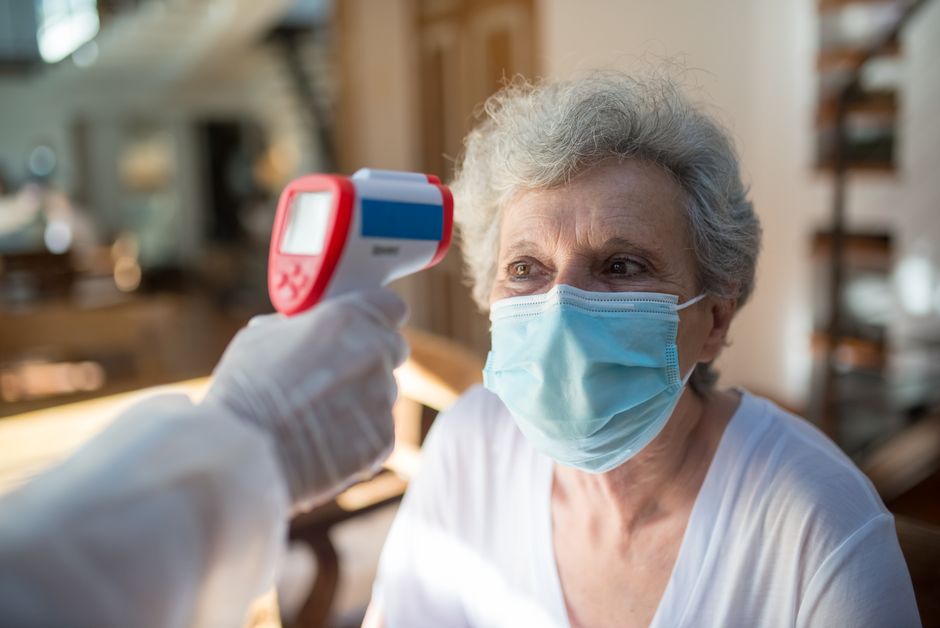
Your infrared thermometer is not working because something is blocking the path between the sensor and the forehead, or the reading is being taken wrong. Dirty lenses, cold rooms, sweaty skin, direct sunlight, and holding the device too far away are the most common causes. The good news is that most of these problems are fixable in under a minute.
Infrared thermometers do not measure body temperature directly. They measure the infrared energy a surface gives off and convert that into a temperature estimate. Anything that interferes with that energy — or with the math the device uses to interpret it — will throw off the reading.
Why Is My Infrared Thermometer Not Working?
Most failures fall into one of three groups: a dirty or blocked sensor, a bad measurement technique, or an environment the device was never built to handle.
The sensor window at the front of the device is the most fragile part. Skin oil, dust, condensation, and even a light smudge will absorb or scatter infrared energy before it reaches the detector. The reading drops. Sometimes it drops by a lot.
Technique matters just as much. Forehead thermometers are calibrated for a specific distance — usually a few centimeters — and a specific spot on the forehead. Move the device back, angle it, or aim at a different part of the face and the number changes.
Environment is the third factor. A cold room, a hot car, or direct sun on the forehead will shift the reading even when the device and the technique are perfect.
What Causes Inaccurate Readings on a Forehead Thermometer?
Several everyday things push the number in one direction or another. Knowing which ones apply helps you decide whether the reading is trustworthy.
- Dirty lens. Oil or dust on the sensor window lowers the reading.
- Sweat on the forehead. Moisture cools the skin surface and lowers the reading.
- Direct sunlight or a hot room. Warms the skin and raises the reading.
- Cold outdoor air. Cools the skin and lowers the reading.
- Recent exercise or a hot shower. Raises skin temperature temporarily.
- Cosmetics or heavy moisturizer. Can change how the skin emits infrared energy.
- Hair or a hat covering the forehead. Blocks the sensor’s view.
- Holding the device too far away. The reading drifts toward the average of whatever else is in view.
- Cold device. A thermometer stored in a cold car or a cold room may not function to spec until it warms up.
The pattern matters. A single odd reading in a comfortable room with a clean device is usually a technique issue. Repeated odd readings across several people suggest the device itself.
How Do You Take a Reading Correctly With an Infrared Thermometer?
Follow the manufacturer’s instructions first — every device is calibrated differently — but a few principles apply to nearly all forehead thermometers.
Clean the sensor window with a soft cloth or an alcohol wipe and let it dry. Check that no hair, sweat, or makeup sits between the device and the skin. The forehead should be bare and dry.
Wait at least 15 minutes after the person has come in from outside, exercised, or had a hot drink. Let the body settle to room conditions.
Hold the device at the distance the manual specifies. Most forehead models are designed for a few centimeters. Some are designed to touch the skin. Do not guess — the distance is part of the calibration.
Aim at the center of the forehead, between the eyebrows and above them. Sweep slowly across the forehead if the manual calls for it. Take two or three readings and use the highest, unless the manual says otherwise.
If the reading still looks wrong, take a reading on someone healthy in the same room with the same technique. If that person also reads oddly, the problem is the device or the room. If only one person reads oddly, the problem is likely that person’s skin surface or a real temperature difference.





Why Does My Thermometer Give Different Readings Each Time?
Small differences between readings are normal. Infrared thermometers measure skin surface temperature, and skin surface temperature fluctuates constantly with blood flow, sweat, and air movement.
Variation of a few tenths of a degree between back-to-back readings is expected. Larger swings — a full degree or more — usually point to technique or environment rather than the person.
One detail worth knowing: forehead infrared thermometers do not measure core body temperature. They measure skin temperature and estimate what core temperature might be. That estimate is less accurate than a rectal, oral, or ear reading in clinical settings. This is why many hospitals use infrared thermometers for quick screening but confirm with another method when a fever matters.
Some research suggests forehead infrared readings can miss low-grade fevers that oral or rectal thermometers catch. The evidence on how well they perform varies by device, technique, and population, and no single accuracy figure applies to all of them.
What Should You Do If the Thermometer Still Does Not Work?
If cleaning, technique, and environment do not fix it, the device itself may be the problem.
Check the battery. A weak battery can cause erratic readings or a blank display. Replace it with a fresh one of the correct type and try again.
Look for error codes on the display. Most manufacturers list what each code means in the manual. A common one is a reading outside the device’s measurement range, which usually means the room is too hot or too cold for the device to function.
Let the device sit at room temperature for at least 30 minutes if it has been stored somewhere cold or hot. Infrared sensors are sensitive to their own temperature.
If the device is more than a few years old, has been dropped, or has been exposed to moisture, replacement may be the practical answer. Consumer infrared thermometers are not designed to be repaired.
When a fever genuinely matters — for an infant, an older adult, or anyone who is unwell — a different thermometer is the safer choice. Oral, rectal, and ear thermometers measure closer to core temperature and are better suited for confirming a fever at home.
Are Infrared Thermometers Less Accurate Than Other Types?
For screening, they are useful. For diagnosis, they are less reliable than thermometers that measure closer to the body’s core.
Rectal thermometers remain the reference standard for measuring core temperature, especially in infants and young children. Oral thermometers are accurate when used correctly in adults and older children who can hold them under the tongue. Ear thermometers are accurate when the probe is positioned correctly in the ear canal.
Forehead infrared thermometers sit lower on the accuracy ladder. They are fast, non-contact, and useful for checking many people quickly. They are not the best tool for deciding whether someone has a fever that needs medical attention.
This does not mean they are useless. It means the reading should be interpreted with the right expectations. A clearly high reading on an infrared thermometer is meaningful. A normal reading on an infrared thermometer does not rule out a fever.
When Should You Stop Relying on an Infrared Thermometer?
Stop relying on it when the reading does not match what you see. A person who looks and feels feverish but reads normal on an infrared thermometer needs a different measurement method.
Stop relying on it for infants under 3 months. Any fever in a newborn is a medical concern, and the reading needs to be as accurate as possible. Rectal measurement is the standard for this age group.
Stop relying on it when the device has been dropped, exposed to water, or stored in extreme temperatures. The internal calibration can drift, and there is no way to check it at home.
For everyday screening in a healthy household, an infrared thermometer is fine. For anything that could matter clinically, use a method that measures closer to core temperature, or seek medical advice.
Frequently Asked Questions
Why does my infrared thermometer read low?
A dirty sensor window, sweat on the forehead, or a cold room are the most common causes of a low reading. Clean the lens, dry the skin, and let the person adjust to room temperature before trying again.
Can I use an infrared thermometer on my wrist or neck?
Some devices are designed for wrist or neck measurement, but the calibration is different from forehead mode. Only use a site the manufacturer specifies, because the device’s math is built around that specific location.
How accurate are forehead thermometers compared to oral thermometers?
Forehead infrared thermometers are generally less accurate than oral thermometers for detecting fever. They measure skin temperature and estimate core temperature, which introduces more room for error.
Why does my thermometer show an error code?
Error codes usually mean the reading is outside the device’s working range or the device is too cold or too hot to function. Check the manual for the specific code and let the device sit at room temperature for at least 30 minutes.
