
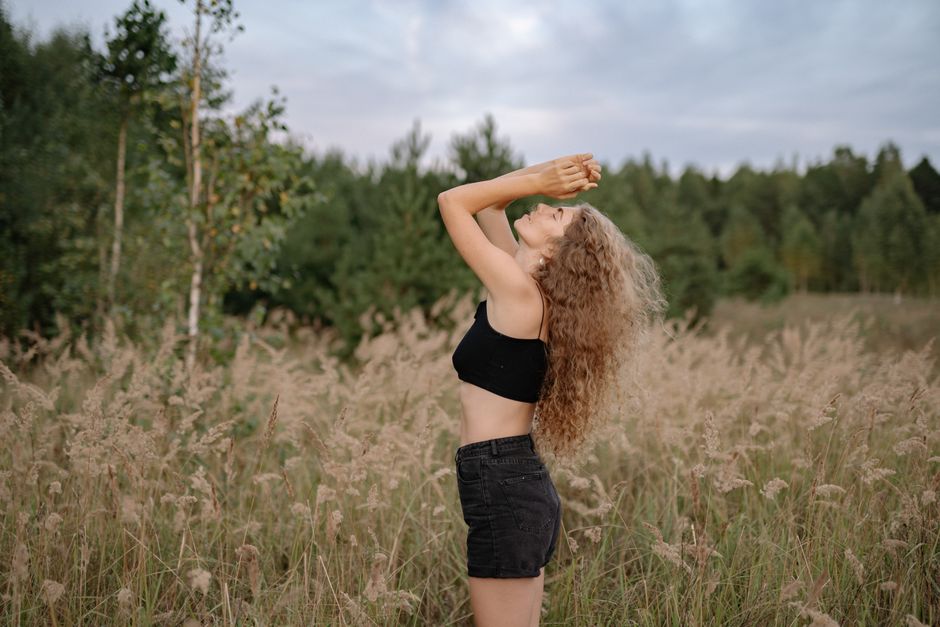
If your hair used to spiral into ringlets and now falls flat or straight, the change is real — not your imagination, and usually not your shampoo’s fault. Hair texture is determined by the shape of the hair follicle and the way protein bonds form inside each strand, and both of those things can change over time. The most common drivers are hormonal shifts, age, heat or chemical damage, and genetics finally revealing themselves. Here is what actually happens, and what the evidence does and does not support.
Why Is My Hair No Longer Curly Causes Explained?
Curly hair gets its shape from two things working together: the curve of the follicle it grows out of, and the way sulfur bonds form between protein chains inside the strand. Change either one and the curl pattern changes with it.
Follicles are not rigid tubes. Their shape is influenced by hormones, particularly androgens, and by the surrounding tissue in the scalp. A follicle that is slightly curved produces a wave. A follicle with a pronounced curve produces a tight coil. When hormonal signals shift, the follicle’s behavior can shift too, and new hair grows with a different shape than the hair it replaces.
Inside the strand, hair is built mostly of a protein called keratin. Pairs of sulfur-containing amino acids link up to form disulfide bonds, and these bonds act like rungs holding the hair’s shape. That is why a curl can be reshaped temporarily with water and heat, and permanently with chemical treatments that break and reform those bonds. Anything that damages or alters those bonds changes how the hair behaves.
Because hair grows slowly — roughly half an inch per month on average — a change in follicle behavior takes time to show. By the time you notice straighter roots, the shift that caused it may have started months earlier. This delay is one reason people struggle to connect the change to its cause.
Can Hormones Change Your Hair Texture?
Yes, and this is one of the most well-established causes. Hormones influence the size, shape, and activity of hair follicles, so when hormone levels shift, texture can shift with them.
Puberty is the clearest example. Many people have straight hair as children and develop waves or curls during adolescence, because rising hormones change follicle activity. The reverse also happens. Pregnancy is another documented example — some women report thicker, wavier hair during pregnancy and a return to their previous texture afterward, driven by estrogen and by the fact that pregnancy extends the growth phase of the hair cycle.
Menopause is a common turning point for texture changes in women. Declining estrogen and shifting androgen ratios can affect follicle shape and hair diameter. Some women notice their hair becoming drier, coarser, or less curly. Others notice the opposite. The direction varies, but the mechanism — hormonal influence on the follicle — is the same.
Thyroid conditions are worth mentioning because they affect hair broadly. Both an underactive and an overactive thyroid can cause hair to become dry, brittle, and prone to shedding. Whether thyroid imbalance specifically changes curl pattern is less clear. Some clinicians report it, but it has not been firmly established in research. If you are noticing hair changes along with fatigue, weight changes, or temperature sensitivity, that combination is worth discussing with a doctor.
Does Age Make Hair Straighter?
Age is one of the most common reasons people lose their curl. Hair texture can change at any point in life, and for many people the change is gradual and permanent.
Two things happen as we get older. First, hair follicles can change shape over time, producing hair with less natural curve. Second, hair tends to thin, and thinner hair has less structural support to hold a curl. A strand that once had enough bulk to coil may now fall flatter simply because there is less of it.
Gray hair also behaves differently. When pigment-producing cells in the follicle slow down, the hair that grows is often coarser and drier. That dryness can make curls look looser or frizzier rather than tighter. Some people find gray hair holds curl better; others find it goes limp. Both patterns are reported, and the outcome seems to depend on the individual’s follicle shape and hair porosity.
This is one of the changes that is largely outside your control. If texture has shifted because of age-related follicle changes, no product will restore the original pattern. What products can do is manage the hair you have now.


Can Heat, Chemicals, and Styling Change Your Curl Pattern?
Yes — and this is the cause most within your control. Heat and chemicals can permanently alter the bonds that hold a curl.
Disulfide bonds are strong, but they are not indestructible. Chemical relaxers and permanent waves work by deliberately breaking these bonds and reforming them in a new shape. That is the entire point of the treatment, and the result is permanent until new hair grows in. If you have had a relaxer, the straight sections will stay straight; only the new growth at the root will show your natural pattern.
Heat is more subtle. Flat irons and blow dryers used at high temperatures can weaken the hydrogen bonds that give hair temporary shape. Occasional use usually causes no lasting change. Repeated high-heat styling over years can cause cumulative damage that leaves hair less able to hold a curl, especially at the ends. The damage is not always reversible, because once the protein structure is compromised, it does not rebuild itself.
Bleaching and repeated coloring can have a similar effect. These processes raise the hair’s cuticle and remove some of its internal structure, leaving hair more porous. Porous hair tends to lose curl definition and frizz more easily. If your texture changed after a period of heavy coloring or heat styling, damage is a likely contributor.
What Else Can Change Hair Texture?
Several other factors can affect curl pattern, and some are worth ruling out with a doctor.
- Medications. Some drugs, including certain chemotherapy agents, blood thinners, and acne medications, have been reported to change hair texture. The effect varies widely by person and by drug.
- Nutritional deficiencies. Severe iron deficiency, low protein intake, and other nutritional shortfalls can affect hair growth and quality. Mild deficiencies are less clearly linked to texture changes.
- Alopecia areata. This autoimmune condition causes patchy hair loss. When hair regrows after a flare, it sometimes comes back with a different texture or color before returning to normal.
- Scalp conditions. Chronic inflammation or scarring of the scalp can damage follicles and change the hair they produce. This is uncommon but worth a medical evaluation if you also notice scalp pain, itching, or visible thinning.
- Genetics. Sometimes there is no trigger at all. Curl pattern is inherited, and the genes that control it can express differently at different life stages.
If the change is sudden, comes with hair loss, or is accompanied by other symptoms, that is a reason to see a doctor rather than assume it is just aging.
Can You Get Your Curls Back?
Sometimes. It depends entirely on why they changed.
If the cause is a temporary one — pregnancy, a medication you have stopped, a nutritional deficiency that has been corrected — new hair may grow back with your original curl pattern. Because hair grows slowly, you may need to wait for a full growth cycle before you can judge. That can take months.
If the cause is age-related follicle change or permanent chemical straightening, the original pattern will not return. New hair will grow according to the follicle’s current behavior, and if that behavior has changed permanently, so has the texture.
If the cause is heat or chemical damage to the existing hair, the damaged sections cannot be repaired. They can be cut off. Hair that grows in afterward will reflect the follicle’s natural pattern, assuming the follicle itself was not affected.
There is no product, supplement, or treatment with strong clinical evidence for restoring a lost curl pattern. Be skeptical of anything marketed that way. What you can do is support healthy hair growth generally — adequate protein, enough iron, and gentle handling — and manage the texture you have now with the right cut and styling approach.
Frequently Asked Questions
Why did my hair suddenly go straight?
A sudden change is usually hormonal, medication-related, or the result of chemical or heat damage. If it happened quickly and came with hair loss or scalp symptoms, see a doctor to rule out thyroid problems or other conditions.
Can menopause change your hair from curly to straight?
Yes. Shifting estrogen and androgen levels during menopause can change follicle shape and hair diameter, which can loosen curl pattern. The direction of change varies by person.
Does hair texture change with age?
It can, and the change is often permanent. Follicles may change shape over time, and thinning hair has less structure to hold a curl.
Can damaged curly hair become curly again?
Damaged sections of hair cannot be repaired once the protein structure is compromised. New hair will grow in with your natural pattern, so the fix is usually to cut off the damaged length and let it regrow.
