
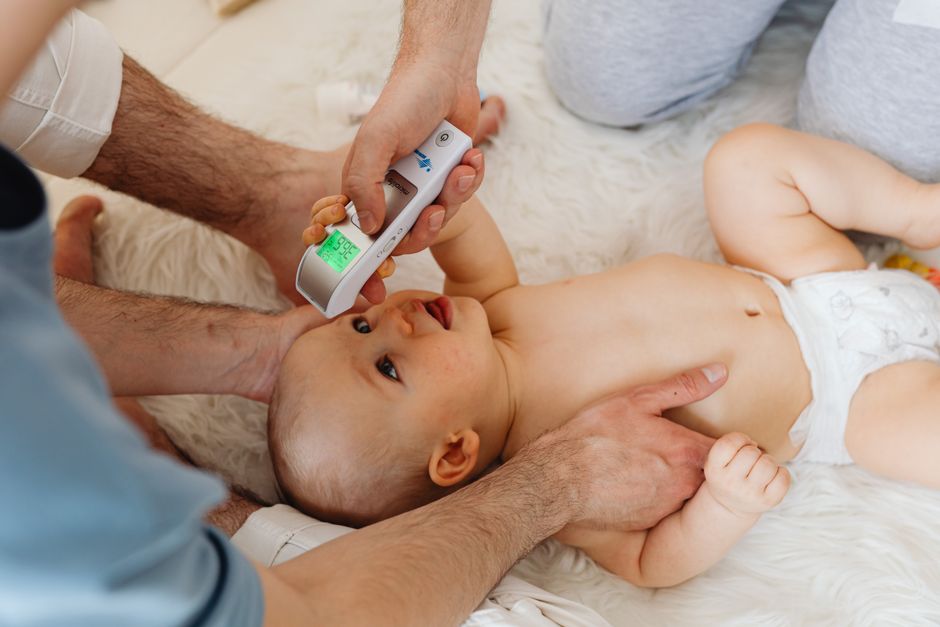
A fever that holds steady for a few days is often the body doing its job, not a sign that something has gone wrong. Most fevers from common infections peak within a few days and then fade as the immune system gains control. But a fever that won’t move, keeps climbing, or comes back after it seemed to break deserves attention. The cause is usually the infection itself, though sometimes it points to a secondary problem like dehydration or a bacterial infection on top of a viral one. Below is what actually drives a stubborn fever, how to tell the difference between a normal course and a warning sign, and what genuinely helps.
Why does a fever stay high for days?
Fever is a controlled rise in the body’s set point, not a malfunction. When your immune system detects an invader, it releases signaling molecules called cytokines. These travel to the hypothalamus — the brain region that acts as your body’s thermostat — and tell it to raise the target temperature. That is why you feel cold and shiver as a fever builds: your body is trying to reach a higher set point.
As long as the immune response is active, the thermostat stays elevated. A fever that lasts several days is often simply the length of that response. Many common viral infections run their course over roughly three to five days, and the fever tracks along with them. The fever is a symptom of the battle, not the battle itself.
One non-obvious point: the number on the thermometer matters less than the pattern and how the person looks. A person with a fever of 102°F who is drinking, alert, and reasonably comfortable is often in a different situation than someone with 100.4°F who is confused, breathing hard, or can’t keep fluids down. Clinicians weigh the whole picture, not a single reading.
What causes a fever that won’t come down?
The most common cause is an ongoing infection your body is still fighting. Beyond that, a fever that resists treatment usually falls into a few categories.
- Viral infections are the most frequent source of multi-day fevers. Most resolve on their own, but some — like influenza — can produce fevers that last a week or more.
- Bacterial infections can layer on top of a viral illness. A classic example is a bacterial ear infection or pneumonia developing during or after a cold. These often produce a fever that improves and then worsens again.
- Dehydration can make a fever harder to manage and can push the temperature higher, because the body has less fluid to regulate heat.
- Medication-related fever is real but uncommon. Some drugs can cause fever as a side effect, and this is easy to overlook.
- Inflammatory and other medical conditions can cause prolonged fever without an obvious infection. These are less common and typically require a clinician’s evaluation.
Fever-reducing medication does not treat the cause. It lowers the set point temporarily, which is why the fever can return when the dose wears off. That return is expected and is not a sign the medicine failed.
Why isn’t fever medicine bringing the temperature down?
Fever reducers like acetaminophen or ibuprofen work by blocking the signals that raise the set point. They lower fever; they do not eliminate it, and they do not cure the underlying illness. If the immune response is strong, the temperature may drop only partway or rise again as the drug clears.
There are a few practical reasons a fever seems “stuck” despite medication:
- The dose may be too low for the person’s weight, or given too far apart. Follow the dosing on the package or what a clinician or pharmacist advised.
- The medication may not have had time to work. It typically takes a while to reach full effect.
- The underlying infection is still active, so the body keeps resetting the thermostat upward.
- The person may be underdressed or overdressed. Bundling up traps heat; light clothing helps the body release it.
It is worth being clear about something many people get wrong: alternating or combining fever medicines is common practice, but it is not risk-free and the evidence that it improves outcomes is limited. Some clinicians recommend it in specific situations; it is not a universal standard. If you are considering it, especially for a child, check with a pharmacist or clinician first. Overlapping ingredients — many cold products already contain acetaminophen — are a real source of accidental overuse.





When is a fever a warning sign?
Most fevers are not dangerous in themselves. The concern is what is causing them and how the person is responding. Seek medical care promptly in these situations:
- An infant under 3 months with any fever at all. This is a medical emergency and requires immediate evaluation.
- A fever in a child that comes with unusual sleepiness, a stiff neck, a rash that does not fade when pressed, trouble breathing, or repeated vomiting.
- An adult with a fever plus confusion, a severe headache, chest pain, shortness of breath, or a rash.
- A fever that lasts more than a few days without improvement, or one that spikes repeatedly.
- A fever in anyone with a weakened immune system, or in someone who is pregnant.
- A fever that breaks and then returns days later.
For children, age matters enormously. The younger the child, the lower the threshold for getting medical advice. A fever in a newborn is treated very differently from a fever in a school-age child. Established guidance is clear that very young infants need urgent assessment rather than home monitoring.
What actually helps a fever come down?
The goal of managing a fever is comfort, not forcing the number to normal. A fever is part of the immune response, and there is no strong evidence that routinely suppressing every fever speeds recovery. The practical aim is to keep the person safe and reasonably comfortable while the body does its work.
What genuinely helps:
- Fluids. Drink water, broth, or an oral rehydration solution. Dehydration worsens fever and makes people feel worse. Watch for dark urine or very little urination as signs of low fluid intake.
- Rest. The body is using energy to fight infection.
- Light clothing and a comfortable room temperature. Do not bundle up to “sweat it out” — that traps heat and can raise the temperature.
- Fever-reducing medicine when needed for comfort, dosed correctly for age and weight.
What does not help, and can be harmful: cold baths or ice packs, alcohol rubs, and forcing a fever down when the person is comfortable. Cold water causes shivering, which actually generates heat and can raise the core temperature. Alcohol rubs are dangerous and should never be used.
There is a persistent myth that a fever must be broken quickly or it will “cook” the brain. In ordinary infections, the body’s thermostat keeps fever within a range that does not cause harm. The risk from fever comes from the underlying illness and from dehydration, not from the temperature itself in most cases.
How long should a fever last before you worry?
There is no single number of days that applies to everyone, because the expected duration depends on the cause and the person. That said, general guidance is that a fever lasting more than a few days, or one that is not improving, is a reason to check in with a clinician.
Pay attention to the trend. A fever that is gradually easing over several days is following a normal course. A fever that is climbing, that keeps returning after breaking, or that comes with new symptoms like a worsening cough or ear pain is a different story and warrants medical advice.
For children, the age and the child’s behavior tell you more than the thermometer. A child who is drinking, playing between fevers, and sleeping reasonably is usually on a normal path. A child who is listless, hard to wake, or not drinking needs to be seen.
Can dehydration keep a fever from breaking?
Yes. Dehydration makes fever harder to control and can make a person feel much worse. When fluid levels drop, the body has less capacity to regulate temperature and to circulate blood efficiently. This is one of the most common and most fixable reasons a fever seems stuck.
Watch for the signs: a dry mouth, dark yellow urine, urinating much less than usual, dizziness on standing, and in children, fewer wet diapers or no tears when crying. Small, frequent sips are easier to keep down than large amounts at once. Oral rehydration solutions are designed to replace both fluid and salts and are more effective than water alone when someone has been losing fluids through sweating or vomiting.
If someone cannot keep fluids down at all, that is a reason to seek medical care rather than keep trying at home.
Frequently Asked Questions
Why is my fever not going down even with medicine?
Fever medicine lowers the set point temporarily but does not cure the infection, so the temperature can rise again as the dose wears off. If the fever stays high despite correct dosing, the underlying cause may need medical evaluation.
How many days can a fever last normally?
Many common viral infections produce fevers that last roughly three to five days and then ease. A fever that lasts longer than a few days or keeps returning should be checked by a clinician.
Should I let a fever run its course?
For most otherwise healthy people, a fever does not need to be forced down if the person is comfortable and drinking fluids. Treat for comfort rather than to hit a specific number on the thermometer.
When should I go to the hospital for a fever?
Go promptly for a fever with confusion, trouble breathing, a stiff neck, a rash that does not fade when pressed, or chest pain. Any fever in an infant under 3 months is an emergency.
