
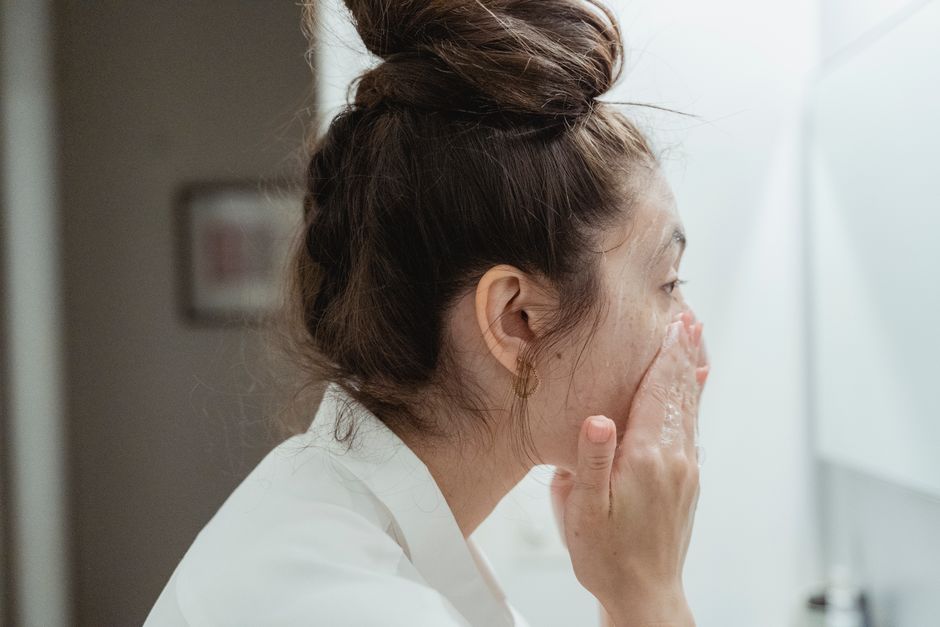
Waking up with a puffy face is common. It happens when fluid builds up in the tissues under your skin while you sleep. For most people, it is temporary and harmless, often caused by last night’s dinner or how you slept. The good news is that simple changes to your evening routine usually fix it within a few hours.
What Causes Morning Face Bloating?
Your body handles fluid differently when you lie flat. Gravity no longer pulls fluid down toward your legs. Instead, it can pool in your face, especially around your eyes and cheeks. This is called dependent edema.
Several factors make this worse. A high-salt meal the night before is a major trigger. Sodium makes your body hold onto water. If you ate processed food, soy sauce, or deli meats late in the evening, your face may show it the next morning.
Alcohol is another common cause. It dehydrates you, and your body responds by holding onto whatever water it can. This effect is often worst the morning after drinking.
Sleep position matters too. Sleeping face down or on a very flat pillow allows fluid to settle in your facial tissues. Your pillow can also press against your face, temporarily slowing drainage.
Allergies can cause puffiness as well. Histamine release makes blood vessels leak fluid into surrounding tissue. If you sleep with a dusty pillow or a pet in the room, this could be your trigger.
How Long Does Morning Face Bloating Last?
For most people, facial puffiness fades within one to three hours after waking. Once you stand up and move around, gravity helps drain the fluid. Normal activity and hydration speed this up.
Some people notice their face looks normal by the time they finish breakfast. Others may see puffiness linger into mid-morning. This depends on the cause and how much fluid accumulated overnight.
If your face stays swollen past midday or gets worse throughout the day, that is different. Persistent swelling can point to an underlying issue that deserves medical attention.
How to Reduce Face Bloating Fast
If you need to look less puffy quickly, several methods genuinely work. They do not require special products or expensive treatments.
Cold water and cold compresses constrict blood vessels. This reduces fluid leaking into tissues. Splash cold water on your face or hold a cold, damp cloth over puffy areas for a few minutes. Some people use chilled spoons or a cold eye mask, which work the same way.
Gentle facial massage helps move fluid toward your lymph nodes. Use your fingertips to make small circular motions from the center of your face outward. Light pressure is enough. You are not kneading muscle; you are encouraging fluid drainage.
Stand up and move. Walking around, even for five minutes, lets gravity do its work. This is often the most effective single step.
Drink water. If your puffiness comes from alcohol or excess salt, water helps your body flush out the excess sodium. Drink a full glass soon after waking.
Caffeine in coffee or tea is a mild diuretic. It can help reduce fluid retention, though the effect is modest. Do not overdo it; too much caffeine dehydrates you and can make things worse later.





What to Change in Your Evening Routine
Prevention starts the night before. Small adjustments reduce the amount of fluid that accumulates while you sleep.
Watch your salt intake at dinner. This is the single most effective change. Aim for a dinner that is not loaded with sodium. Home-cooked meals with fresh ingredients are usually lower in salt than restaurant meals or packaged foods.
Limit alcohol, especially close to bedtime. If you drink, have water alongside your alcoholic beverage. This helps offset the dehydrating effect.
Sleep with your head slightly elevated. An extra pillow or a wedge pillow keeps your head above your heart. This helps fluid drain away from your face during the night. Keep the elevation modest; too many pillows can strain your neck.
Stay consistent with hydration during the day. Drinking enough water throughout the day helps your body regulate fluid balance. Drinking a large amount of water right before bed is not the issue. The problem is chronic dehydration or excess sodium, not the glass of water at night.
Wash your face before bed. Makeup, dirt, and oil can irritate the skin overnight. This irritation can contribute to puffiness, especially around the eyes. A gentle cleanser removes these irritants.
When Should You Worry About Morning Face Swelling?
Occasional morning puffiness is normal. But some patterns deserve attention.
See a doctor if your face swelling is severe, painful, or comes with other symptoms. Swelling that affects only one side of your face is different from general puffiness. So is swelling accompanied by shortness of breath, hives, or difficulty swallowing. These can indicate an allergic reaction or another medical issue.
Persistent facial swelling that does not improve during the day can be a sign of a thyroid condition, kidney problems, or a reaction to medication. Some blood pressure medications, antidepressants, and pain relievers list facial swelling as a side effect.
If the swelling is accompanied by a rash, it could be contact dermatitis or an allergic reaction to a new skincare product, detergent, or food. Stop using any recently introduced product and see if the swelling resolves.
Pay attention to the pattern. If your face is puffy every single morning regardless of what you eat or how you sleep, that is worth mentioning to your doctor. The same applies if the puffiness gets progressively worse over weeks.
Does Sleeping Position Really Matter?
Yes, but not for everyone. People who sleep on their stomach or side are more likely to wake up with facial puffiness. Back sleepers experience it less often.
The reason is simple. When you sleep face down, your face presses into the pillow. This pressure can slow blood flow and fluid drainage in that area. The effect is temporary, but it can be noticeable for hours after waking.
If you are a side sleeper, you may notice more puffiness on the side you slept on. This is normal. Switching to your back, if you can manage it, often reduces morning puffiness.
Elevating your head slightly also helps. You do not need a special pillow. A standard extra pillow works for most people. The goal is to keep your head above your heart level, which encourages fluid to drain away from your face.
Does Skincare Help or Hurt?
Some skincare products can reduce puffiness. Others can cause it. Knowing the difference matters.
Products containing caffeine are sometimes used around the eyes. Caffeine constricts blood vessels, which can temporarily reduce puffiness. These products work for some people, but the effect is short-lived and modest.
Hyaluronic acid serums draw water into the skin. This is good for dryness but can actually increase puffiness if applied heavily before bed. The same applies to rich night creams. They hydrate the skin but also attract water, which can pool overnight.
If you notice more puffiness after starting a new skincare product, consider applying it only in the morning. Or switch to a lighter formula.
Cold rollers and gua sha tools can help with puffiness when used correctly. They combine massage with cooling, both of which encourage fluid drainage. They are not necessary, but they are not harmful either.
Frequently Asked Questions
Why is my face bloated in the morning even when I don’t eat salt?
Fluid redistribution during sleep happens to everyone, regardless of diet. Sleep position, allergies, and even normal hormonal fluctuations can cause morning puffiness.
Does drinking water before bed cause a puffy face?
No. A glass of water before bed is rarely the cause. Excess sodium and dehydration are far more likely culprits than normal water intake.
Can a pillow cause morning face bloating?
Yes. Sleeping face down or with your face pressed into a flat pillow can slow fluid drainage. Sleeping on your back with your head slightly elevated reduces this effect.
How long does it take for face bloating to go down?
Most morning puffiness fades within one to three hours of waking. Standing up, moving around, and drinking water speed up the process.
