
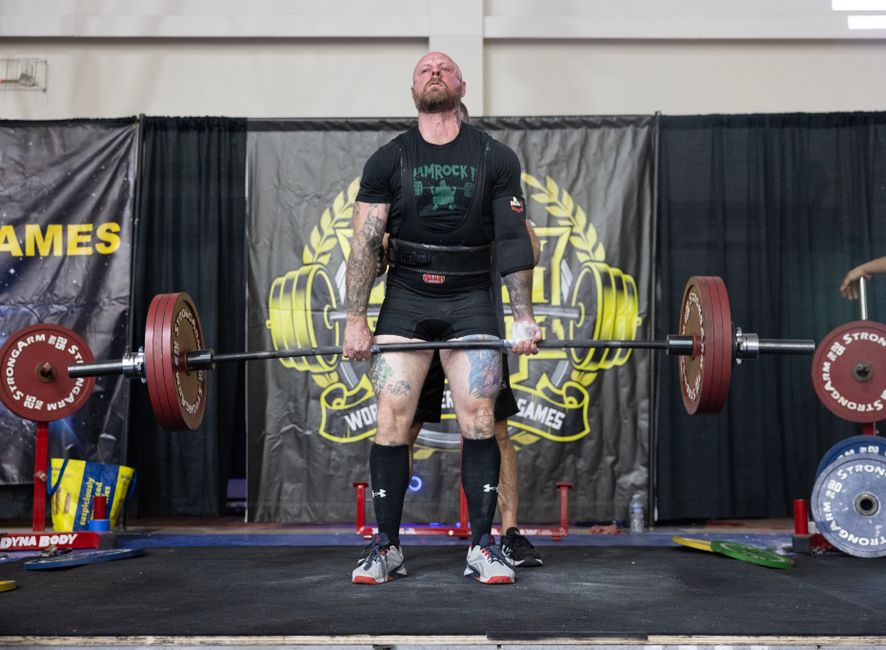
If your deadlift numbers tower over your squat, you are not alone. The deadlift and the squat use different starting positions, different muscle emphasis, and different amounts of total body mass. Most lifters can pull more than they can squat, and that gap is normal.
The main reason comes down to physics and muscle involvement. In a deadlift you start from the floor with the bar in your hands, which shortens the range of motion compared with a full squat. You also recruit more muscle groups at once, including the back, hips, and grip. A squat asks more of your quads and core in a deeper position, which usually limits how much weight you can move.
There is more to it than that. Levers, training history, technique, and even how you define a “real” rep all shape the gap. Here is what the evidence and basic biomechanics actually show.
Why Is My Deadlift So Much Stronger Than My Squat?
The deadlift lets you move more weight because it combines a shorter effective range of motion with broader muscle recruitment. You are pulling with your hips, back, and legs together, and the bar starts at a height that reduces how far you have to travel.
A squat is a different task. The bar sits on your back or chest, and you lower your hips below or near parallel. That deep position demands more from your quadriceps and places the load through a longer arc. The muscles that drive a squat are working from a mechanical disadvantage at the bottom, which caps the weight you can handle.
Think of it this way. In a deadlift, your hands hold the load and your whole posterior chain engages from the first inch. In a squat, your legs and trunk carry the load through a full descent and ascent. Different jobs, different limits.
How Does Range of Motion Affect the Numbers?
Range of motion is one of the biggest reasons the two lifts diverge. A standard deadlift begins with the bar at roughly mid-shin height and ends with you standing tall. A squat starts at the top and travels all the way down and back up.
That difference matters. Moving a weight through a longer distance takes more work, and the hardest part of a squat is often the bottom position where your muscles are stretched and mechanically weakest. The deadlift avoids that deep, disadvantaged position entirely.
This is not a loophole. It is simply a different movement. A trap-bar deadlift, which changes the bar path and grip, tends to reduce the gap further because it looks more like a squat. Lifters who use a very deep squat will usually see a wider gap than those who squat to just parallel.
Which Muscles Does Each Lift Use?
The deadlift recruits a wider set of muscles than the squat, and that broader involvement lets you move heavier loads. Both lifts train the legs and hips, but the emphasis differs.
- Deadlift: heavily involves the glutes, hamstrings, spinal erectors, upper back, and grip. The quads assist but are not the primary driver.
- Squat: emphasizes the quadriceps, glutes, and adductors, with the core stabilizing the trunk under a load placed on the shoulders or chest.
Because the deadlift spreads the demand across more muscle groups, no single group becomes the bottleneck as quickly. In a squat, your quads and trunk often set the ceiling. If your quads are relatively weaker than your back and hips, your squat will lag behind your pull.
Grip is worth noting. In a deadlift, your hands are a genuine limiting factor. Many lifters find that their grip gives out before their legs and back do. That is one reason grip training and the mixed grip or straps can change the numbers so much.





Do Body Proportions Change the Gap?
Body proportions can widen or narrow the gap between your two lifts. Limb length, torso length, and where your joints sit all affect how each lift feels and how much weight you can move.
Lifters with long arms and a long torso often find the deadlift especially favorable. A longer arm span means the bar travels less distance from the floor to lockout. A shorter torso relative to the legs can make the squat position harder to reach comfortably.
Shorter arms and a longer torso tend to help the squat and can make the deadlift start position more awkward. These are general tendencies, not rules. Individual anatomy varies enough that two lifters of the same height can have very different ratios. Technique coaching matters more than trying to fight your own frame.
Is It Normal to Deadlift More Than You Squat?
Yes. For most lifters, a deadlift that exceeds the squat is the expected pattern, not a sign of a weak squat or a training problem. The two lifts are simply not directly comparable.
What is less clear is the exact size of the gap you should expect. Strength standards tables exist, but they are built from specific populations and are not universal rules. The ratio between your lifts depends on your training age, body type, technique, and how strictly you perform each movement.
A very large gap can point to something worth examining, though. If your squat is far behind your pull, it may reflect limited squat practice, mobility restrictions, or quadriceps that are undertrained relative to your posterior chain. That is not a diagnosis. It is a reason to look at your program rather than assume something is wrong.
When Should You Worry About the Gap?
A big gap between your deadlift and squat is usually not a problem on its own. It becomes worth attention when it comes with pain, stalled progress, or a clear technique breakdown.
Watch for these situations:
- Knee, hip, or lower back pain that appears during one lift but not the other.
- A squat that has not improved for a long stretch despite consistent training.
- Difficulty reaching depth in the squat, which can signal mobility limits rather than strength.
- A deadlift that relies on your back rounding because your legs cannot keep up.
None of these automatically mean the gap is the cause. They are reasons to get an in-person assessment from a qualified coach or clinician rather than guessing from numbers alone.
Does the Gap Tell You Anything About Your Training?
The gap can hint at where your training is unbalanced, but it cannot tell you much by itself. A deadlift that outpaces your squat may mean you have practiced the pull more, or that your quads and core need more direct work.
If you want to close the gap, the honest approach is to train the squat more specifically rather than chase a number. That usually means squatting more often, addressing depth and mobility, and building quad strength with movements that suit your frame. There is no universal target ratio to hit.
One clarification worth making: a stronger deadlift does not mean the deadlift is the “better” lift. Each one tests different qualities. The squat challenges your legs and trunk through a longer range. The deadlift tests your ability to coordinate the whole body from a dead stop. Both have value, and neither is a truer measure of strength than the other.
If you are deciding where to put your effort, base it on your goals and any weak points a coach identifies, not on the size of the gap between two different movements.
Frequently Asked Questions
Is it normal to deadlift a lot more than you squat?
Yes, most lifters deadlift more than they squat because the pull has a shorter range of motion and recruits more muscle groups at once. A gap in that direction is expected, not a red flag.
Why can I deadlift more but squat less?
The squat asks more of your quadriceps and core through a deeper range, which limits the load you can handle. The deadlift spreads the work across your back, hips, and grip, so no single group limits you as quickly.
Should my squat and deadlift be the same weight?
No, there is no rule that they should match, and for most people they will not. The ratio depends on your body proportions, training history, and technique, so comparing the two directly is not very useful.
Does a weak squat compared to my deadlift mean I am imbalanced?
Not necessarily, though a very large gap can suggest your quads or squat practice are lagging. A coach can assess whether your training or technique needs adjustment.
