
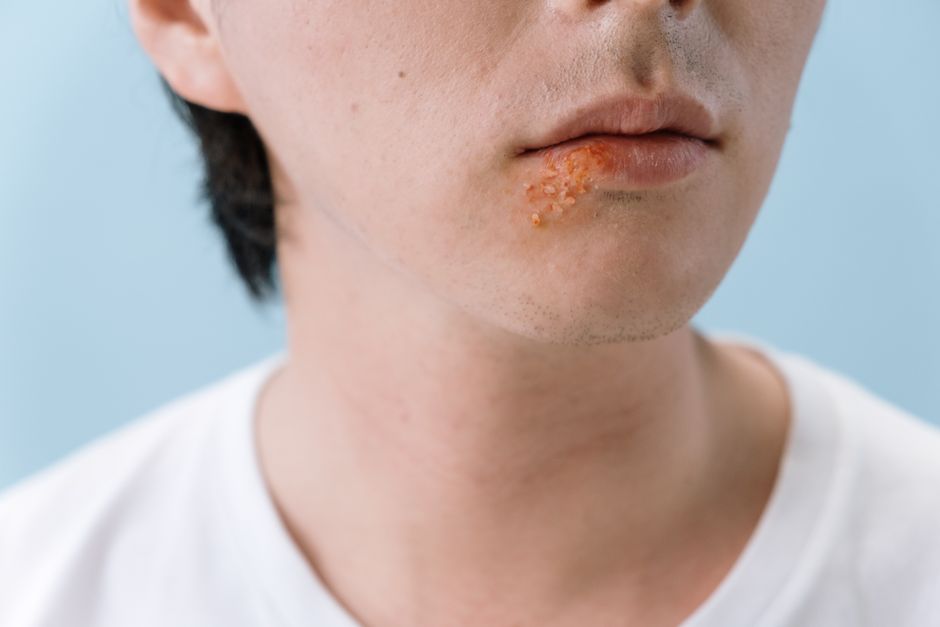
Yes, you can put too much Abreva on a cold sore, and doing so will not make it heal faster. Abreva is a topical antiviral cream with one approved purpose: shortening how long a cold sore lasts when it is used correctly. More cream does not mean more benefit. It means more irritation, more wasted product, and a higher chance of side effects at the application site.
The active ingredient in Abreva is docosanol. It is available without a prescription and is meant for adults and children 12 and older. The instructions on the label describe a specific way to apply it, and that schedule matters more than the amount you squeeze out. Using extra cream, applying it more often, or layering it on thicker than directed does not improve results and can make the skin around the sore worse.
Can You Put Too Much Abreva On A Cold Sore?
You can, and the most common sign of it is irritation right where you applied it. The label directs you to apply a thin layer, not a thick coating. A thin layer is enough to deliver the medication to the skin. Piling on more cream does not push more medicine into the tissue — the skin can only absorb so much, and the rest just sits on the surface.
Docosanol works by interfering with the way the herpes simplex virus fuses with your skin cells. This is a surface-level action, not something that scales up with volume. Once the skin is covered, adding more cream does not add more antiviral activity. It mostly adds the inactive ingredients in the cream — things like propylene glycol and other carriers — which are the parts most likely to cause stinging, redness, or drying.
So the short answer is that overapplying is not dangerous in the way that swallowing too much medication would be, but it is genuinely counterproductive. You are more likely to irritate the sore, and irritation can make the area look and feel worse even as the cold sore itself is running its normal course.
What Happens If You Apply It Too Often?
Applying more frequently than directed is a separate mistake from applying too much at once, and it carries the same basic problem. The label specifies a set number of applications per day. That schedule was chosen based on how the medication was studied. Going beyond it does not speed anything up.
What you may notice if you overapply or apply too often:
- Stinging or burning at the site, especially on cracked or open skin
- Increased redness around the cold sore
- Dryness, flaking, or a rough texture on the treated area
- Worsening of the irritation with each additional application
These reactions are usually local and settle down once you go back to the correct amount and frequency. If irritation is severe, spreading, or not improving after you stop, that is a reason to contact a clinician rather than keep treating it yourself.
How Should You Actually Use Abreva?
Follow the package label. The label is the authoritative source for how much to apply and how often, and it reflects how the product was tested. In general terms, the product is applied to the cold sore a set number of times per day, starting at the very first sign — the tingling, itching, or burning that comes before a blister appears.
Timing matters more than quantity. Docosanol is most useful when it is started early, during that tingling stage. Once a full blister has formed, the window where the medication can make the most difference has largely passed. This is why people who wait until the sore is fully visible often feel the product “didn’t work” — they started too late, not because they used too little.
A few practical points that come directly from how topical antivirals are meant to be handled:
- Wash your hands before and after applying, to avoid spreading the virus to other skin or to your eyes
- Use a clean fingertip or a cotton swab to apply a thin layer
- Do not share the tube with anyone else
- Do not apply it inside the mouth, nose, or eye area unless a clinician tells you to
If you wear contact lenses, apply the cream before handling your lenses, not after, and wash your hands thoroughly. The virus that causes cold sores can cause a serious eye infection if it reaches the eye.
Does More Abreva Make a Cold Sore Heal Faster?
No. There is no evidence that using more than the label directs shortens a cold sore. The benefit of docosanol is modest and time-limited even when used correctly. Clinical studies of the ingredient found that it can shorten the duration of a cold sore by roughly a day when treatment starts at the first symptom. That is the realistic expectation. Using a thicker layer or extra applications does not build on that number.
This is worth sitting with, because it is where most frustration comes from. People expect a cold sore cream to make the sore vanish. What these products can do is trim a small amount of time off the episode when started early. That is a real but limited effect, and no amount of extra cream changes the ceiling.
If cold sores are frequent, severe, or slow to heal, the more effective approach is usually prescription antiviral medication taken by mouth, which a clinician can assess. Over-the-counter cream is not a substitute for that conversation.
When Should You Call a Doctor Instead?
Cold sores are usually a minor, self-limiting problem. But some situations call for medical care rather than self-treatment with an over-the-counter cream.
Contact a clinician if:
- The cold sore is near or in your eye, or you have eye pain, redness, or blurred vision
- You have a weakened immune system from a condition or medication
- The sores are widespread, unusually painful, or keep coming back
- The sore has not healed within the expected timeframe
- You have a fever or feel generally unwell along with the outbreak
- You are unsure whether the sore is a cold sore at all
Cold sores are caused by herpes simplex virus, usually type 1. Several other skin conditions can look similar — including canker sores, which are not caused by herpes and appear inside the mouth, and various forms of dermatitis or bacterial infection around the lips. If a sore is not behaving the way a typical cold sore does, that uncertainty is a reason to get it looked at rather than keep applying cream.
The Bottom Line on Overapplying
Putting too much Abreva on a cold sore will not help and may irritate the skin. The correct approach is a thin layer, applied the number of times per day the label states, starting at the first tingle. That is the version of the product that was actually studied, and it is the only version with a reason to expect benefit.
If you have already overapplied, there is no need to panic. Stop, go back to the correct amount, and let the area settle. If the irritation is severe or the sore is not following its usual course, that is the point to involve a clinician. The honest summary is that cold sore creams are a small tool with a small effect, and using more of them does not make the tool bigger.
Frequently Asked Questions
What happens if you use too much Abreva?
You may get stinging, redness, or dryness at the application site, but it is not expected to cause serious harm. The main downside is irritation and wasted product, not a dangerous reaction.
Can I apply Abreva more than the label says?
No, you should follow the label’s frequency. Applying it more often than directed does not make a cold sore heal faster and increases the chance of skin irritation.
Does a thicker layer of Abreva work better?
No. A thin layer is all that is needed, and a thicker layer does not add antiviral benefit. Extra cream mostly just sits on the surface and can irritate the skin.
How fast does Abreva work on a cold sore?
When started at the first tingling symptom, docosanol has been shown to shorten a cold sore by roughly a day. It does not make the sore disappear, and starting late reduces any benefit.
