
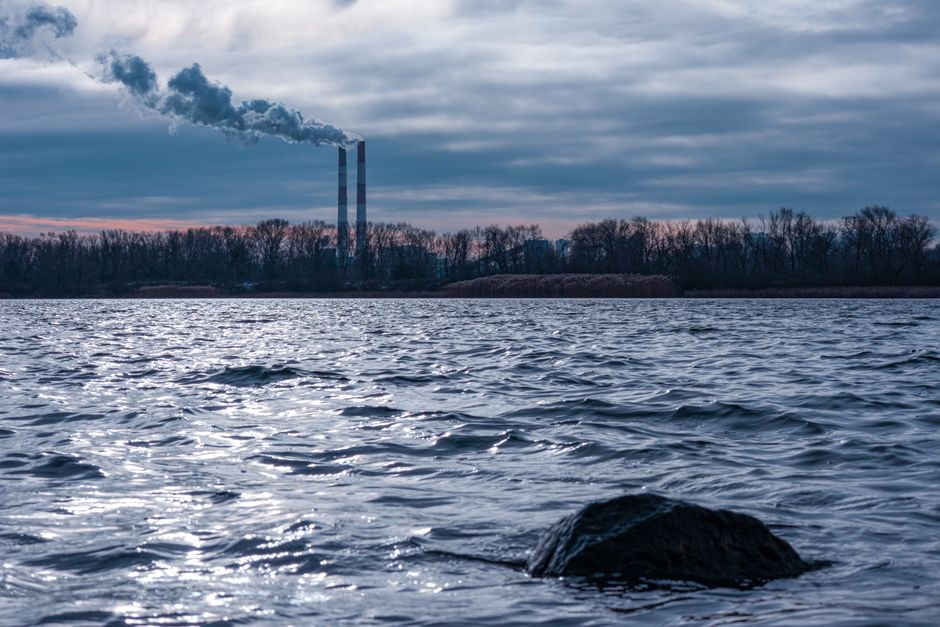
Cremation is not a major source of air pollution compared with cars, power plants, or industry. But it does release mercury, and that mercury comes from a specific and identifiable source: dental fillings. A cremated body can emit mercury vapor into the air, and in some countries cremation is a meaningful share of total mercury emissions. The “more” in the question is real too. Modern cremation also produces nitrogen oxides, carbon monoxide, fine particles, and carbon dioxide, and it uses a lot of energy per body. None of this makes cremation uniquely dangerous. It does make it a pollution source worth understanding honestly, without the exaggeration that often surrounds the topic.
Why Is Cremation Bad Pollution Mercury More?
Mercury is the pollution problem most closely tied to cremation, and the reason is simple. Silver-colored dental amalgam fillings contain roughly 50 percent mercury by weight. When a body is cremated, the heat vaporizes that mercury, and it leaves the crematorium through the exhaust stack as a gas.
Mercury from fillings is a well-established fact, not a fringe concern. Health and environmental agencies in several countries have measured it directly in crematoria emissions. The World Health Organization has identified cremation as a source of mercury releases to air in countries where amalgam use is common. The United Nations Environment Programme’s mercury assessments have also counted crematoria among the smaller but identifiable mercury emission sources.
The scale matters here. Crematoria are not in the same category as coal-fired power plants or artisanal gold mining, which dominate global mercury emissions. In a country with high cremation rates and widespread historical amalgam use, cremation can still account for a noticeable fraction of national mercury emissions. That fraction has been shrinking in many places for two reasons: fewer people now receive amalgam fillings, and some regions require mercury capture equipment on crematorium exhaust.
Mercury is a neurotoxin. It can travel long distances in the atmosphere, deposit on land and water, and accumulate in fish as methylmercury. That is why regulators pay attention to any controllable mercury source, even a modest one.
How Much Mercury Does One Cremation Release?
The amount varies widely from person to person, mainly because it depends on how many amalgam fillings the person had. Someone with no fillings releases essentially none. Someone with many large amalgam fillings releases more.
Estimates in the scientific literature range from well under a gram to several grams of mercury per cremation. I am not going to give you a precise average figure, because the published estimates differ substantially by country, by era, and by assumptions about filling prevalence. What is consistent across studies is the mechanism and the fact that the mercury comes from dental amalgam.
One clarification that often gets lost: this mercury is not created by cremation. It was already in the body, placed there decades earlier as dental restorative material. Cremation is simply one pathway by which it returns to the environment. Burial does not destroy the mercury either. It stays in the ground, where its long-term behavior is different but not necessarily harmless.
What Other Pollutants Come From Cremation?
Mercury gets the headlines, but a cremation furnace releases a broader mix of combustion products. These are the same general categories you would expect from any high-temperature combustion process, though at a much smaller scale than industrial sources.
- Nitrogen oxides (NOx): Formed when nitrogen and oxygen react at high heat. NOx contributes to smog and fine particle formation.
- Carbon monoxide: A product of incomplete combustion. Well-run crematoria control this through proper furnace operation.
- Fine particulate matter (PM2.5): Tiny particles that can penetrate deep into the lungs and are linked to heart and lung disease.
- Carbon dioxide: A greenhouse gas released by burning the fuel used to run the furnace, and by combustion of the body itself.
- Sulfur dioxide and hydrogen chloride: Smaller quantities, depending on what is burned and the fuel used.
Cremation is also energy-intensive. A single cremation requires a substantial amount of natural gas or other fuel to reach and hold the temperatures needed, which is typically in the range of 1,400 to 1,800 degrees Fahrenheit. That energy use is part of the environmental footprint, separate from the emissions themselves.





How Does Cremation Compare to Burial?
This comparison is less clear-cut than advocates on either side suggest. Burial and cremation each carry environmental costs, and which is “better” depends heavily on local conditions and on what you are measuring.
Conventional burial involves embalming fluid, which historically contained formaldehyde, a known carcinogen. It also involves a casket, a concrete or metal vault in many cemeteries, and land use. Those materials have their own manufacturing and transport footprints. Caskets and vaults do not biodegrade quickly, and cemetery land is often permanently set aside.
Cremation avoids land use and embalming fluid but produces air emissions and uses fuel. It also produces ash, which is mostly bone mineral and is generally low in mercury because the mercury vaporized during cremation. That last point surprises people. The cremated remains themselves are not the mercury problem; the exhaust is.
The evidence does not support a simple verdict that one option is universally greener. Some research suggests that, on a per-body basis, cremation can have a lower land and material footprint while burial can have lower air emissions. The honest position is that the comparison depends on the specifics, and that lower-impact options exist within both paths.
What Are Greener Alternatives to Standard Cremation?
Several alternatives reduce or eliminate the mercury and combustion emissions associated with standard cremation. Evidence on their full environmental profile is still developing, so treat claims about them with appropriate caution.
Mercury capture equipment is the most direct fix for the mercury issue. Some countries, particularly in Europe, require crematoria to install filters that trap mercury before it leaves the stack. Where this is required, the mercury emission from cremation drops sharply. This is a proven engineering solution, not a speculative one.
Alkaline hydrolysis, sometimes called water cremation or resomation, uses water and an alkaline solution instead of flame. It does not vaporize mercury the same way, and the process operates at lower temperatures. Some evidence indicates it has a lower air-emissions profile than flame cremation, though independent life-cycle comparisons are still limited.
Natural or green burial avoids embalming and often avoids vaults, allowing the body to return to the soil. Its environmental profile depends on the site and practices, and it is not free of considerations, but it eliminates combustion emissions entirely.
Reduced amalgam use is a longer-term lever. As dental practices shift toward alternative filling materials, the mercury reservoir in the population declines, and so does the mercury released at end of life. This is a slow demographic effect, not a quick fix.
Does Cremation Pose a Health Risk to People Nearby?
There is no established evidence that living near a crematorium causes harm to health. The emissions are real, but they are dispersed through a tall stack and diluted in the surrounding air, and the concentrations involved are generally low.
That said, “no established evidence of harm” is not the same as “proven safe at every exposure level.” Mercury is a cumulative neurotoxin, and regulators treat any controllable source with care. The concern is primarily environmental and long-range rather than an immediate local health threat.
The bigger mercury exposure route for most people is not crematoria at all. It is fish consumption, particularly large predatory fish that accumulate methylmercury. That is why dietary guidance focuses on fish choices rather than on proximity to crematoria. It is also why the cremation mercury issue is best understood as an environmental stewardship question rather than a personal safety one for nearby residents.
What Should You Take Away From This?
Cremation releases mercury because dental amalgam contains mercury, and that mercury vaporizes during the process. It also releases nitrogen oxides, carbon monoxide, fine particles, and carbon dioxide, and it uses significant fuel. These are real environmental costs, and they are well documented.
At the same time, cremation is a modest contributor to overall air pollution compared with major industrial sources. The mercury issue is the most distinctive and most controllable part of its footprint, and mercury capture technology already exists where regulators require it. The choice between burial and cremation is not a clean environmental win for either option. It depends on local rules, practices, and priorities.
If this topic matters to you, the most useful questions are practical ones. Does your region require mercury filtration at crematoria? What alternatives are available where you live? Those answers vary enormously by location, and they matter more than any general claim that cremation is or is not “bad.”
Frequently Asked Questions
Why does cremation release mercury?
Mercury comes from dental amalgam fillings, which contain about 50 percent mercury by weight, and it vaporizes when the body is cremated. The mercury was already in the body before cremation and is not created by the process.
Is cremation worse for the environment than burial?
The evidence does not support a simple verdict either way, because burial and cremation carry different environmental costs. Cremation produces air emissions and uses fuel, while conventional burial uses land, embalming fluid, and materials.
Do cremated ashes contain mercury?
Generally no, because most of the mercury vaporizes during cremation and leaves through the exhaust stack. The cremated remains are mostly bone mineral and are not the main mercury concern.
Can crematorium mercury emissions be reduced?
Yes, mercury capture equipment installed on crematorium exhaust stacks traps mercury before it is released, and some countries require it. Where this filtration is used, mercury emissions from cremation drop sharply.
