
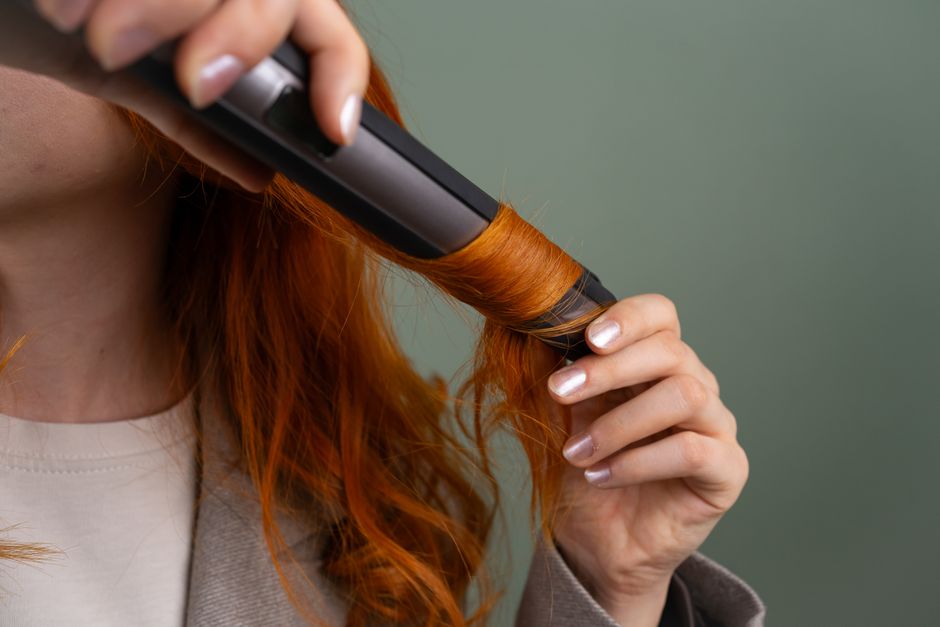
You look in the mirror and notice it again. The bottom few inches of your hair bend, flip, or spiral in a direction that seems to have no connection to the rest of your style. The ends curl under your collar, flick outward near your shoulders, or kink up in random places. It is one of the most common hair frustrations, and it has nothing to do with your skill with a flat iron. The end of your hair curls because of a combination of hair structure, damage, moisture imbalance, and weight. The hair shaft is no longer uniform from root to tip, and that change in structure changes how the ends behave.
Understanding why this happens is the first step. Curling at the ends is not a sign that your hair is unhealthy in a dangerous way. It is a mechanical response to how the hair fiber has changed over time. The fix depends on identifying which factor is driving the curl in your specific hair type, and then addressing that factor directly rather than fighting the curl with heat every morning.
Why Does The End Of My Hair Curl Causes Fixes? Root Causes
The ends of your hair curl because the hair fiber is oldest at the tip and weakest at the tip. Every inch of hair you see has been through months of washing, brushing, heat styling, sun exposure, and friction against clothing. The cuticle — the protective outer layer of the hair shaft — wears down over time. When the cuticle is intact, hair lies flat and reflects light evenly. When the cuticle is damaged, the inner cortex absorbs moisture unevenly. That uneven absorption makes the hair shaft bend and curl in ways it did not when the hair was newer.
There is also a structural factor that has nothing to do with damage. Hair grows from a follicle that has a specific shape. If your follicle is oval or asymmetrical, your hair is naturally curly or wavy. The root of the hair may grow straight because it is newer and heavier, but as the hair lengthens, the natural curl pattern asserts itself. The ends are simply the oldest part of the strand, and they have had the most time to express their natural shape. For people with wavy or curly hair, the ends often curl more because the weight of the longer hair pulls the root straighter while the ends are free to spring back into their natural pattern.
Is It Damage Or Is It Your Natural Texture?
This is the first question to answer. Take a strand of hair from your brush or comb. Look at the root end and the tip end side by side. If the root end is straight and the tip end is curly, the difference is likely damage or moisture imbalance. If both ends show the same wave pattern, you are looking at your natural texture asserting itself.
Damage-related curling behaves differently from natural curl. Damaged ends often feel rough, look dull, and split into two or more branches. Natural curl is uniform, smooth, and consistent across multiple strands. If you have never had curly hair and suddenly the ends are curling, that points to damage or a change in how your hair is being cared for. If you have always had waves or curls, the ends curling is likely just your hair being itself.
Heat styling is the most common cause of new curl formation at the ends. When hair is repeatedly exposed to high heat, the protein structure in the cortex changes. The hair loses moisture faster than it can absorb it from the air. The result is a fiber that bends and kinks unpredictably. This is not a permanent change. New hair growth will be straight if your follicle produces straight hair. The curly ends are a snapshot of the damage history of that specific section of hair.
How Moisture Imbalance Creates Curly Ends
Hair is hygroscopic, meaning it absorbs and releases moisture from the air. Healthy hair has a balanced moisture level that keeps the cuticle flat and the shaft straight. Damaged hair has gaps in the cuticle where moisture can enter and leave easily. When the air is humid, the damaged ends absorb water and swell. The swelling is uneven because the damage is uneven. One side of the hair shaft swells more than the other, and the hair bends toward the side that swells less. That bend is the curl you see at your ends.
In dry environments, the opposite happens. The damaged ends lose moisture quickly and shrink. Again, the shrinkage is uneven across the hair shaft, causing the ends to curl or kink. This is why your ends may curl more in summer humidity and also curl more in winter dryness. The hair is responding to the environment because the cuticle can no longer regulate moisture exchange effectively.
Hard water is a common and overlooked contributor. Minerals like calcium and magnesium build up on the hair shaft over time. This buildup makes the hair feel rough and can interfere with moisture balance. The ends, being the oldest part of the hair, have the most mineral buildup. Some research suggests that chelating shampoos — those designed to remove mineral buildup — can improve hair texture and reduce unwanted curling at the ends.



Does Hair Weight Affect How The Ends Curl?
Yes, and this is often misunderstood. Long hair is heavy. The weight of the hair pulls downward from the root, which stretches the hair shaft and temporarily straightens the natural wave or curl pattern. The ends, however, are the lightest part of the strand. They have less mass pulling them down, so they are free to curl, wave, or flip according to their natural pattern or damage state.
This is why the same person can have relatively straight hair from root to mid-length and curly ends. The root and middle sections are being pulled straight by the weight of the hair below them. The ends have nothing pulling them straight, so they revert to their natural shape. If you have wavy hair, this effect is more pronounced. The longer your hair grows, the straighter the top looks and the curlier the ends appear.
Haircuts change this dynamic. When you cut off two or three inches, the remaining hair is lighter and shorter. The weight distribution changes, and the curl pattern shifts. Sometimes hair appears curlier after a haircut because the heavy, stretched-out ends are gone and the newer, springier hair is now the end of the strand. This is normal and not a sign that the haircut damaged anything.
What Actually Fixes Curling Ends?
The fix depends on the cause, and there is no single product that works for everyone. If the curling is from damage, the only permanent fix is cutting off the damaged section and preventing future damage. Trims every 8 to 12 weeks remove the oldest, most damaged part of the hair before it can travel further up the shaft. This is not a marketing suggestion. Split ends cannot be repaired by any product. They can only be sealed temporarily or cut off.
If the curling is from moisture imbalance, adjusting your washing routine can help. Washing hair less frequently allows natural oils to coat the hair shaft and protect the cuticle. Using a conditioner formulated for your hair type adds moisture to the cortex. Leave-in conditioners and hair oils can help seal the cuticle and reduce uneven moisture absorption. The evidence for specific ingredients is mixed, but the general principle of maintaining moisture balance is well established in hair science.
Heat protection is not optional if you use hot tools. A heat protectant spray or serum creates a barrier between the tool and the hair shaft. It does not make hair invincible, but it reduces the rate of moisture loss during styling. Lower heat settings and fewer passes with the tool also reduce cumulative damage. Air drying, when possible, eliminates heat damage entirely.
When Should You See A Professional?
If your ends are curling and you also notice excessive breakage, thinning, or bald patches, that is a different situation. Those signs can indicate a medical issue such as a thyroid condition, iron deficiency, or a hair loss disorder. Curling ends alone are cosmetic. Curling ends with other symptoms warrant a conversation with a doctor or dermatologist.
If the curling is purely a styling frustration, a professional haircut is the most effective intervention. A stylist can assess the damage level, remove the compromised ends, and shape the hair in a way that works with your natural texture rather than against it. This is especially important if you have wavy or curly hair. A stylist who understands curl patterns can cut the hair so the ends land in a place where the curl looks intentional.
No product, mask, or oil can permanently change the structure of hair that is already damaged. The hair is dead tissue. It does not heal. It can be temporarily smoothed, coated, and protected, but the underlying damage remains until the hair is cut off and replaced by new growth. This is the honest truth about hair care, and understanding it saves a lot of money spent on products that promise impossible results.
Frequently Asked Questions
Why do only the ends of my hair curl?
The ends are the oldest and most damaged part of the hair shaft, so they absorb moisture unevenly and bend. The weight of longer hair also pulls the root straighter while the lighter ends are free to curl.
Can I fix curly ends without cutting my hair?
You can temporarily smooth curly ends with heat styling, oils, or serums, but the effect lasts until the next wash. The only permanent fix is trimming the damaged ends and preventing future damage.
Is curly hair at the ends a sign of damage?
Not always. If you have naturally wavy or curly hair, the ends may curl because they are the oldest part of the strand expressing the natural pattern. If your hair is naturally straight, new curling at the ends usually indicates damage or moisture imbalance.
Does humidity make the ends of hair curl more?
Yes. Damaged ends absorb humidity unevenly, causing the hair shaft to swell and bend. The same mechanism causes curling in dry environments when the damaged ends lose moisture unevenly.
