
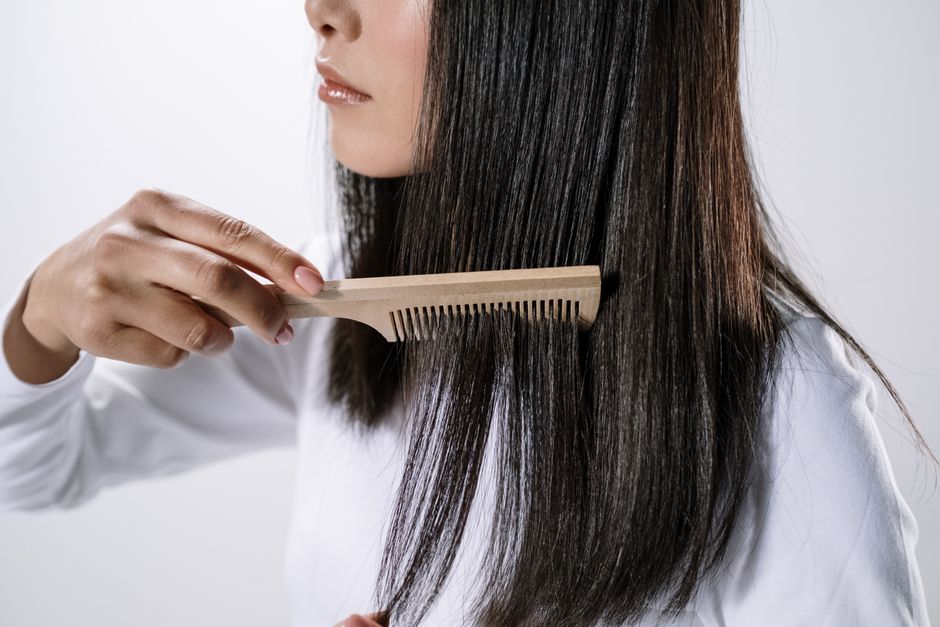
Your hair isn’t straight. It never was. What you’re seeing after it dries is the shape your hair was always trying to take, finally revealed once water stopped holding it down. Straight hair that dries wavy and frizzy is usually a sign of natural texture that’s been suppressed by weight, heat, or styling — not a sudden change in your hair’s biology.
The waviness comes from the internal structure of your hair strands. The frizz comes from how those strands interact with moisture in the air. Both are predictable once you understand what’s happening at the fiber level.
Why Does My Straight Hair Dry Wavy And Frizzy?
Hair shape is determined by the cross-sectional shape of each strand and the way protein bonds form inside it. Straight hair has a round cross-section. Wavy hair has a slightly oval one. Curly hair is more oval still. This shape is set at the follicle — the tiny pocket in your scalp where the hair grows.
When hair is wet, water breaks some of the hydrogen bonds inside the strand. Those bonds are what hold the protein structure in its current shape. With those bonds temporarily loosened, the hair can be stretched straight, curled around a brush, or flattened under the weight of water itself. As it dries, new hydrogen bonds form and lock the hair into whatever shape it’s in at that moment.
Here’s the part most people miss. If your hair has a natural wave pattern, water doesn’t erase it — it just relaxes it temporarily. As the hair dries, the wave reasserts itself. If you’ve been blow-drying straight for years, you may simply not have seen your natural pattern in a long time.
Frizz is a separate issue that often shows up at the same time. Frizz happens when individual hair strands absorb moisture from the air and swell. The cuticle — the outer layer of each strand — lifts slightly, and strands that were lying smooth start pushing against each other. Hair that’s dry or damaged absorbs moisture faster and swells more, which is why frizz tends to be worse on the ends and on hair that’s been chemically treated or heat-styled repeatedly.
Is Your Hair Actually Straight, Or Just Styled Straight?
Many people who describe their hair as straight have hair that’s been trained into straightness through years of blow-drying, flat-ironing, or chemical relaxers. The underlying follicle shape hasn’t changed.
There’s a simple way to check. Wash your hair and let it air dry with no product, no brushing, and no touching. Don’t wrap it in a towel. Don’t run your fingers through it while it dries. What you see when it’s completely dry is closer to your natural pattern than anything you’ll see after styling.
If it dries with waves or bends, your hair has natural texture. If it dries straight but frizzy, the issue is more likely damage, dryness, or environmental moisture than hidden waves.
Hair texture can also change over time. Hormonal shifts — pregnancy, menopause, thyroid changes — can alter the shape of new hair growing from the follicle. Some people notice their hair getting wavier or straighter after these transitions. This is a real phenomenon, though the reasons aren’t fully understood.
Why Does Humidity Make Straight Hair Wavy And Frizzy?
Humidity affects hair because hair is hygroscopic — it absorbs water from the air. This isn’t a small effect. Hair can absorb a significant amount of its own weight in water vapor under humid conditions.
When hair absorbs moisture, two things happen. First, the hydrogen bonds inside the strand loosen again, just like they do when you wash your hair. Any natural wave pattern gets a chance to re-form. Second, the cuticle swells and lifts, which creates friction between strands and makes them separate instead of lying smooth.
This is why someone with hidden waves might have hair that looks straight in dry winter air but wavy and frizzy on a rainy summer day. The humidity is essentially re-wetting the hair from the inside out.
Damaged hair is more vulnerable to this. Hair with a compromised cuticle — from bleach, repeated heat styling, or rough handling — absorbs moisture more readily and loses it more quickly. That cycle of swelling and shrinking weakens the strand over time and makes frizz worse.

What Causes Frizz On Hair That Used To Be Smooth?
Frizz usually develops gradually. Hair that was smooth at 25 may be frizzy at 45 for several reasons that stack on top of each other.
- Cuticle damage accumulates with every heat styling session, color treatment, or rough brushing. Once the outer layer is compromised, the strand can’t hold moisture evenly.
- Decreasing oil production from the scalp is common with age. Less natural oil means less protection along the length of the hair.
- Hormonal changes can affect both the texture of new growth and the oil balance of the scalp.
- Environmental exposure to sun, chlorine, salt water, and pollution degrades the cuticle over time.
- Gray hair tends to have a different texture than pigmented hair — often coarser and more resistant to lying flat.
None of these happen overnight. The result is hair that gradually becomes more reactive to humidity and harder to keep smooth.
Does Drying Method Change How Wavy Or Frizzy Hair Gets?
How you dry your hair has a measurable effect on the final shape. This is basic fiber physics, not a styling opinion.
Rubbing hair with a rough towel creates friction that lifts the cuticle and encourages frizz. Wrapping hair tightly in a towel and leaving it for a long time does the same thing. Air drying without touching generally produces the least frizz but also the least control over shape.
Blow-drying with a brush sets hydrogen bonds in the direction you’re pulling the hair. That’s why a blowout holds its shape until the next wash — you’ve physically reorganized the bonds while the hair was in a moldable state. But high heat damages the cuticle, and over time that damage makes the hair more prone to frizz when you’re not actively styling it.
There’s no single correct method. What matters is understanding that the drying process is when the hair’s final shape gets locked in. Whatever position the hair is in when it dries is the position it will hold.
Can You Make Wavy, Frizzy Hair Dry Smooth Again?
You can reduce frizz and manage wave pattern, but you can’t permanently change the shape your follicles produce without chemical treatment. That’s an honest limitation worth stating clearly.
What does help, based on how hair fiber behaves:
- Moisturizing products can temporarily fill gaps in a damaged cuticle and reduce how much moisture the hair absorbs from the air.
- Avoiding excessive heat gives the cuticle a chance to lie flatter. There’s no established timeline for how much recovery is possible — it depends on how much damage exists.
- Leave-in conditioners and lightweight oils can add a coating that slows moisture exchange with the air.
- Trimming damaged ends removes the most compromised part of the strand. Split ends don’t repair themselves and can travel up the shaft.
What doesn’t work: any product claiming to permanently change hair texture without chemical processing. Bond-building treatments can strengthen hair that’s been damaged by bleach or color, and some studies suggest measurable improvement in hair strength after use. But they don’t change the shape of the follicle or make wavy hair grow in straight.
If your hair has become dramatically wavier or frizzier over a short period, and especially if you’re also noticing thinning, scalp changes, or other symptoms, that’s worth mentioning to a doctor. Hormonal conditions like thyroid disorders can affect hair texture. This isn’t common, but it’s a real possibility that gets overlooked when people assume the change is just styling or aging.
Frequently Asked Questions
Why does my straight hair dry wavy?
Your hair likely has a natural wave pattern that gets temporarily relaxed by water and then re-forms as the hair dries. If you usually blow-dry or flat-iron, you may not have seen your natural texture in years.
Why does humidity make my straight hair frizzy?
Hair absorbs moisture from the air, which causes the cuticle to swell and lift while loosening the internal bonds that hold the hair smooth. This lets any natural wave reassert itself and creates friction between strands.
Can hair texture change over time?
Yes. Hormonal shifts from pregnancy, menopause, or thyroid changes can alter the shape of new hair growing from the follicle. Age-related changes in oil production and cumulative styling damage can also make hair behave differently than it used to.
Can damaged hair be repaired so it dries smooth again?
Damaged cuticles cannot be fully restored, but conditioning products can temporarily smooth the surface and reduce moisture absorption. Trimming damaged ends is the only way to remove the most compromised part of the hair.
