
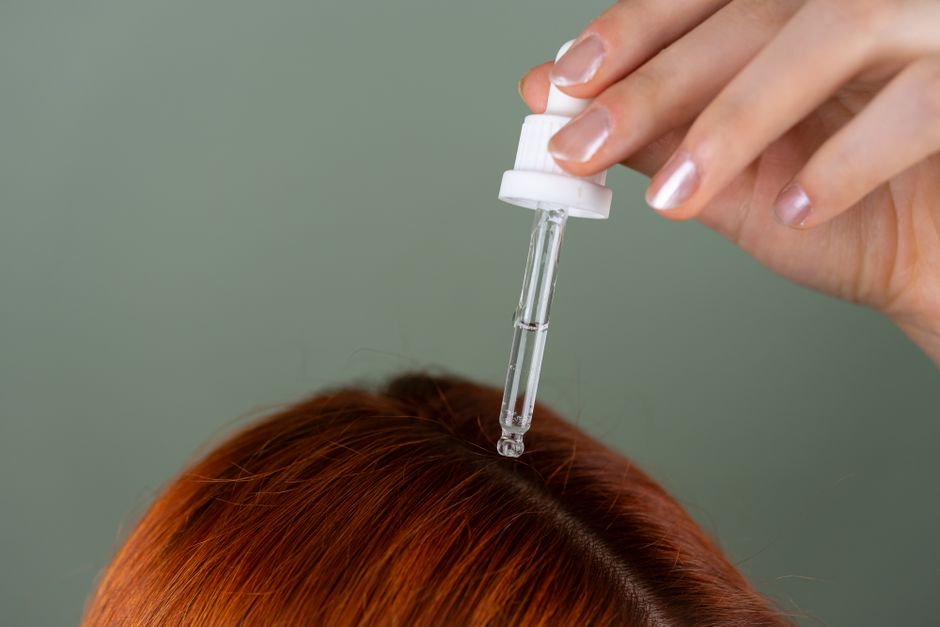
You can put a wide range of plant and seed oils in your hair, and the ones that work best depend on your hair type. Coconut, argan, jojoba, olive, castor, almond, and grapeseed oils are among the most common. Each has a different weight and chemical structure, so an oil that softens thick, curly hair may leave fine, straight hair looking flat and greasy.
Oils can coat the hair shaft, reduce friction, and slow water loss. That is the core of what they do. They are not a treatment for hair loss, and they do not repair hair that is already broken. Understanding that distinction helps you use them well and skip the hype.
How Do Hair Oils Actually Work on Your Hair?
Oils work mostly on the outside of the hair shaft. They form a thin film that smooths the surface, which reduces friction between strands and can make hair feel softer and look shinier.
The outer layer of each hair is called the cuticle. It is made of overlapping scales. When the cuticle is raised or damaged, hair feels rough and tangles more. An oil film can lie over those scales and temporarily smooth them. This is a surface effect, not a repair. The oil does not rebuild the protein inside the hair.
Oils also slow the loss of water from the hair. This is why they can help hair feel less dry. Some oils can partly penetrate the outer layers of the shaft, while others sit mostly on the surface. Coconut oil is the most studied in this regard. Research suggests its small, straight molecular structure lets it enter the hair shaft more than many other oils, which may reduce protein loss during washing.
One point that gets lost in marketing: oil and water do not mix. Oils are not moisturizers in the strict sense. Moisture means water. Oil can help seal water in, but it does not add water to your hair. If your hair is genuinely dry and brittle, applying oil to dry hair without any water underneath may just coat it.
What Oils Can You Put In Your Hair Types Benefits?
Matching oil weight to hair type is the single most useful rule. Light oils suit fine hair. Heavier, richer oils suit thick or highly textured hair.
Fine or Thin Hair
Fine hair has a smaller diameter and tends to show oil quickly. Light oils are the better fit here.
- Grapeseed oil is very light and absorbs quickly. It is a good choice if heavier oils weigh your hair down.
- Jojoba oil is technically a liquid wax. Its structure is close to the natural oil your scalp produces, called sebum. It tends to feel less greasy than many plant oils.
- Argan oil is light to medium and is often used as a finishing oil on the ends.
With fine hair, less is more. A few drops spread through the ends is usually enough. Applying oil near the roots can make fine hair look flat fast.
Medium, Straight, or Wavy Hair
This hair type can handle a wider range of oils. Argan, almond, and light coconut oil all tend to work well.
- Argan oil is a common all-rounder. It adds shine without much weight.
- Sweet almond oil is light and has little scent. It is often used on the ends and mid-lengths.
- Coconut oil works for many people in this group, especially as a pre-wash treatment.
Thick, Curly, or Coily Hair
Thick and textured hair usually benefits from heavier oils. The natural oils from the scalp do not travel down curly or coily hair as easily, so the ends tend to be drier.
- Coconut oil is popular for its ability to enter the hair shaft and reduce protein loss.
- Castor oil is thick and sticky. It is often mixed with a lighter oil because it is hard to spread on its own.
- Olive oil is heavy and rich. It works well as a deep pre-wash treatment.
- Shea butter is not an oil, but it is often grouped with them. It is very heavy and suits coily hair.
Damaged or Color-Treated Hair
Damaged hair has a rougher cuticle and loses water more easily. Oils can help it feel smoother and look less frizzy. Coconut oil is the most studied for reducing protein loss during washing. Keep in mind this is a protective effect, not a fix. Oil cannot restore hair that has been chemically broken down.
Which Oil Is Best for Your Hair Type?
Here is a simple comparison to help you choose. “Weight” refers to how heavy the oil feels on hair.
| Oil | Weight | Often Used For |
|---|---|---|
| Coconut | Medium | Penetrates shaft; pre-wash treatment; thick and curly hair |
| Argan | Light to medium | Shine and smoothing; most hair types |
| Jojoba | Light | Fine hair; scalp; closest to natural sebum |
| Olive | Heavy | Deep pre-wash treatment; thick, dry hair |
| Castor | Very heavy | Thick hair; usually mixed with lighter oils |
| Almond | Light | Ends and mid-lengths; most hair types |
| Grapeseed | Very light | Fine hair; least likely to weigh hair down |




Can Hair Oils Help With Hair Growth or Hair Loss?
No oil has been shown to regrow hair in people with common pattern hair loss. This is where marketing and evidence part ways most sharply.
Some oils are sometimes studied for scalp health, and a few small studies have looked at certain plant oils for hair growth. The evidence is limited and not strong enough to call any oil a proven treatment for hair loss. If you are losing hair, the causes matter. Pattern hair loss, thyroid problems, iron deficiency, and other conditions all look different and need different approaches. A doctor can help sort out which one applies to you.
What oils can do is improve how hair looks and feels. That is a real benefit, but it is a cosmetic one. It is not the same as treating a medical cause of hair loss.
There is one genuine caution. Some people apply essential oils like rosemary or peppermint to the scalp for hair growth. Essential oils are not the same as carrier oils. They are concentrated and can irritate skin or cause allergic reactions. If you use them at all, they are normally diluted in a carrier oil first. No clinical guidelines support essential oils as a proven treatment for hair loss.
How Should You Apply Hair Oil?
How you apply oil matters as much as which one you pick. A few habits make a difference.
- Start with a small amount. You can always add more, but you cannot easily remove too much.
- Focus on the ends and mid-lengths. The roots near your scalp already make their own oil.
- Apply to damp hair if you want to help seal in water. Apply to dry hair for a finishing shine.
- Warm the oil between your palms first so it spreads evenly.
- For a deep treatment, apply before washing, leave it on for a while, then shampoo it out.
If your hair looks greasy after applying oil, you used too much or applied it too close to the roots. Wash it out and use less next time.
Are There Any Risks or Downsides to Hair Oils?
For most people, hair oils are low risk when used on the hair. Problems usually come from how they are used, not the oils themselves.
Applying heavy oil to the scalp can trap oil and dead skin, which may worsen dandruff or seborrheic dermatitis in people prone to it. If you have a flaky, itchy scalp, oiling the scalp may make it worse rather than better.
Some people react to certain oils. A patch test on a small area of skin before wide use is a reasonable step, especially with essential oils or oils you have not used before.
There is also a fire risk that gets overlooked. Oils soaked into towels, clothing, or bedding can catch fire in a dryer or near a heat source. This applies to many plant oils, including cooking oils. Wash oily towels and fabrics carefully and keep them away from heat.
Finally, oil is not a substitute for medical care. If you have sudden hair loss, a scalp rash, or a scalp that is painful or oozing, see a doctor rather than treating it with oil at home.
Frequently Asked Questions
What oil is best for fine hair?
Light oils like grapeseed and jojoba are the best fit for fine hair because they are least likely to weigh it down. Apply only a few drops to the ends.
Does coconut oil really help hair grow?
No, coconut oil has not been shown to regrow hair in people with common hair loss. It can reduce protein loss during washing and make hair feel softer, which is a cosmetic benefit.
Can I leave oil in my hair overnight?
You can, and many people do it as a pre-wash treatment, but there is no strong evidence that overnight is better than a shorter time. If you have a flaky or oily scalp, leaving heavy oil on it overnight may make those problems worse.
Is castor oil good for hair?
Castor oil is very thick and is often mixed with a lighter oil to make it easier to spread. No clinical evidence confirms it promotes hair growth.
