
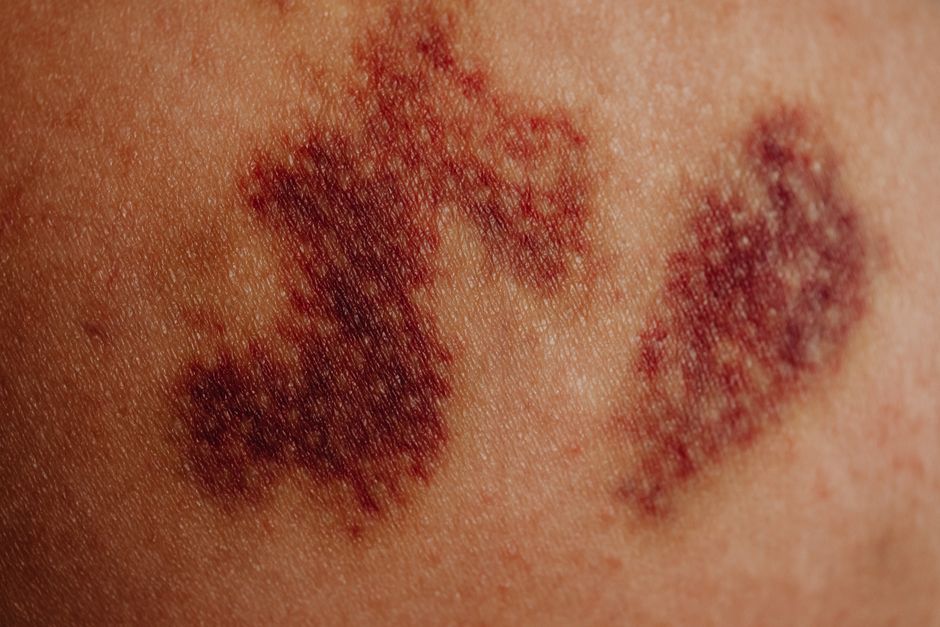
Bruising happens when small blood vessels under your skin break and leak blood into the surrounding tissue. If you bruise easily, it usually means your blood vessels are fragile, your blood does not clot as quickly as it should, or you are taking something that thins your blood. In most cases, easy bruising is harmless and simply part of how your body ages. But sometimes it points to an underlying medical condition that deserves attention.
What Actually Happens When You Bruise?
A bruise forms when tiny blood vessels called capillaries break. Blood leaks out into the tissue beneath your skin. Your body then sends platelets and clotting factors to the area to stop the bleeding and repair the vessel.
The black-and-blue color comes from blood pooling under the skin. As your body breaks down that blood, the bruise changes color. It may turn green, yellow, or brown before fading completely. This process is normal and takes one to two weeks for most people.
Some people simply have thinner skin or more fragile capillaries. That makes bruising easier even without any medical problem. Fair skin also makes bruises more visible, which can make it seem like you bruise more often than you actually do.
Why Does My Skin Bruise So Easily Causes Explained by Age
Aging is the most common reason for easy bruising. As you get older, your skin becomes thinner. The layer of fat that cushions your blood vessels shrinks. Your capillaries also become more fragile with time.
This combination means less protection and weaker vessel walls. A minor bump that would not have bruised you at 25 may leave a noticeable mark at 60. This is a normal part of aging, not a sign of disease.
Sun damage accelerates this process. Years of sun exposure break down collagen and elastin in the skin. That weakens the support structure around your blood vessels. People who spent significant time in the sun in their younger years often notice easier bruising earlier in life.
Medications and Supplements That Increase Bruising
Several common medications make bruising more likely. Blood thinners are the most obvious category. Aspirin, warfarin, and newer anticoagulants all reduce your blood’s ability to clot. Even a low daily dose of aspirin can make you bruise more easily.
Other medications affect bruising without being classified as blood thinners. Corticosteroids, whether taken as pills or used on the skin, can thin the skin over time. Some antibiotics and antidepressants have been linked to easier bruising as well.
Supplements can also play a role. Fish oil, vitamin E, and ginkgo biloba all have mild blood-thinning effects. Garlic supplements can do the same. These effects are usually mild, but they can add up if you take multiple supplements or combine them with prescription blood thinners.
If you started bruising easily after beginning a new medication or supplement, that timing is a strong clue. Talk to your doctor before stopping any prescribed medication. Do not stop a blood thinner on your own.



Nutritional Deficiencies That Cause Easy Bruising
Your body needs certain nutrients to form healthy blood and strong vessel walls. Deficiencies in these nutrients can make bruising more likely.
Vitamin C is essential for collagen production. Collagen is a key structural protein in blood vessel walls. Severe vitamin C deficiency causes a condition called scurvy, which includes easy bruising as a hallmark symptom. This is rare in developed countries, but marginal vitamin C intake is not uncommon.
Vitamin K is needed for blood clotting. Your liver uses vitamin K to make several clotting factors. A true vitamin K deficiency is uncommon in healthy adults, but it can occur in people with certain digestive disorders or those taking specific antibiotics.
Iron deficiency can also contribute. Iron is needed to make hemoglobin, the protein in red blood cells that carries oxygen. Low iron levels can affect platelet function, though this connection is less direct than with vitamin C or K.
These deficiencies are usually diagnosed with blood tests. If you eat a varied diet and have no digestive problems, a nutritional deficiency is less likely to be the cause of your bruising.
Medical Conditions Associated With Easy Bruising
Several medical conditions can cause easy bruising. Liver disease is one of the more serious ones. Your liver produces many of the proteins needed for blood clotting. When liver function declines, clotting can become impaired.
Kidney disease can also affect platelet function. People with advanced kidney disease often have abnormal bleeding and bruising, even if their platelet count is normal.
Blood disorders are another category. Low platelet count, a condition called thrombocytopenia, directly causes easy bruising. Platelets are the cells that form the initial plug at the site of a broken blood vessel. Without enough of them, bleeding takes longer to stop.
Clotting factor deficiencies, such as hemophilia, are usually diagnosed in childhood. But mild forms can go unnoticed until adulthood. These are genetic conditions that affect specific proteins in the clotting cascade.
Some autoimmune conditions can also cause bruising. Vasculitis, which is inflammation of the blood vessels, can make vessels more fragile. Certain types of vasculitis produce bruises that look unusual or appear without any injury.
When Easy Bruising Requires Medical Attention
Most easy bruising does not require a doctor visit. But certain signs should prompt you to seek medical evaluation.
See a doctor if you develop bruises without any known injury, especially if they appear in unusual places like your chest, back, or abdomen. Large bruises that keep expanding also warrant attention. Bruises that take more than two weeks to fade are worth mentioning to your doctor.
Other warning signs include bleeding from your gums, blood in your urine or stool, or frequent nosebleeds. These suggest a more general bleeding problem, not just fragile skin vessels.
If you have a family history of bleeding disorders, mention that to your doctor. A sudden change in your bruising pattern, especially if you have not started any new medications, also deserves evaluation.
Your doctor may order blood tests to check your platelet count and clotting function. These simple tests can rule out most serious causes of easy bruising.
What You Can Do About Easy Bruising
You cannot reverse the aging process, but you can take steps to reduce bruising. Protecting your skin is the most direct approach. Long sleeves and pants offer physical protection. Padding on sharp furniture corners can prevent accidental bumps.
Moisturizing your skin may help. Well-hydrated skin is more flexible and may be less prone to tearing. This is not proven to reduce bruising, but it is a reasonable part of skin care.
If sun damage is a factor, start protecting your skin from further damage. Daily use of sunscreen on exposed areas can prevent additional collagen breakdown.
Review your medication and supplement list with your doctor. If a specific medication is contributing to your bruising, your doctor may adjust the dose or suggest an alternative. Never make these changes on your own.
If a nutritional deficiency is identified, correcting it may help. Eat foods rich in vitamin C, like citrus fruits and bell peppers. Include vitamin K sources like leafy greens in your diet. Iron-rich foods include red meat, beans, and fortified cereals.
Can You Prevent Bruises From Forming?
You cannot completely prevent bruises. Even with perfect precautions, accidental bumps happen. But you can reduce their frequency and severity.
Keeping your home free of clutter reduces trips and falls. Good lighting helps you avoid bumping into furniture. Wearing protective gear during sports or physical activities is sensible for anyone who bruises easily.
Some over-the-counter creams claim to reduce bruising. Arnica gel is one popular option. Some research suggests it may help bruises fade faster, but the evidence is limited. No cream has been proven to prevent bruises from forming in the first place.
Eating a balanced diet with adequate protein, vitamins, and minerals supports healthy blood vessels. Staying hydrated keeps your skin supple. Neither of these will eliminate bruising, but they support overall skin health.
Frequently Asked Questions
Why do I bruise so easily all of a sudden?
A sudden change in bruising often relates to a new medication, supplement, or an underlying medical condition. If you cannot identify a clear cause, see a doctor for a blood test.
What vitamin deficiency causes easy bruising?
Vitamin C, vitamin K, and iron deficiencies can all contribute to easy bruising. These are diagnosed with blood tests and are usually correctable with diet changes or supplements.
When should I worry about bruising easily?
Worry if you bruise without injury, develop large or expanding bruises, or have other bleeding signs like bloody gums or nosebleeds. A family history of bleeding disorders also warrants a medical check.
Can stress cause easy bruising?
Stress does not directly cause bruising. However, stress can affect eating habits, sleep, and medication use, which might indirectly influence skin health and clotting.
