
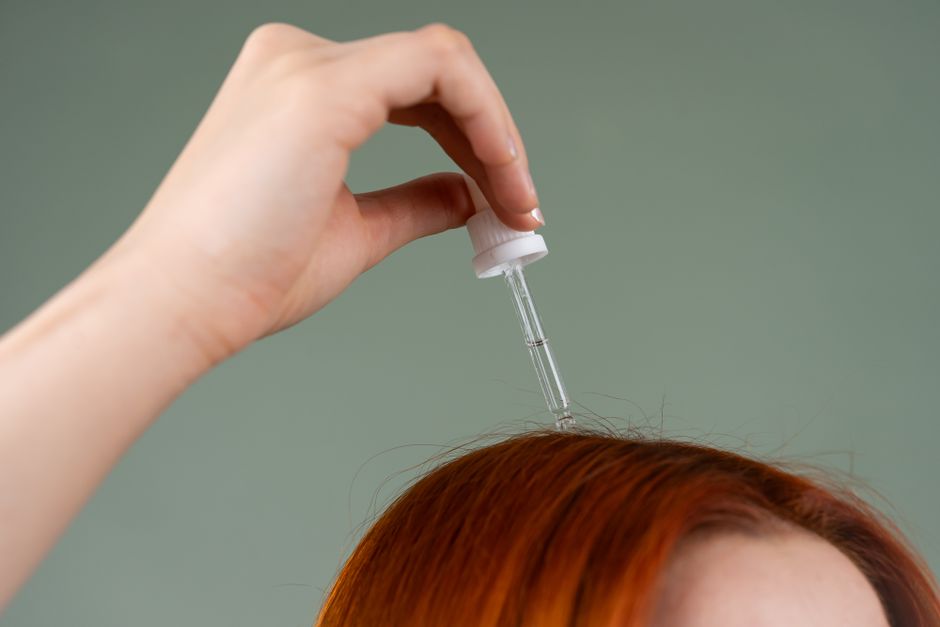
If your hair flares out at the bottom instead of falling smooth, the cause is almost always one of three things: your hair’s natural growth pattern, the shape of the cut, or dryness that makes individual strands push away from each other. Hair that flares is not damaged hair by default. It is hair doing exactly what its structure tells it to do. The fix depends on which of those three causes is actually driving it in your case.
Why Does My Hair Flare Out And How To Stop It?
Hair flares when the ends are wider than the rest of the strand’s natural fall. This happens because of how hair grows out of the scalp, how it was cut, and how much moisture it holds.
Every hair follicle has a slight tilt. That tilt determines which direction the strand wants to lie. When hair reaches a certain length, the weight of the strand is no longer enough to pull it against that natural direction, and the ends start to lift or spread. This is why a cut that looked smooth at shoulder length can start flaring at collarbone length.
The second driver is cut shape. A blunt cut creates a straight line of ends. If those ends sit on a curve — like the curve of your neck or shoulders — they will not follow that curve. They stick out. A layered cut removes bulk and lets the ends taper, which is why layers often reduce flaring even when the underlying hair has not changed.
The third driver is moisture. Dry hair loses flexibility. Strands that cannot bend easily push against each other instead of lying flat. This is why flaring often gets worse in winter, in dry climates, or after heat styling.
Frizz and flaring are related but not identical. Frizz is individual strands lifting and curling in different directions. Flaring is the whole bottom section spreading outward as a group. You can have one without the other.
Is Flaring Caused by Damage or by Your Natural Hair Type?
Most flaring is structural, not damage. That distinction matters because the fix is different.
Damage-related flaring comes from broken cuticles, split ends, or chemical processing that has stripped the outer layer of the hair. Damaged hair loses its ability to hold a shape. It feels rough, looks dull, and tends to break rather than bend. If your ends are splitting and snapping, that is damage. If your ends are intact but simply refuse to lie flat, that is structure.
Natural hair type plays a large role. Hair with a curl pattern has a built-in bend. When you cut curly or wavy hair into a straight line, the ends will not align with that line. They follow the curl. This is why curly hair cut wet and straight often flares once it dries — the cut line and the curl pattern are fighting each other.
Hair density matters too. Thick hair has more strands competing for the same space. When those strands reach the ends, they have nowhere to go but outward. Fine hair flares for a different reason: it lacks the weight to pull itself down, so even a small amount of static or dryness lifts it.
Texture, density, and porosity all interact. Porosity — how easily hair absorbs and loses water — is often the missing piece. High-porosity hair takes in moisture fast and loses it just as fast. That cycle leaves hair drier than it looks, which makes flaring worse.
How Does Your Haircut Shape Cause Flaring?
The cut is the single most controllable factor. A cut that does not match your hair’s natural fall will flare no matter how well you care for it.
A blunt, one-length cut works on straight, medium-to-thick hair because the weight of the length holds the ends down. On fine hair, that same cut can flare because there is not enough weight. On wavy or curly hair, a blunt cut almost always flares because the ends follow the curl, not the cut line.
Layers change where the weight sits. Removing weight from the interior lets the outer layer of hair fall closer to the head. This is why a stylist will often suggest internal layers for hair that flares at the bottom — the layers do not shorten the length, they reduce the bulk that is pushing outward.
There is a non-obvious point here that many people miss. Cutting hair shorter can make flaring worse, not better. If you cut above the point where gravity was holding the ends down, the flare moves up. People often cut more length hoping to fix flaring and end up with the same problem at a shorter length. The issue was never the length. It was the shape.
A stylist who understands this will cut to the growth pattern, not against it. That may mean a slightly angled line, soft graduation at the ends, or a shape that works with your natural part and cowlick rather than fighting them.




What Makes Hair Flare More in Winter or Humid Weather?
Weather changes how much water hair holds, and that changes how it behaves.
In dry air, hair loses moisture to the environment. Dry hair has less flexibility, so strands resist bending and instead push outward. Static also builds more easily in dry conditions, and static makes individual strands repel each other. That is why flaring often gets worse in heated indoor air during winter.
In humid air, the opposite happens but the result can look similar. Hair absorbs water from the air and swells. For hair with a curl pattern, that swelling changes the shape of the curl, which can make the ends spread unevenly. For straight hair, humidity can add weight and actually reduce flaring — unless the hair is porous, in which case it swells unevenly and frizzes.
Porosity is the key variable. Low-porosity hair has a tightly closed cuticle and resists absorbing water. High-porosity hair has a raised cuticle and absorbs water quickly but loses it just as fast. Two people with the same hair type can have completely different reactions to the same weather because of porosity alone.
You can get a rough sense of your porosity at home. Drop a clean strand of hair into a glass of water. If it floats for a while, porosity is likely low. If it sinks quickly, porosity is likely high. This is not a clinical test, but it gives a general direction.
Does Heat Styling Make Flaring Worse Over Time?
Heat can smooth hair in the short term and make flaring worse over time. Both are true.
When you apply heat, you temporarily break the hydrogen bonds inside the hair. That lets you reshape the strand. As the hair cools, the bonds reform in the new shape. This is why a blow-dry or flat iron can make hair lie flat for a day or more.
The problem is cumulative. Repeated high heat damages the cuticle, and a damaged cuticle cannot hold a smooth shape. Over time, hair that used to straighten easily starts fighting back. It may look smooth right after styling and then flare within hours.
Heat protectants help reduce damage, but they do not prevent it entirely. No product currently available makes high heat completely safe for hair. The honest position is that heat styling carries a real cost, and how much you can tolerate depends on your hair’s starting condition.
If you use heat regularly and notice flaring getting worse, the cause may be cumulative damage rather than anything new in your routine. Trimming the ends and reducing heat frequency is the most direct response.
What Actually Helps Reduce Flaring?
The most effective approach depends on which cause is driving your flaring. There is no single product that fixes all three.
- If the cause is cut shape: Talk to a stylist about layers or a shape that follows your natural fall. This is the highest-impact change for most people.
- If the cause is dryness: Reduce heat, wash less often if your scalp tolerates it, and use a conditioner that matches your porosity. High-porosity hair generally responds better to heavier, richer conditioners. Low-porosity hair often does better with lighter ones.
- If the cause is static: Static is worse in dry air. A humidifier in winter can help more than any styling product.
- If the cause is damage: Trim split ends. Split ends do not repair themselves, and they can travel up the strand over time.
- If the cause is your natural pattern: Work with it rather than against it. Straightening hair that wants to curl is a temporary fix that requires ongoing effort.
Styling technique matters as much as products. Blow-drying with the nozzle pointed down the strand smooths the cuticle. Blow-drying against the direction of growth roughs it up. Sectioning hair and drying it in the direction you want it to fall makes a measurable difference.
One caution about product claims. Many products marketed for “smoothing” or “anti-frizz” work by coating the hair with silicones or oils. That can reduce flaring temporarily by adding weight and reducing friction. It does not change the underlying structure. Once the coating wears off, the flaring returns. That does not make these products useless — it just means they are a temporary layer, not a fix.
Frequently Asked Questions
Why does my hair flare out at the bottom?
Hair flares at the bottom when the ends are wider than the rest of the strand’s natural fall, usually because of cut shape, dryness, or your hair’s growth pattern. It is not automatically a sign of damage.
Can cutting my hair stop it from flaring?
Cutting can help if the shape is the problem, but cutting shorter alone often does not fix flaring. A cut that works with your natural growth pattern is what makes the difference.
Does frizz mean my hair is damaged?
Not necessarily. Frizz is often a sign of dryness or a natural curl pattern rather than damage. Damaged hair usually feels rough, breaks easily, and has split ends.
Do smoothing products permanently fix flared hair?
No. Most smoothing products work by coating the hair with oils or silicones, which reduces flaring temporarily. The effect fades when the coating wears off.
