
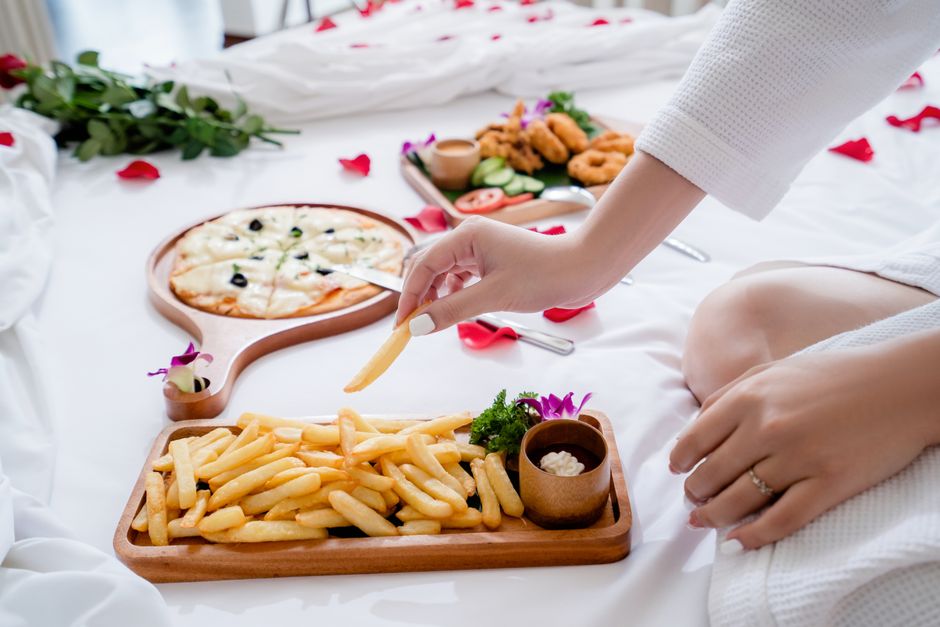
Fried food tastes so good because frying triggers two separate reward systems at the same time. Heat breaks down the food’s surface into hundreds of aromatic compounds while oil carries fat-soluble flavor molecules straight to your tongue. Your brain evolved to seek out both fat and salt because they were scarce for most of human history — and modern frying delivers them in one bite.
Why Does Fried Food Taste So Good Science Explains?
The answer starts with a chemical reaction called the Maillard reaction. When food hits hot oil, amino acids and certain sugars react together and create new flavor compounds. This is the same reaction that browns a steak or toasts bread.
Frying does something extra. Because oil conducts heat far more efficiently than air, the surface of the food dries out and browns fast while the inside steams in its own moisture. That contrast — crisp shell, soft center — is a texture combination humans find highly rewarding.
Then there is the fat itself. Fat carries flavor molecules that water cannot. Many of the aromatic compounds released during frying are fat-soluble, meaning they dissolve in oil and reach your taste buds and smell receptors more effectively.
Smell matters more than most people realize. What we call “taste” is largely aroma traveling from the back of the mouth up into the nasal cavity. Fried food generates a large number of volatile compounds, and that aroma cloud is a big part of why the experience feels so intense.
What Happens in Your Brain When You Eat Something Fried?
Fat and salt both trigger dopamine release in the brain’s reward pathway. This is not a flaw in your willpower. It is a system shaped by evolution, when calorie-dense food was rare and surviving a famine mattered more than avoiding excess.
Research using brain imaging has found that foods combining fat and carbohydrate activate reward circuits more strongly than foods high in either alone. Fried food often hits that combination, plus salt.
The texture matters too. Studies on eating behavior suggest that crunch and sound influence how much we enjoy food. A loud crunch signals freshness to the brain. Soft or soggy textures signal staleness, and we find them less appealing.
There is also a temperature effect. Fried food is usually eaten hot, and warmth amplifies the release of aromatic compounds. Cold fried food tastes flatter because those compounds are no longer volatile.
Is Fried Food Addictive?
Fried food is not addictive in the clinical sense that drugs are. It does not produce the same chemical dependence or withdrawal. But it does activate reward pathways that can drive repeated cravings.
The word researchers use is “hyperpalatable.” That means a food has been engineered — or simply happens to combine — fat, salt, sugar, and refined carbohydrate in proportions that make it very easy to overeat.
Some research suggests that highly processed, hyperpalatable foods can trigger eating patterns that look compulsive in some people. The evidence here is still developing, and scientists debate how closely these patterns resemble true addiction.
What is clear: the reward system does not distinguish between “natural” fat cravings and cravings for fried chicken. It responds to the nutrients themselves.



Why Does Fried Food Feel So Satisfying Compared to Other Cooking Methods?
Frying adds fat that other cooking methods do not. Boiling, steaming, and baking leave the food’s own fat content unchanged. Frying adds a layer of oil to the surface and, depending on the food, absorbs some into the interior.
Fat is calorie-dense. It provides about 9 calories per gram, compared with about 4 calories per gram for both protein and carbohydrate. That density is part of why fried food feels filling and rewarding.
Fat also lingers on the palate. It coats the mouth and carries flavor for longer than water-based cooking does. That extended release keeps the eating experience pleasurable for more of the meal.
Salt is the other half of the equation. Many fried foods are salted after cooking, and salt enhances sweetness and suppresses bitterness. It makes the whole flavor profile read as more balanced.
Does Frying Destroy Nutrients in Food?
It depends on the nutrient. Some vitamins are heat-sensitive and can be reduced by frying. Vitamin C and several B vitamins are among the most vulnerable to heat, and how much is lost depends on the food, the oil temperature, and how long it cooks.
Other compounds are unaffected or even improved. Fat-soluble vitamins like A, D, E, and K survive frying reasonably well because they are not destroyed by heat in the same way. In some cases, cooking makes nutrients more available to the body by breaking down cell walls.
One thing worth knowing: when oil is reused many times or heated past its smoke point, it breaks down and forms compounds that are not good for health. Fresh oil used at the right temperature is a different situation from oil that has been reheated repeatedly.
This is not a reason to eat more fried food. It is a reason to be specific about what frying does and does not do, rather than treating all fried food as nutritionally identical.
Why Does Fried Food Sometimes Taste Bad or Feel Heavy?
Oil temperature is the main variable. If the oil is too cool, the food absorbs more oil and turns greasy instead of crisp. If the oil is too hot, the outside burns before the inside cooks through.
Oil that has been used too many times develops off-flavors. The breakdown products from repeated heating taste stale or rancid, and they transfer to the food.
Breading and batter also matter. A thick, heavy coating traps steam and can make the food soggy. A thin, well-formulated coating lets moisture escape and creates a crisper shell.
The “heavy” feeling people describe after eating fried food usually comes from fat content and portion size, not from the frying method alone. Fat slows stomach emptying, which can feel uncomfortable in large amounts.
Does the Type of Oil Change How Fried Food Tastes?
Yes, and it changes how the food behaves during cooking. Oils differ in their smoke point — the temperature at which they begin to break down and produce smoke and off-flavors.
Oils with higher smoke points hold up better to high-heat frying. Oils with lower smoke points break down faster and can impart a burnt or bitter taste. Refined oils generally have higher smoke points than unrefined ones.
The flavor of the oil itself can also carry into the food. A strongly flavored oil will taste different from a neutral one, even when the frying method is identical.
For home cooks, the practical point is simple: use an oil suited to high heat, keep the temperature in the right range, and do not reuse oil indefinitely.
Is There a Way to Get the Crunch Without Deep Frying?
Yes. Air frying uses circulating hot air to brown the surface of food, producing a crisp exterior with far less oil. It does not reproduce the exact flavor of deep frying, because the Maillard reaction still occurs but the fat-carrying effect is reduced.
Oven roasting at high heat can also brown food and create some crunch, though usually less than frying. Coating food lightly in oil before roasting helps the surface brown more evenly.
These methods do not make fried food “healthy” in an absolute sense, and they do not make the original version unhealthy in an absolute sense either. They simply change the fat content and the texture.
What they cannot fully replicate is the specific aroma profile of deep frying. That aroma is a large part of why fried food tastes the way it does, and it comes from the oil itself.
Frequently Asked Questions
Why does fried food taste better than baked food?
Frying adds fat that carries flavor compounds to your taste buds and creates a crisp texture through fast surface browning. Baking can brown food too, but it usually adds less fat and produces a different, often softer texture.
Is fried food actually addictive?
Fried food is not addictive in the clinical sense that drugs are, but it activates the brain’s reward pathway through fat and salt. That can drive strong cravings and overeating in some people.
Does frying remove all the nutrients from food?
No. Some heat-sensitive vitamins like vitamin C and certain B vitamins are reduced, but fat-soluble vitamins and some other nutrients survive frying. How much is lost depends on the food and cooking conditions.
Why does cold fried food taste worse than hot fried food?
Aroma compounds are released more readily when food is hot. As fried food cools, those volatile compounds stop rising into your nasal cavity, so the flavor feels flatter.
