
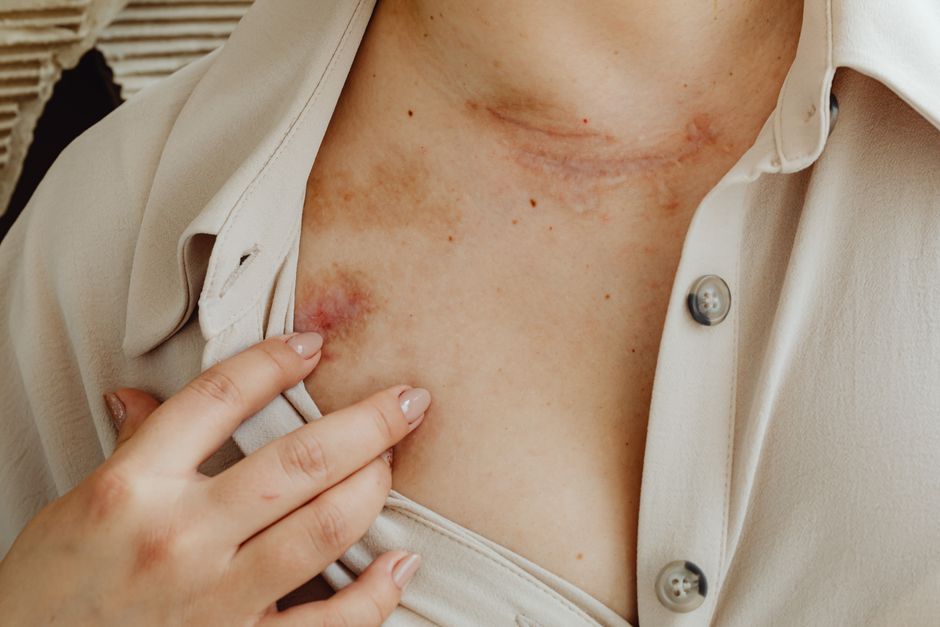
Scarring is a normal part of how your body heals after an injury. But some people form more noticeable scars than others, even from minor cuts or scratches. If you scar easily, it usually comes down to your genetics, your age, your skin type, or an underlying health condition that affects how your body produces collagen.
How Does Scarring Happen?
When you damage your skin, your body starts a healing process that has several phases. First, it stops the bleeding and sends immune cells to clean the wound. Then it builds new tissue using a protein called collagen. Collagen fibers are laid down quickly to close the gap, but they are not arranged in the same neat pattern as normal skin. This random organization is what creates a scar.
Over weeks and months, your body continues to remodel the scar tissue. In some people, this remodeling produces a flat, pale scar that fades with time. In others, the scar remains raised, thick, or darker than the surrounding skin. How your body manages this process is partly controlled by your genes.
Why Do You Scar So Easily?
Several factors can make you more prone to noticeable scarring. Genetics is one of the strongest. If your parents have prominent scars, you are more likely to have them too. Research suggests that certain gene variants influence how much collagen your body produces and how it organizes the fibers during healing.
Age also plays a role. Younger skin heals faster and produces more collagen, which can lead to thicker scars. Older skin heals more slowly and produces less collagen, so scars may be less raised but can still be more noticeable because the skin is thinner.
Skin type matters as well. People with darker skin are more prone to keloids — scars that grow beyond the original wound boundary. They are also more likely to develop hyperpigmentation where the scar is darker than the surrounding skin. This is not about skin color itself but about how melanocyte cells respond to inflammation.
Location on your body influences scarring too. Areas with high tension — like the chest, shoulders, and knees — tend to produce thicker scars. Wounds on the back or joints are also more likely to form raised scars because the skin is constantly being pulled.
Certain health conditions directly affect collagen production. Ehlers-Danlos syndromes are a group of disorders that affect connective tissue. People with these conditions often heal poorly and form thin, stretchy scars. Scurvy — caused by severe vitamin C deficiency — stops collagen production entirely, leading to poor wound healing and easy bruising.
Can Your Diet Affect Scarring?
Yes, but only within limits. Your body needs enough protein, vitamin C, zinc, and iron to build collagen and heal wounds properly. Vitamin C is essential because it helps enzymes that link collagen fibers together. Zinc helps with cell growth and immune function during healing.
Severe deficiencies in these nutrients will impair healing and make scars more likely to be larger or slower to close. However, eating more than the recommended amounts will not make your scars disappear or prevent them entirely. No diet can override strong genetic factors. The evidence is clear: a balanced diet supports normal healing, but it does not determine the final appearance of a scar on its own.
Some supplements are marketed for scar improvement, but large clinical trials are lacking. For example, vitamin E is often applied to scars, but studies show it does not improve appearance and can cause contact dermatitis in some people. Aloe vera gel may soothe the skin, but no high-quality evidence shows it changes scar formation.




Do Certain Medications Make You Scar More?
Yes. Corticosteroids — whether taken as pills, creams, or injections — can slow wound healing by suppressing inflammation and reducing collagen production. Long-term use of oral steroids is linked to thinner skin and more fragile scars.
Nonsteroidal anti-inflammatory drugs (NSAIDs) like ibuprofen and naproxen can also interfere with healing if taken regularly during the early wound phase. They reduce the inflammation that is necessary to start the repair process. Occasional use is unlikely to cause problems, but chronic use around the time of injury may contribute to poorer scarring.
Other medications that can affect wound healing include chemotherapy drugs, some blood pressure medications (like ACE inhibitors), and retinoids. If you are taking any prescription medication and are concerned about scarring, talk to your doctor. Do not stop or change medications on your own.
Can You Prevent or Reduce Scarring?
Some techniques can help minimize scarring, though no method guarantees a perfect result. Keeping a wound clean and covered reduces the risk of infection, which is a major cause of worse scarring. Once the wound has closed, keeping it moist with a simple petroleum jelly or an occlusive dressing can help the skin heal more evenly.
Silicone gels or sheets are one of the few treatments with consistent evidence behind them. They help flatten and fade raised scars, especially if used for several months starting as soon as the wound closes. They work by hydrating the scar tissue and reducing collagen overproduction.
Sun protection is crucial. UV exposure darkens scar tissue and makes it stand out more. Sunscreen with SPF 30 or higher, or covering the scar with clothing, can prevent this. Protection is important for at least the first year after injury.
Massage with gentle pressure may help break down collagen fibers and improve scar flexibility, but evidence is mostly based on clinical experience rather than large trials. Some clinicians recommend it, especially for burn scars or post-surgical scars.
Do not use hydrogen peroxide or alcohol on healing wounds — they kill cells and delay healing. Simple soap and water is enough for cleaning.
When Should You See a Doctor About Scarring?
Most scars are harmless, but some need medical attention. See a doctor if a scar becomes painful, itchy, or continues to grow beyond the original wound. This could be a keloid or hypertrophic scar that may benefit from treatment. Also see a doctor if a wound is slow to heal — taking more than two to three weeks without closing — as this could indicate an infection, poor blood supply, or an underlying health problem.
If you notice that you are forming unusual scars from very minor injuries, or if you have a family history of Ehlers-Danlos syndromes or other connective tissue disorders, mention it to your doctor. Early diagnosis of an underlying condition can help you manage your skin care and avoid complications.
Treatments for problematic scars include corticosteroid injections, laser therapy, cryotherapy, and surgical revision. These are typically done by a dermatologist and are most effective when started early. However, results vary, and no treatment can erase a scar completely.
Frequently Asked Questions
Why do some people scar more easily than others?
Genetics is the main reason — your inherited collagen production and healing patterns determine how your scars form. Age, skin type, and certain medical conditions also play a part.
Can vitamin deficiency cause easy scarring?
Yes, severe deficiencies in vitamin C, zinc, or protein can impair wound healing and lead to worse scarring. But in a person with a normal diet, taking extra vitamins does not prevent scars.
Do darker skin tones scar more easily?
People with darker skin are more prone to keloids and hyperpigmented scars, but not necessarily to more scars overall. The tendency is linked to how melanocytes respond to inflammation.
Can you make a scar go away completely?
No treatment can erase a scar entirely. Treatments like silicone gels, laser therapy, and injections can improve appearance, but some trace of the scar usually remains.
