
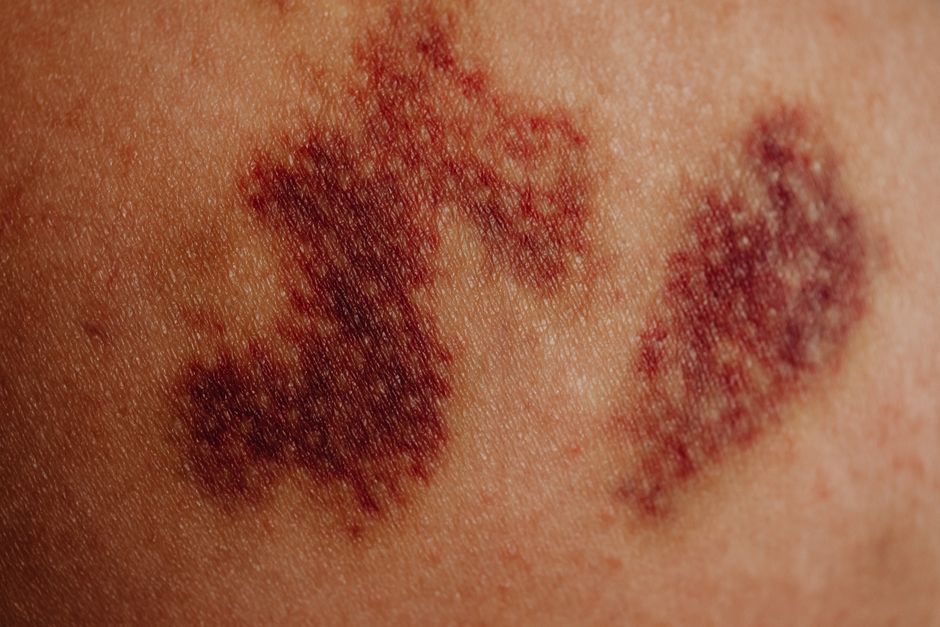
If you have noticed bruises appearing with little or no bump, you are not alone. Many people in their 30s to 60s suddenly start bruising more easily. The most common reasons are thinning skin, fragile blood vessels, or changes in how your blood clots. Medications, vitamin shortfalls, and certain medical conditions can also play a role.
Why Am I Bruising So Easily All Of A Sudden? Root Causes
Bruises form when small blood vessels called capillaries break under the skin. Blood leaks out and collects in the tissue. That dark blue or purple mark is the trapped blood. Over days the body breaks it down and the color fades to green, yellow, then brown.
When this starts happening more often and with less force, something has changed. The most common change is age. Skin gets thinner and loses some of its protective fat layer. Blood vessels become more fragile. This process begins in your 30s and speeds up after 60. For many people, that alone explains the sudden increase in bruises.
Other root causes include medications that thin the blood or weaken blood vessel walls, vitamin deficiencies that impair clotting, and conditions that affect platelet count or liver function. Sometimes the cause is temporary and reversible. Other times it points to an underlying health issue that needs attention.
What Medications Can Cause Easy Bruising?
Many prescription and over-the-counter drugs can make you bruise more easily. The most common are blood thinners. Aspirin, warfarin (Coumadin), clopidogrel (Plavix), and apixaban (Eliquis) all reduce the blood’s ability to clot. Even a low-dose aspirin taken daily for heart health can increase bruising.
Nonsteroidal anti-inflammatory drugs (NSAIDs) like ibuprofen (Advil, Motrin) and naproxen (Aleve) also interfere with platelet function. Taking them regularly for arthritis or chronic pain can lead to more bruises.
Corticosteroids, both oral (prednisone) and topical, make blood vessels more fragile. People using steroid inhalers for asthma or steroid creams for eczema may notice increased bruising. Some antidepressants, especially SSRIs, have been linked to a higher bruising risk in some studies. Supplements like fish oil, ginkgo biloba, and vitamin E in high doses can also thin the blood.
If you started a new medication around the same time the bruising began, that is a likely suspect. Do not stop any prescribed drug without talking to your doctor. But do mention the bruising at your next visit.
Can Vitamin Deficiencies Cause Easy Bruising?
Vitamin C deficiency is a well-established cause of easy bruising. When you lack vitamin C, collagen production suffers. Collagen is the protein that holds blood vessel walls together. Without enough collagen, capillaries leak easily. Severe deficiency causes scurvy, but milder forms can still lead to unexplained bruises. Scurvy is rare in the United States, but it does occur in people with very limited diets, heavy alcohol use, or certain absorption issues.
Vitamin K is essential for making several clotting factors. A deficiency can prolong bleeding time and lead to more bruises. Newborns are routinely given vitamin K shots for this reason. In adults, deficiency is less common because gut bacteria produce some vitamin K and it is found in leafy greens. But conditions that affect fat absorption, such as Crohn disease or celiac disease, can reduce vitamin K levels.
Vitamin D is sometimes mentioned in casual health articles as a cause of bruising, but no strong clinical evidence supports that link. Iron deficiency can cause pale skin and fatigue, but bruising is not a typical sign. Some research suggests low zinc or copper may affect wound healing, but these are not established causes of sudden easy bruising.
If you suspect a deficiency, ask your doctor for a blood test. Do not take high-dose supplements without knowing your levels first.





What Medical Conditions Cause Easy Bruising?
Several medical conditions can appear first as unexplained bruises. The liver produces most of your clotting factors. Liver disease, including fatty liver, hepatitis, or cirrhosis, can reduce clotting ability. Other signs include jaundice, swelling in the legs, and fatigue. But easy bruising can be an early clue.
Platelet disorders, such as immune thrombocytopenia (ITP), lower the number of platelets in your blood. Platelets are the cells that form the initial plug at a bleeding site. With too few platelets, bruising and pinpoint red spots called petechiae can appear.
Hemophilia and von Willebrand disease are inherited bleeding disorders. If you have always bruised easily since childhood, these may be the cause. Suddenly developing symptoms as an adult is possible with von Willebrand disease, especially after pregnancy or with certain medications.
Bone marrow problems, including leukemia, can also reduce platelet production. This is less common but serious. Other signs include frequent infections, fatigue, and unexplained fever.
Cushing syndrome, caused by high cortisol levels, weakens blood vessels and thins skin. It can result from long-term steroid use or from a tumor. Weight gain, a round face, and purple stretch marks often accompany it.
Aging itself is not a disease, but it is the most common reason for sudden easy bruising in otherwise healthy adults after age 50. The skin becomes more fragile, and the supporting fat layer shrinks.
When Should You Worry About Easy Bruising?
Most easy bruising is harmless. But some patterns need a medical check. See your doctor if you have bruises that are larger than a quarter with no clear injury. Also if the bruises are painful, have a lump, or appear on your trunk, back, or face without known cause.
Bleeding from your gums, nose, or cuts that takes more than ten minutes to stop is a red flag. Dark black stools or blood in your urine also need attention. If you have a family history of bleeding disorders, mention it.
Sudden easy bruising combined with fatigue, weight loss, fever, or night sweats should be evaluated promptly. These symptoms together can signal a bone marrow or blood cell problem.
A simple blood test called a complete blood count (CBC) and a coagulation panel can rule out many serious causes. Your doctor may also check liver function and vitamin levels. For most people, the results come back normal or show only age-related changes. That is reassuring.
How to Reduce Easy Bruising
If your bruising is from fragile blood vessels and thin skin, you cannot reverse that completely. But you can protect yourself. Use padding when working around hard surfaces. Wear long sleeves and pants during activities that could cause bumps. Keep your home free of tripping hazards.
If you take a blood thinner, ask your doctor if the dose is still right for you. Do not stop on your own. If you take NSAIDs or supplements daily and the bruising bothers you, talk to your doctor about alternatives.
Eating a balanced diet with enough vitamin C and K can help if you are deficient. Good sources of vitamin C are citrus fruits, bell peppers, and broccoli. Vitamin K is abundant in spinach, kale, and Brussels sprouts. A standard multivitamin covers both. But if your diet is adequate, extra vitamins will not strengthen your blood vessels further.
Avoid excessive alcohol, which can impair liver function and worsen clotting. If you smoke, consider quitting. Smoking damages blood vessels and skin.
No topical cream has been proven to prevent bruises. Some creams containing vitamin K or arnica may help fade existing bruises slightly faster, but the evidence is weak.
Frequently Asked Questions
Why am I bruising easily all of a sudden without injury?
The most common cause is age-related thinning of skin and weakening of blood vessels. Medications, vitamin C or K deficiency, and underlying medical conditions can also cause sudden bruising with minimal or no remembered injury.
What vitamin deficiency causes easy bruising?
Vitamin C deficiency is the best established cause, as it weakens collagen in blood vessel walls. Vitamin K deficiency can also contribute because it impairs the body’s ability to form blood clots.
When is easy bruising a sign of something serious?
Seek medical attention if bruises are larger than a quarter, painful, or appear with other symptoms like nosebleeds, bleeding gums, fatigue, fever, or unexplained weight loss. A blood test can help determine if a clotting or platelet disorder is present.
Can stress cause easy bruising?
There is no direct evidence that stress alone causes bruising. However, chronic stress can affect overall health, and some people under stress may use alcohol or medications that increase bruising risk.
