
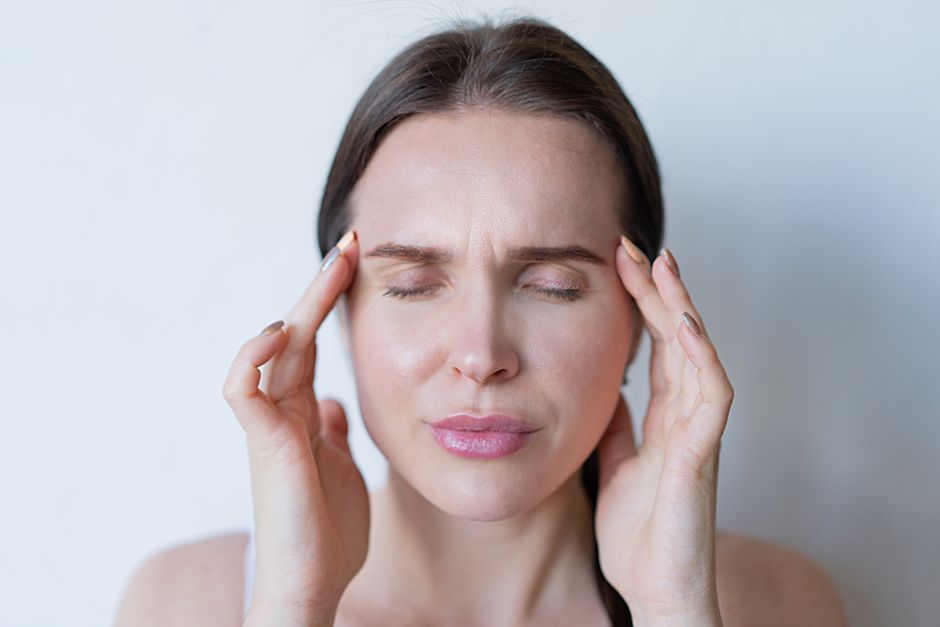
Most people assume a headache means their brain hurts. It doesn’t. The brain itself has no pain receptors. Headache pain comes from tissues around the brain — the scalp, sinuses, neck muscles, and the blood vessels and nerves that surround the skull. When those structures are irritated, inflamed, or squeezed, they send pain signals that your brain interprets as a headache. If you keep getting headaches, something in that system is being triggered repeatedly. The most common culprits are tension, dehydration, sleep problems, and specific dietary or environmental triggers.
Why Do You Keep Getting Headaches? What Is Actually Happening
Your body is responding to a specific trigger each time. The pain pathway is the same, but the cause can differ from episode to episode. Headaches are classified by their underlying mechanism. Tension headaches involve muscle tightness in the neck and scalp. Migraines involve changes in nerve signaling and blood vessel dilation in the brain. Cluster headaches involve activation of a nerve pathway on one side of the face.
Recurrent headaches mean the trigger is recurring. Finding the pattern is the first step to stopping the cycle. A headache diary that tracks timing, food, sleep, stress, and weather can reveal what you are missing. Many people discover their headaches are not random at all — they follow a predictable schedule tied to a specific habit or environmental factor.
What Are the Most Common Causes of Recurring Headaches?
Tension headaches are the most common type. They affect roughly two out of three adults at some point. The pain is usually a dull, pressing sensation on both sides of the head. It often feels like a tight band around the skull. Prolonged screen time, poor posture, and jaw clenching are frequent contributors.
Migraine is the second most common cause. It affects about one in seven adults. Migraine pain is usually throbbing and often on one side of the head. It commonly comes with nausea, light sensitivity, or sound sensitivity. Some people experience an aura — visual disturbances like flashing lights or blind spots — before the pain begins.
Dehydration is a surprisingly common cause. Even mild fluid loss can trigger headache pain. One study found that increasing water intake reduced headache frequency in people who were not drinking enough. If your urine is dark yellow, you may not be hydrating enough.
Sleep problems play a major role. Both too little sleep and too much sleep can trigger headaches. Irregular sleep schedules are a known migraine trigger. The relationship between sleep and headache is bidirectional — poor sleep causes headaches, and headaches disrupt sleep.
Could Your Daily Habits Be Causing the Pain?
Caffeine is a double-edged sword. Small amounts can relieve a headache by constricting dilated blood vessels. But regular caffeine use leads to rebound headaches when the caffeine wears off. If you drink coffee daily and get headaches on weekends when you sleep in, caffeine withdrawal is a likely suspect. The same applies to over-the-counter pain relievers. Using them more than two or three days per week can cause medication-overuse headaches.
Skipping meals is another overlooked trigger. Low blood sugar can provoke headaches in susceptible people. Eating regular meals with protein and complex carbohydrates helps maintain steady glucose levels. Processed foods containing nitrates, MSG, or artificial sweeteners trigger headaches in some individuals, though the evidence varies by person.
Alcohol is a well-documented trigger. Red wine is more likely to cause headaches than other alcoholic drinks, possibly due to compounds called tannins and histamines. Alcohol also causes dehydration and disrupts sleep, both of which independently contribute to headache risk.





When Should You See a Doctor About Headaches?
Most headaches are not dangerous. But some patterns require medical evaluation. See a doctor if you experience headaches more than 15 days per month, if they worsen over time, or if they interfere with daily function. A sudden, severe headache — often described as the worst headache of your life — requires immediate emergency care.
Seek urgent attention if a headache comes with any of these warning signs: fever, stiff neck, confusion, seizures, double vision, weakness, numbness, or difficulty speaking. Headaches that begin after age 50 also warrant evaluation. So do headaches that change character — if your usual tension headache suddenly feels different, that is a reason to get checked.
A doctor can distinguish between primary headaches — where the headache itself is the condition — and secondary headaches caused by an underlying issue like sinus infection, high blood pressure, or head injury. This distinction matters because treatment differs completely.
What Treatment Options Actually Work?
For occasional tension headaches, over-the-counter medications like acetaminophen, ibuprofen, or aspirin are effective for most people. Take them at the first sign of pain rather than waiting for the headache to peak. Resting in a quiet, dark room and applying a cold or warm compress to the head or neck can also help.
For migraines, a class of drugs called triptans is the standard prescription treatment. They work by constricting dilated blood vessels and blocking pain pathways. They are most effective when taken early in an attack. Some newer medications called CGRP antagonists are also available and work differently.
Preventive treatment is an option for people with frequent headaches. Beta-blockers, antidepressants, anti-seizure medications, and CGRP inhibitors are used preventively. Botox injections are approved for chronic migraine — defined as 15 or more headache days per month. These treatments reduce frequency and severity but do not eliminate headaches entirely.
Non-drug approaches have solid evidence behind them. Cognitive behavioral therapy helps people manage stress and pain perception. Biofeedback teaches awareness of physical responses like muscle tension. Both have shown benefit in clinical trials for headache prevention.
What Supplements and Lifestyle Changes Have Evidence?
Some supplements have research support for migraine prevention. Magnesium, particularly magnesium citrate, has shown benefit in several studies. Riboflavin (vitamin B2) at higher doses has also demonstrated preventive effects. Coenzyme Q10 has some evidence as well. The evidence for these is moderate — they help some people but not everyone.
No clinical guidelines currently exist for supplement dosing in headache prevention for all populations. If you are pregnant, breastfeeding, or taking other medications, talk to your doctor before starting any supplement. Natural does not mean automatically safe.
Regular aerobic exercise reduces headache frequency in many people. Exercise releases endorphins, improves sleep, and reduces stress. Start slowly if exercise currently triggers headaches — some people get exertion headaches from intense activity. Consistent moderate exercise is the goal, not sporadic intense workouts.
Why Do Some People Get Headaches From Weather or Hormones?
Barometric pressure changes are a recognized trigger. When atmospheric pressure drops before a storm, the pressure difference between the environment and your sinuses can cause pain. Not everyone is sensitive to this, but those who are often predict storms by their headache onset.
Hormonal fluctuations affect headache patterns, particularly in women. Estrogen levels fall right before menstruation, and this drop can trigger menstrual migraines. These headaches are often more severe and longer-lasting than other migraines. Some women find relief with continuous hormonal contraceptives that prevent estrogen withdrawal.
What Is Medication-Overuse Headache and How Do You Stop It?
Medication-overuse headache is a paradoxical condition where treating headaches makes them worse. It occurs when pain relievers are used too frequently — generally more than two or three days per week. The brain adapts to the medication, and when it wears off, withdrawal-like pain begins. This creates a cycle: you take medication for the pain, the medication wears off, and the pain returns.
Breaking this cycle requires stopping the overused medication. This typically causes a temporary worsening of headaches for several days to a few weeks. After that, many people find their baseline headache frequency drops significantly. This process is best done with medical supervision, especially for people who use opioids or barbiturate-containing medications.
Frequently Asked Questions
Why do I get headaches every day at the same time?
A consistent daily headache pattern often points to a routine trigger like caffeine withdrawal, skipped meals, eye strain, or poor sleep habits. Medication-overuse headache is another common cause when pain relievers are taken regularly.
Can high blood pressure cause headaches?
Severely elevated blood pressure can cause headaches, but mild to moderate high blood pressure usually does not. A headache from high blood pressure typically occurs only at crisis levels and requires emergency treatment.
Is it normal to get a headache every week?
Occasional headaches are common, but weekly headaches are not something to ignore. Track your triggers for a month and discuss the pattern with your doctor, especially if headaches interfere with work or daily activities.
What does a dehydration headache feel like?
A dehydration headache usually feels like a dull ache on both sides of the head, sometimes with fatigue or dizziness. Drinking water and resting typically resolves it within a few hours.
