
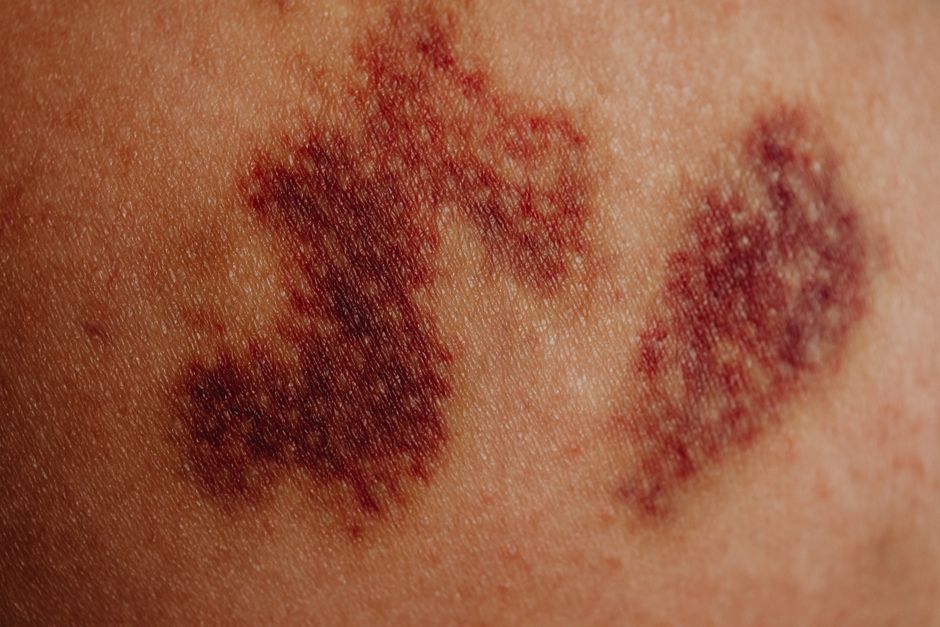
A bruise appears when tiny blood vessels under your skin break and leak blood into the surrounding tissue. The medical term is a contusion, and it happens most often after a bump or a knock that you might not even remember. That random bruise on your shin or forearm usually has a simple explanation, but sometimes the cause is worth a closer look.
What Actually Causes a Bruise to Form?
Your blood travels through vessels of all sizes. The smallest ones, called capillaries, sit just beneath the surface of your skin. When something presses or hits that area hard enough, the capillary wall tears. Blood seeps out into the tissue and pools there.
Your body responds quickly. Platelets rush to the damaged vessel and clump together to form a plug. Clotting factors in your blood build on that plug to create a stable clot. This stops the leaking within minutes to hours.
The trapped blood is what you see as a bruise. At first it looks red because the blood is rich in oxygen. Over the next day or two, the hemoglobin in that blood breaks down. The bruise turns purple or blue. As your body clears the debris, the color shifts to green, then yellow, and finally fades as the tissue returns to normal.
This entire process takes one to two weeks for most people. The speed depends on how much blood leaked and where the bruise is located.
Why Do You Get Random Bruises Without Remembering an Injury?
You likely did bump something. The skin on certain areas is thin, and the blood vessels sit close to the surface. A gentle tap on the shin, the forearm, or the back of the hand can break a capillary without causing any real pain. You simply do not register the event as an injury.
Older adults bruise more easily for a structural reason. Skin becomes thinner with age and loses some of the protective fat layer beneath it. Blood vessels also become more fragile. The same minor contact that would not mark a younger person can produce a noticeable bruise in someone over 60.
Location matters too. Bruises on the shins, thighs, and forearms are common because those areas frequently come into contact with furniture, car doors, and everyday objects. You may have brushed against a counter edge while walking and never paused to notice.
Medications and Supplements That Increase Bruising
Some common medications make bruising more likely because they interfere with normal blood clotting. If you take any of these, random bruises become easier to explain:
- Blood thinners such as warfarin, apixaban, and rivaroxaban are prescribed to prevent clots. They do that job well, but they also mean smaller injuries produce larger bruises.
- Aspirin and nonsteroidal anti-inflammatory drugs (NSAIDs) like ibuprofen and naproxen reduce platelet stickiness. This effect is mild for most people but still increases bruising.
- Corticosteroids taken orally for conditions like asthma or autoimmune disease can thin the skin over time, making vessels easier to break.
- Antidepressants in the SSRI class have been linked to increased bleeding risk in some studies, though the effect is modest.
Dietary supplements can have similar effects. Fish oil, vitamin E, ginkgo biloba, and garlic supplements all have mild blood-thinning properties. In high doses, they can contribute to easier bruising. This does not mean you should stop taking prescribed medication. It means you should mention the bruising to your doctor, especially if it becomes frequent or large.




Medical Conditions That Cause Easy Bruising
When bruising happens often and without clear cause, an underlying condition may be involved. The blood clotting process requires many working parts. A problem at any step can lead to excess bleeding under the skin.
Low platelet count is one of the more common culprits. Platelets are the cells that form the initial plug at a bleeding site. When your bone marrow does not produce enough of them, or your body destroys them too quickly, bruising increases. Platelet counts below the normal range of 150,000 to 450,000 per microliter of blood can produce easy bruising, though many people with mildly low counts have no symptoms at all.
Clotting factor deficiencies are less common but more serious. Hemophilia and von Willebrand disease are inherited conditions where specific clotting proteins are missing or defective. People with these conditions often have a family history of bleeding problems and may also experience prolonged bleeding from cuts, nosebleeds, or dental work.
Liver disease can cause bruising because the liver produces most of your clotting factors. When the liver is damaged, it cannot make enough of these proteins. Easy bruising is often one of the later signs of significant liver disease, appearing alongside other symptoms like jaundice, fatigue, and abdominal swelling.
Vitamin deficiencies play a role in some cases. Vitamin C is required for healthy blood vessel walls. Severe deficiency, known as scurvy, causes easy bruising along with gum bleeding and poor wound healing. Vitamin K is needed for several clotting factors, though deficiency is rare in healthy adults who eat a normal diet.
When Random Bruising Signals a Serious Problem
Most random bruises are harmless. But certain patterns deserve medical attention. You should see a doctor if you notice any of the following:
- Bruises that are larger than a few inches across and appear without any remembered injury
- Bruises that keep getting bigger or do not fade after two weeks
- Frequent bruising along with frequent nosebleeds or bleeding gums
- Blood in your urine or stool
- Bruising that started after you began a new medication
- Unusual bruising in a child who is not yet crawling or walking
A doctor can run simple blood tests to check your platelet count and clotting function. These tests provide clear answers in most cases. If those come back normal, the bruising is likely related to fragile vessels, minor trauma, or medication effects.
One important note: bruises that appear as small, flat, red or purple dots under the skin are different from regular bruises. These are called petechiae. They do not blanch when you press on them and they often indicate a problem with platelets or blood vessels. If you see these, especially along with fever, seek medical evaluation promptly.
Can You Prevent Random Bruises?
You cannot prevent every bruise, but you can reduce how often they happen. The most effective steps are practical ones.
Wear protective gear during sports and physical activities. Shin guards, elbow pads, and padded clothing absorb impact that would otherwise reach your skin. At home, clear walkways of clutter and keep furniture in predictable places. Good lighting matters, especially at night when you are more likely to bump into something.
If you take a blood thinner, talk to your doctor about whether your dose is appropriate. Do not adjust it yourself. The same applies to over-the-counter supplements. If you notice more bruising after starting fish oil or aspirin, mention it at your next appointment.
For older adults, protecting the skin is key. Long sleeves and pants provide a physical barrier. Moisturizing daily keeps skin supple, which may reduce tearing on impact. Some research suggests that eating a diet rich in vitamin C and protein supports healthy skin and blood vessels, though no specific diet has been proven to eliminate bruising.
Home Treatment for Bruises That Actually Works
Once a bruise forms, you can speed up healing with simple measures. The evidence supporting these methods is modest, but they are low-risk and may help.
Cold therapy works best in the first 24 to 48 hours. Applying an ice pack wrapped in a cloth for 15 to 20 minutes at a time constricts blood vessels and may reduce the amount of blood that leaks. Do not apply ice directly to skin, as this can cause frostbite.
Elevation helps when the bruise is on a limb. Raising the area above heart level reduces blood flow to the region and limits swelling. This is most effective in the first day after injury.
Heat can help after the first two days. A warm compress increases blood flow to the area, which may help your body clear the trapped blood faster. Some people find arnica cream helpful, though clinical evidence for its effectiveness is limited and mixed.
Over-the-counter pain relief is fine if the bruise hurts. Acetaminophen does not affect clotting. If you use ibuprofen or aspirin, be aware that these can slow clotting slightly and may make bruising worse if taken regularly.
What Science Still Does Not Know About Bruising
Bruising is common, but research on it is surprisingly thin. Most of what doctors know comes from studies of bleeding disorders and blood thinners, not from studying healthy people who bruise easily.
There is no standard medical definition of what counts as “bruising easily.” One person may consider two bruises a month excessive while another only notices bruises that are painful or large. This lack of standardization makes it hard to study the condition in the general population.
Some research suggests that women bruise more easily than men, possibly due to differences in skin thickness and blood vessel structure. But the evidence is not strong enough to make firm claims about why that difference exists or how much it matters.
What doctors do know is that bruising itself is rarely dangerous. The blood that leaks into your tissue is reabsorbed and recycled by your body. The risk is not the bruise but what it might indicate about an underlying condition. When blood tests come back normal, the bruising is generally a cosmetic issue rather than a medical one.
Frequently Asked Questions
How long does a random bruise usually last?
Most bruises fade within one to two weeks. Larger bruises or those in areas with loose skin may take up to three weeks to fully clear.
Can stress cause random bruises?
Stress does not directly cause bruises. However, stress can affect sleep, nutrition, and alcohol intake, which may indirectly influence skin health and bruising frequency.
Are random bruises a sign of cancer?
Easy bruising can be a symptom of blood cancers like leukemia, but it is rarely the only symptom. Unexplained weight loss, night sweats, fever, and persistent fatigue typically accompany it.
Should I worry about a bruise that will not go away?
A bruise that does not fade after two weeks or that keeps growing should be evaluated by a doctor. It may indicate a deeper injury or a bleeding problem that needs attention.
