
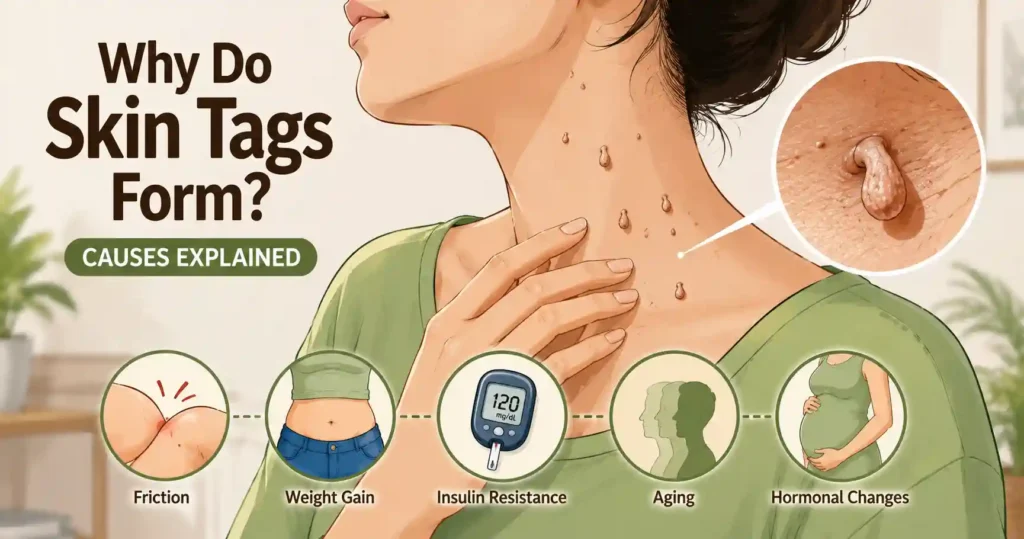
Skin tags form when small amounts of skin tissue grow outward in areas where skin rubs against skin or clothing. They are usually harmless, but research shows they are often linked to friction, aging, weight gain, insulin resistance, and hormonal changes. Skin tags commonly appear on the neck, eyelids, armpits, groin, and other body folds where repeated rubbing happens.
A surprising number of people think skin tags are random. They usually are not. The body tends to develop them in predictable places and under predictable conditions. That pattern matters more than most articles explain.
What are skin tags?
A lot of people notice them after age 40, though younger adults can develop them, too.
One thing that stands out in dermatology research is how strongly skin tags cluster in high-friction areas. That pattern is too consistent to ignore.
Quick Takeaway: Skin tags are harmless skin growths that usually appear in body folds and friction-prone areas.
Why do skin tags form?
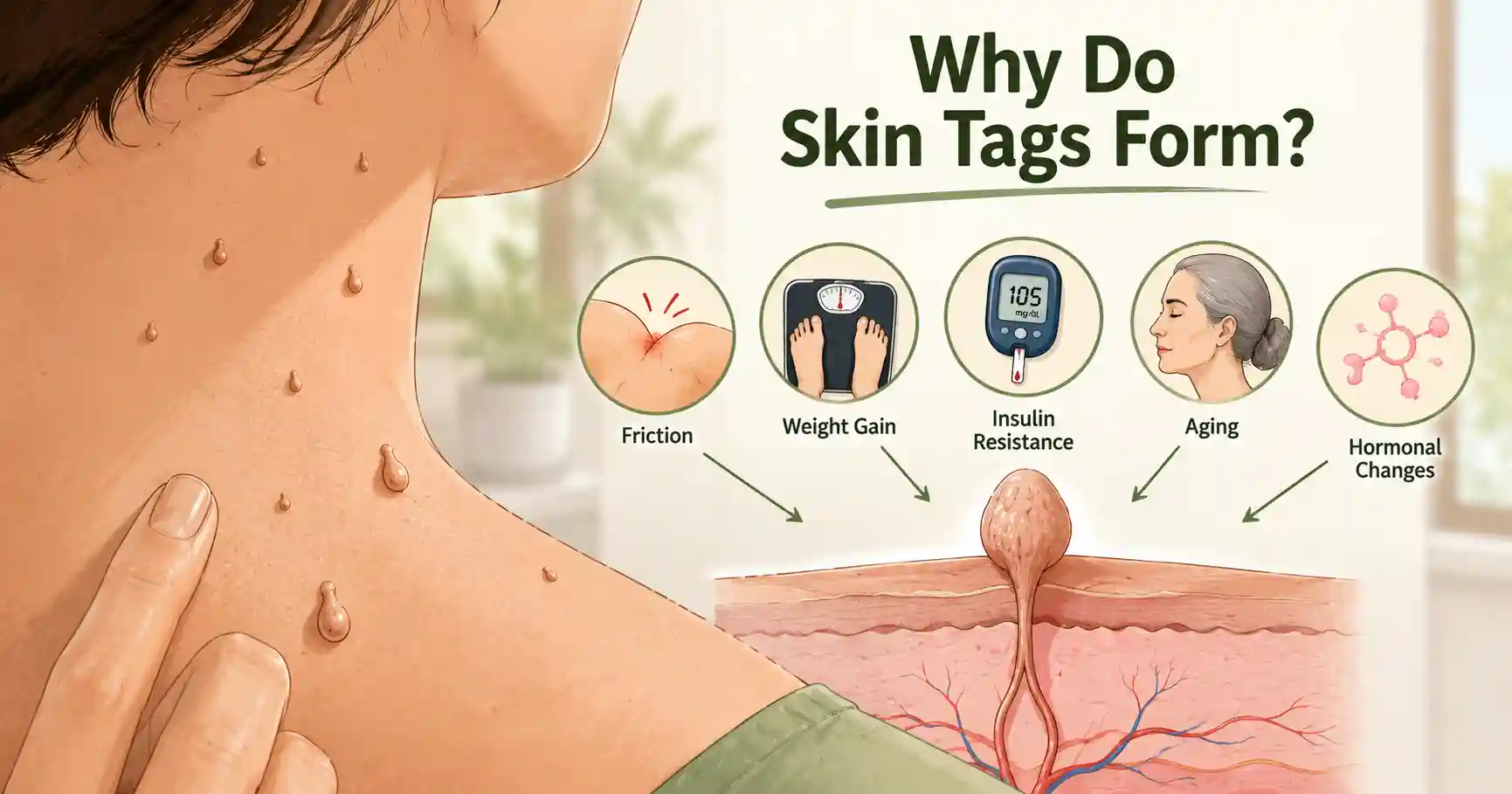
Skin tags form because repeated friction and skin stress trigger extra tissue growth over time. Hormones, insulin levels, body weight, and genetics may also influence who develops them.
That is the short answer. The longer answer is more interesting.
Common factors linked to skin tags
| Factor | Why It May Matter |
|---|---|
| Skin friction | Repeated rubbing may stimulate skin overgrowth |
| Weight gain | Creates more skin folds and moisture |
| Aging | kin loses elasticity and changes structurally |
| Insulin resistance | May affect growth signaling in skin cells |
| Pregnancy | Hormonal shifts may increase growth tendency |
| Genetics | Some families develop more skin tags naturally |
Most articles stop at “friction causes skin tags.” That explanation is incomplete.
Friction probably acts more like a trigger than the entire cause. If friction alone caused skin tags, nearly everyone would develop large numbers of them. They do not.
Research published in the Journal of Clinical and Aesthetic Dermatology has repeatedly noted associations between multiple skin tags and metabolic conditions like insulin resistance and obesity. That does not mean every skin tag signals disease. But patterns matter.
People with many skin tags, especially around the neck or armpits, sometimes also show signs of:
- elevated insulin levels
- metabolic syndrome
- type 2 diabetes risk
This is where internet advice becomes messy. Some wellness sites wildly overstate the connection. Others ignore it entirely. Reality sits somewhere in the middle.
Quick Takeaway: Skin tags likely develop from a combination of friction, metabolic changes, aging, and genetic tendency rather than one single cause.
Why do skin tags form on the neck?
The neck is one of the most common skin tag locations because it combines friction, sweat, movement, and skin folds in one area.
The neck experiences constant rubbing from:
- collars
- jewelry
- shaving
- skin movement
- folds during sleep
But there may be another reason neck skin tags appear so often.
Research has found neck skin tags appear more frequently in people with:
- obesity
- insulin resistance
- metabolic syndrome
The association is strong enough that some dermatologists pay closer attention when patients suddenly develop many tags around the neck.
That does not mean neck skin tags automatically equal diabetes. That leap gets repeated online constantly. But excessive neck tags sometimes act more like a clue than a random cosmetic issue.
Signs your skin tags may deserve closer attention
- rapid increase in number
- darkened skin nearby
- irritation or bleeding
- sudden appearance with weight gain
- strong family history of diabetes
The overlap between neck skin tags and insulin resistance is one of the few findings that genuinely stood out while reviewing this topic. Many articles barely mention it.
Quick Takeaway: Neck skin tags are strongly linked to friction, but multiple tags in that area may also overlap with metabolic health patterns.





Why do skin tags form on eyelids and the face?
Skin tags form on eyelids and the face because those areas experience constant movement and delicate skin friction.
The eyelids move thousands of times per day through:
- blinking
- rubbing
- facial movement
The skin there is thin and flexible, which may make it more prone to tiny tissue overgrowths.
Face and eyelid skin tags are usually harmless, but they create more anxiety because they are highly visible.
People often confuse skin tags with:
- warts
- moles
- seborrheic keratoses
That confusion matters because not every facial growth is a skin tag.
Eyelid skin tags become more noticeable because:
- They sit near the eyes
- Makeup catches on them
- Glasses may irritate them
- Blinking increases awareness
A lot of people try DIY removal methods on eyelids. That is a bad idea. The skin is thin, the infection risk is higher, and eye injuries are not worth the gamble.
What causes skin tags to grow or increase?
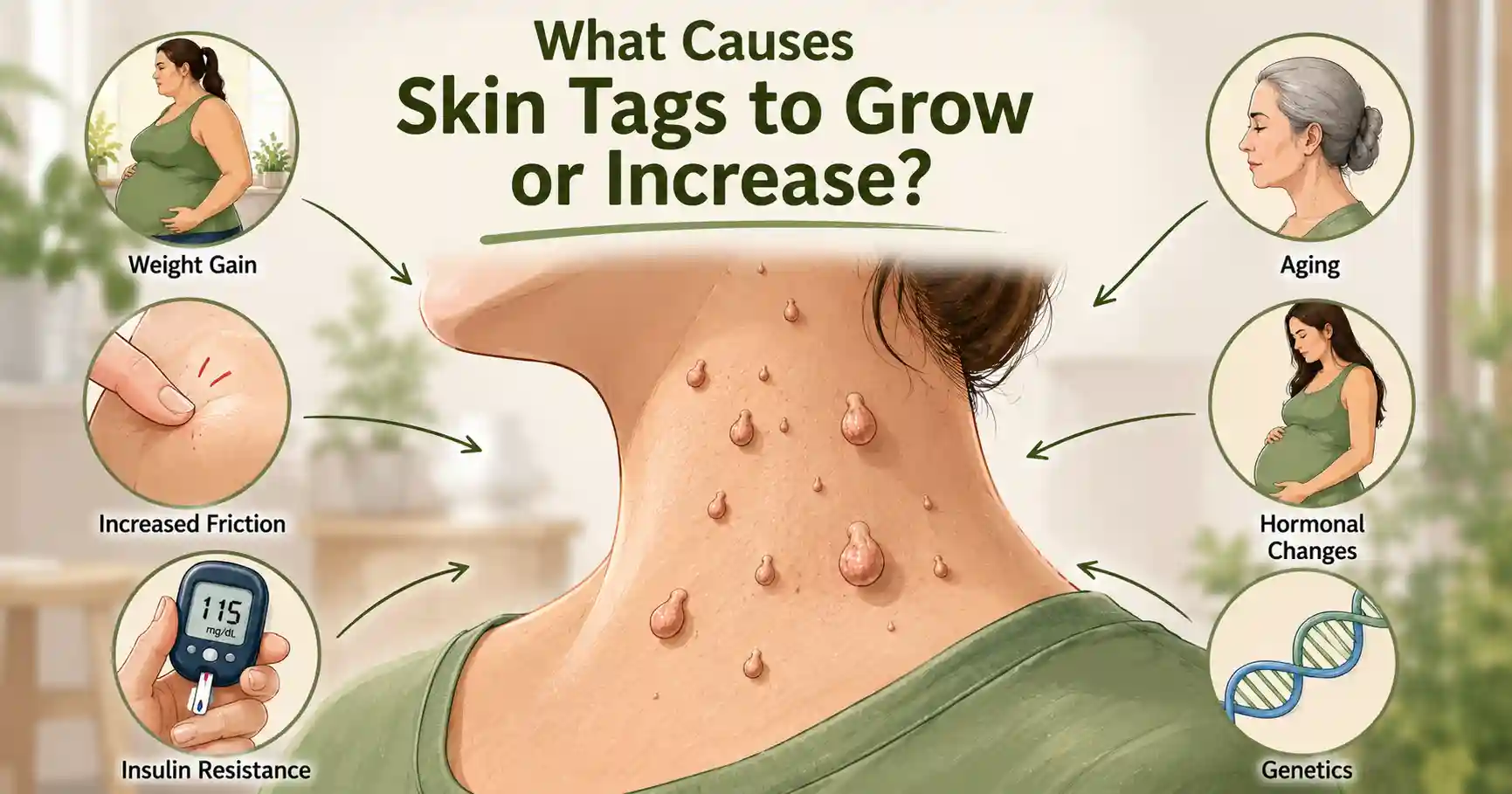
Skin tags grow because the tissue inside them continues producing collagen and small blood vessels over time.
Growth tends to happen slowly. Some stay tiny for years. Others enlarge gradually.
Common reasons people suddenly notice more skin tags
- Weight gain
- Aging
- Hormonal shifts
- Pregnancy
- Increased skin friction
- Insulin resistance changes
People often assume, “I suddenly got skin tags.” Usually, they developed slowly and became noticeable later.
There is also a psychological effect here. Once people notice one skin tag, they start spotting smaller ones they had ignored before.
Current research suggests skin tags become more common with age because skin structure changes and repeated mechanical stress accumulate over decades.
Quick Takeaway: Skin tags usually grow slowly over time, and sudden increases are often linked to weight, hormones, friction, or metabolic changes.
Are skin tags linked to diabetes or insulin resistance?
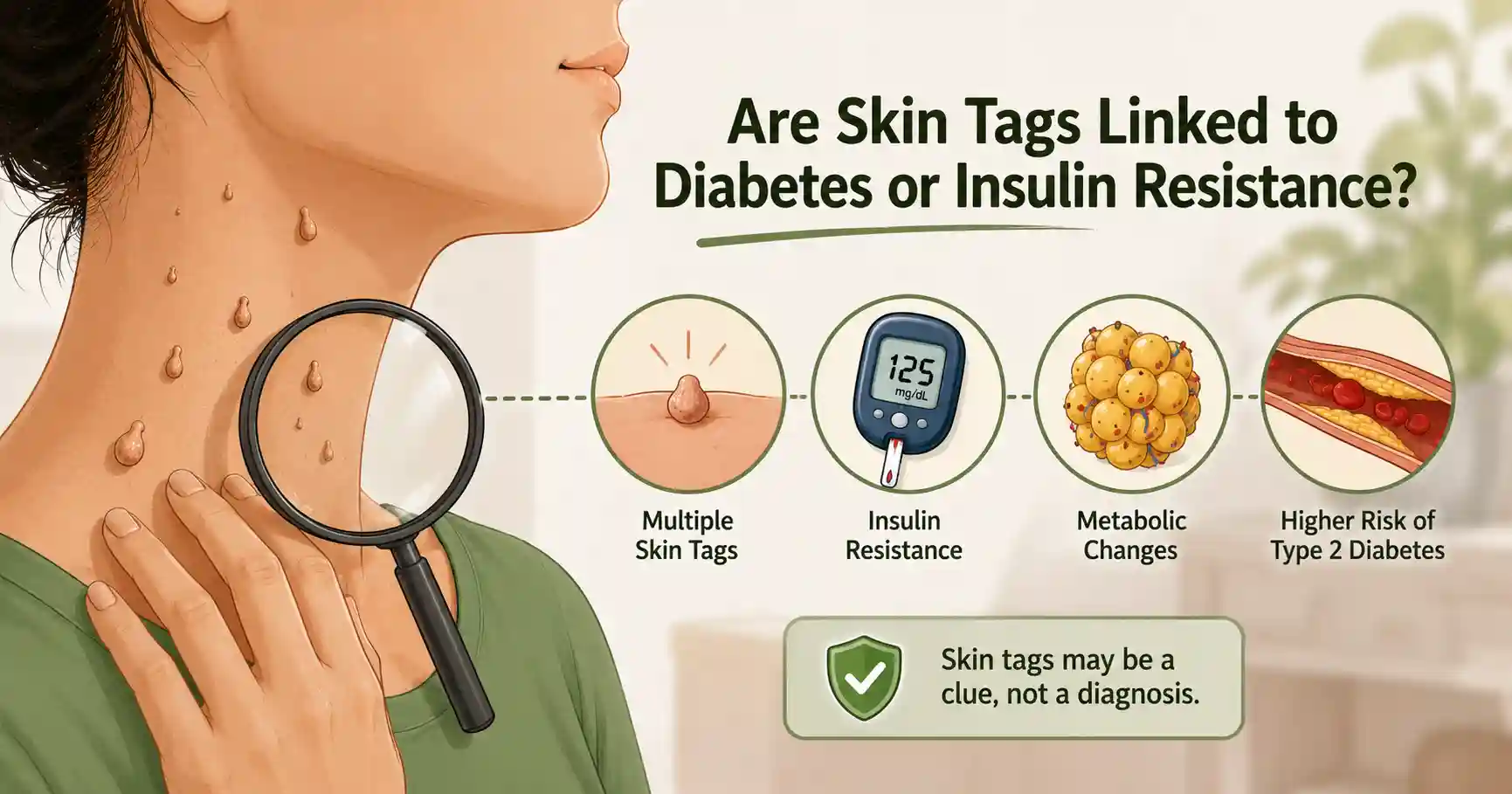
Skin tags are associated with insulin resistance, but they are not considered a direct diagnosis of diabetes.
That distinction matters.
Several studies, including research discussed in Dermatology Reports, have found that people with multiple skin tags are more likely to have:
- Elevated insulin
- Obesity
- Metabolic syndrome
- Type 2 diabetes risk factors
One proposed explanation involves insulin-like growth signaling. Higher insulin levels may stimulate certain skin cells and connective tissue growth. Still, not everyone with skin tags has diabetes. And many people with diabetes never develop skin tags.
This is an association, not certainty. As of 2026, dermatologists generally view multiple skin tags as a possible metabolic clue rather than proof of disease.
Quick Takeaway: Multiple skin tags may overlap with insulin resistance patterns, but they are not a reliable stand-alone sign of diabetes.
What mistakes do people make when removing skin tags?
The biggest mistake is assuming all skin growths are harmless skin tags.
Some people attempt removal with:
- scissors
- nail clippers
- acids
- tea tree oil
- apple cider vinegar
A lot of these methods spread online because they sound “natural,” not because they work well.
Tea tree oil and vinegar may irritate the skin badly, especially around the neck and eyelids.
Common DIY removal problems
| Mistake | Why It Can Backfire |
|---|---|
| Cutting tags at home | Infection and bleeding risk |
| Using acids repeatedly | Skin burns and irritation |
| Removing facial growths blindly | Some may not be skin tags |
| Ignoring rapid changes | Rarely, other lesions may mimic tags |
| Over-treating tiny tags | Can leave worse cosmetic marks |
The American Academy of Dermatology recommends professional evaluation when growths:
- bleed
- rapidly enlarge
- change color
- become painful
When should a doctor check a skin tag?
A doctor should evaluate a skin tag if it changes unexpectedly or no longer looks typical.
Warning signs include:
- rapid growth
- pain
- dark discoloration
- crusting
- repeated bleeding
- irregular shape
Most skin tags are harmless. But not every raised skin growth is actually a skin tag. That distinction gets lost online because many articles oversimplify skin concerns into “probably harmless.”
