
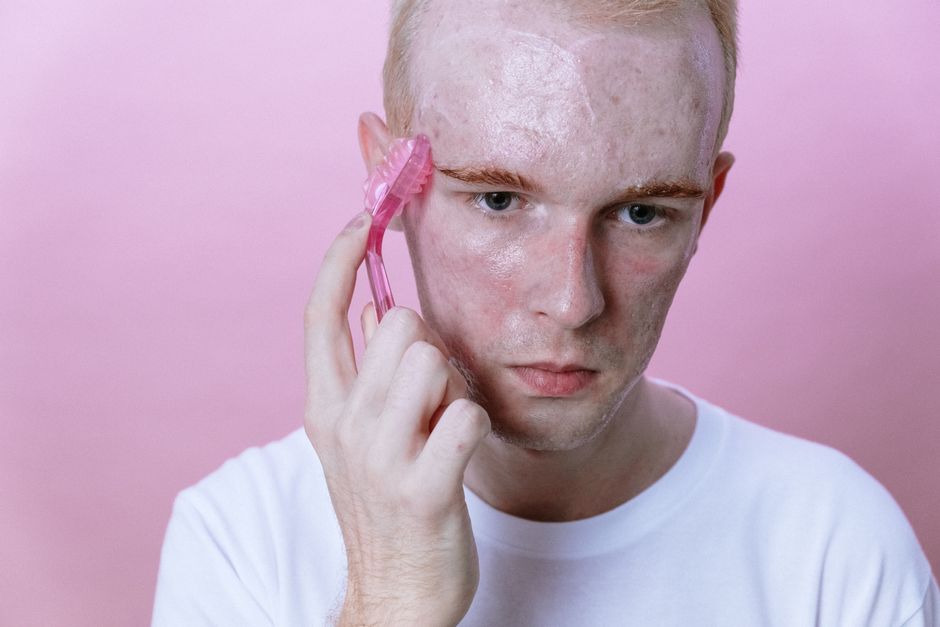
Forehead acne is not random. It is the result of your skin’s oil glands working overtime, combined with dead skin cells and bacteria getting trapped in your pores. The forehead is part of your T-zone — the oiliest area of your face — which is why it breaks out more often than your cheeks or jawline. Understanding exactly why this happens is the first step to clearing it up.
Why Does Acne Form On The Forehead Specifically?
Your forehead has a high density of sebaceous glands. These are the tiny glands that produce sebum, the natural oil that keeps your skin moisturized. When your body produces too much sebum, it mixes with dead skin cells and can plug the opening of a hair follicle. That plug is a comedo — the medical name for a clogged pore.
Once a pore is clogged, a bacteria called Cutibacterium acnes (C. acnes) can multiply inside it. The bacteria feed on the trapped oil and produce waste that triggers inflammation. That inflammation is what turns a clogged pore into a red, swollen pimple. The forehead’s location makes it especially vulnerable because it is constantly exposed to hair products, sweat, and your hands.
Is It Hormonal Acne Or Something Else?
Hormones play a major role in forehead acne. Androgens — hormones like testosterone — signal your sebaceous glands to produce more oil. This happens naturally during puberty, but it also occurs in adults. For women, hormonal fluctuations during the menstrual cycle, pregnancy, and perimenopause can cause oil production to spike.
However, not all forehead acne is hormonal. The forehead is also a contact zone. Everything that touches your skin there can contribute to breakouts. If your acne is concentrated on the forehead but your cheeks and chin are clear, external factors are often the cause rather than hormones alone.
What Everyday Habits Are Causing Your Forehead Breakouts?
Several common habits directly contribute to forehead acne. These are the most frequently overlooked causes:
- Hair products: Pomades, gels, waxes, and dry shampoos can migrate onto your forehead and clog pores. This is so common it has a medical name: pomade acne.
- Not washing after sweating: Sweat itself does not cause acne, but leaving sweat on your skin allows oil and dead skin to build up faster.
- Touching your forehead: Your hands carry dirt, oil, and bacteria. Resting your chin or forehead on your hands transfers all of that directly into your pores.
- Dirty phone screens: Pressing your phone against your face pushes bacteria and oil into the skin.
- Hats and headbands: Friction from fabric traps sweat and oil against the skin, a type of acne called acne mechanica.
- Comedogenic skincare: Some moisturizers, sunscreens, and makeup contain ingredients that are known to clog pores.
If you use any of these products regularly, they are a more likely cause than your hormones. Try eliminating one variable at a time for two weeks to see if your skin improves.




What Is The Difference Between Forehead Acne And Fungal Acne?
Not every bump on your forehead is a traditional pimple. Fungal acne — medically called pityrosporum folliculitis — looks very similar but has a completely different cause. It is caused by an overgrowth of yeast that naturally lives on your skin, not by C. acnes bacteria.
There are a few clues that suggest fungal acne rather than bacterial acne. Fungal acne typically appears as small, uniform, itchy bumps that are all roughly the same size. Traditional acne usually has a mix of blackheads, whiteheads, and inflamed pimples. Fungal acne does not respond to standard acne treatments like benzoyl peroxide or salicylic acid. In fact, those treatments can make it worse by irritating the skin.
If your forehead bumps are itchy and identical in size, and standard acne products are not working, ask a dermatologist about fungal acne. They can confirm it with a simple skin scraping test.
Does Your Diet Actually Affect Forehead Acne?
The link between diet and acne is real, but it is not as dramatic as internet content suggests. Research has consistently shown that high-glycemic foods — foods that spike your blood sugar quickly — can worsen acne. When your blood sugar rises rapidly, your body produces more insulin and insulin-like growth factor (IGF-1). These hormones increase sebum production.
Foods with a high glycemic index include white bread, white rice, sugary drinks, and processed snacks. Some studies also suggest that dairy — particularly skim milk — may be associated with acne, though the evidence is less consistent than for high-glycemic foods.
This does not mean you need to eliminate these foods completely. But if your forehead acne is persistent, reducing sugary snacks and refined carbohydrates for a few weeks is a reasonable experiment. The evidence for chocolate and greasy foods causing acne is weak. Those foods are not proven triggers.
What Skincare Routine Actually Works For Forehead Acne?
An effective routine for forehead acne focuses on two things: keeping pores clear and reducing inflammation. You do not need a complicated 10-step routine. Simpler is usually better.
Cleanser: Wash your face twice daily with a gentle cleanser. Look for one labeled “non-comedogenic” — meaning it will not clog pores. Avoid harsh scrubs, which irritate the skin and can make breakouts worse.
Treatment: The most evidence-based over-the-counter ingredient is benzoyl peroxide. It kills C. acnes bacteria and helps clear clogged pores. Start with a 2.5% concentration, which is just as effective as higher strengths but less irritating.
Salicylic acid is another option. It is a beta-hydroxy acid that penetrates oil and helps shed dead skin cells inside the pore. It works well for blackheads and whiteheads but is less effective at killing bacteria than benzoyl peroxide.
Moisturizer: Even oily skin needs moisture. If you skip moisturizer, your skin can overcompensate by producing more oil. Use a lightweight, oil-free, non-comedogenic moisturizer.
Sunscreen: Daily sunscreen is essential. Some acne treatments increase sun sensitivity, and sun damage makes acne scarring worse. Choose a sunscreen labeled “non-comedogenic” or “oil-free.”
When Should You See A Dermatologist?
Over-the-counter treatments work for many people, but not everyone. You should see a dermatologist if your forehead acne is painful, deep, or leaving dark marks or scars. You should also seek help if you have tried consistent over-the-counter treatment for 8 to 12 weeks without improvement.
A dermatologist can prescribe stronger treatments that are not available over the counter. These include topical retinoids like adapalene or tretinoin, which are highly effective at preventing clogged pores. Oral medications are also an option for moderate to severe acne. These are prescription-only and require medical supervision.
Do not squeeze or pick at forehead pimples. Picking increases inflammation, pushes bacteria deeper into the skin, and dramatically increases the risk of permanent scarring. The forehead has relatively thin skin, and scars there are highly visible.
How Long Does It Take For Forehead Acne To Clear?
Acne treatment is slow. Most treatments take at least 4 to 6 weeks before you see meaningful improvement, and full results can take 8 to 12 weeks. This is normal. The skin’s cell turnover cycle takes about 28 days, and it takes multiple cycles for clogged pores to fully clear.
If a product makes your skin worse in the first week or two, that does not necessarily mean it is failing. Some treatments cause a temporary “purging” phase where existing clogged pores come to the surface as pimples. This usually resolves within a few weeks. However, if you experience severe redness, burning, or peeling, stop using the product and consult a professional.
Frequently Asked Questions
Why do I only get acne on my forehead and not anywhere else?
Your forehead has more oil glands than other parts of your face, making it more prone to clogged pores. External factors like hair products, hats, and touching your face also affect the forehead more than other areas.
Can hair products cause forehead acne?
Yes, hair products are a common cause of forehead acne. Pomades, gels, and oils can migrate onto the skin and clog pores, a condition known as pomade acne.
Does washing my face more often help forehead acne?
Washing more than twice a day can irritate your skin and make acne worse. Wash gently twice daily with a mild cleanser and avoid scrubbing.
Is forehead acne a sign of a health problem?
Usually no. Forehead acne is most often caused by oil production, hair products, or friction. It is rarely a sign of an internal health condition, but persistent or severe acne should be evaluated by a dermatologist.
